What Is Fantasy?
When we talk about fantasy, a genre built on magic, mythical creatures, and worlds that break the rules of reality. Also known as speculative fiction, it’s not just escapism—it’s a way to explore power, fear, identity, and choice through symbols we can’t find in the real world. Think of it as storytelling where the laws of physics take a backseat to the laws of myth. You don’t need a spaceship to travel to another realm—you just need a spell, a prophecy, or a hidden bloodline.
Fantasy isn’t one thing. It splits into many flavors. high fantasy, epic stories set in fully invented worlds like Middle-earth or Westeros demands world-building so deep you could live in it. Then there’s dark fantasy, where magic is dangerous, heroes are flawed, and hope is fragile—think grim battles, cursed bloodlines, and moral gray zones. And let’s not forget urban fantasy, where magic hides in plain sight, tangled with city life, modern problems, and hidden supernatural societies. These aren’t just subgenres—they’re different ways of asking the same question: What happens when the impossible becomes real?
People often confuse fantasy with science fiction, but the line is sharper than it looks. Fantasy asks: What if magic worked? Sci-fi asks: What if technology evolved this far? Dune blurs the line because it uses space travel like a mythic stage—but its power comes from faith, not engineering. That’s why it feels like fantasy even when it’s set among stars. The same goes for stories where ancient gods walk among us, or where a child discovers they’re the last heir to a forgotten throne. These aren’t just plots—they’re reflections of our deepest hopes and fears.
Why do we keep coming back to it? Because fantasy lets us feel the weight of a sword before we’ve held one. It lets us believe in destiny when life feels random. It gives us dragons to fight instead of bills to pay. You don’t need to believe in elves to feel the pull of a story where someone rises from nothing to change everything. That’s the heart of it.
Below, you’ll find real discussions about what makes fantasy work—or fall apart. Some posts dig into how Dune walks the line between magic and science. Others look at how dark romance bleeds into fantasy’s shadows. You’ll see how YA readers connect with magical coming-of-age tales, and why some of the most powerful fantasy stories feel more real than the news. This isn’t just a list of books. It’s a map of why we still need wonder.
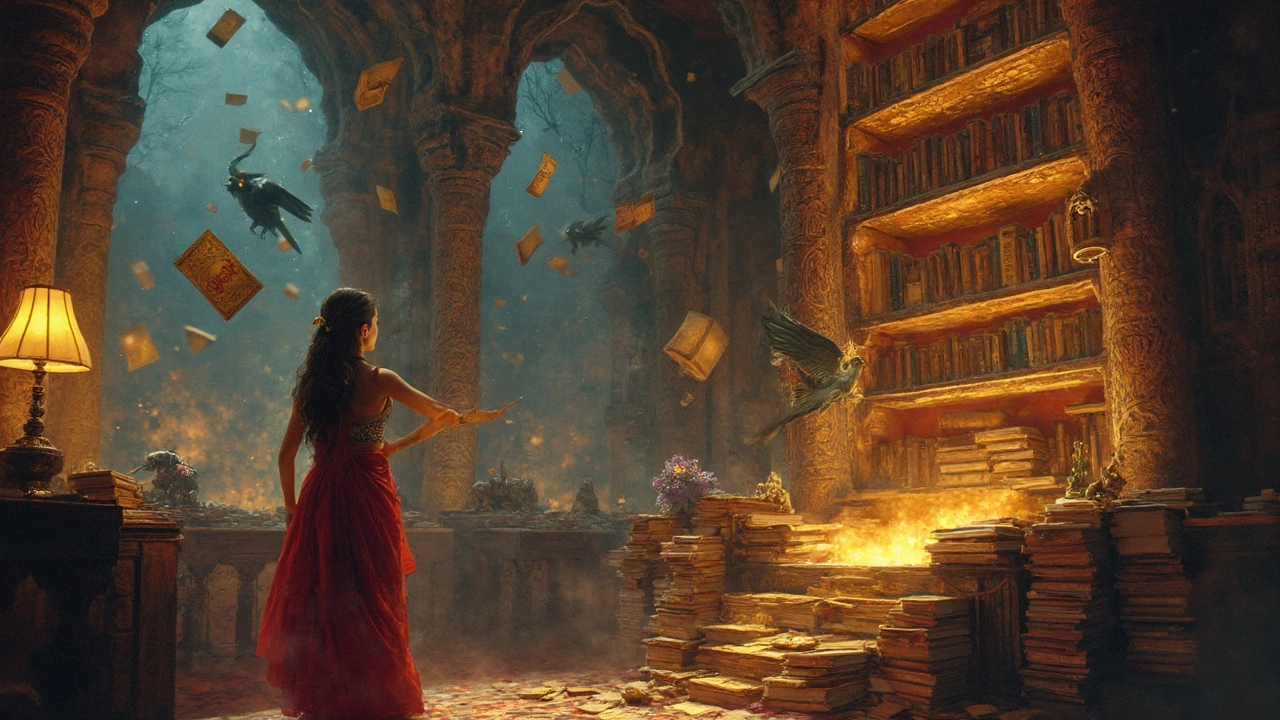
Fantasy Book Definition: What Makes a Book a Fantasy Novel?
What really defines a fantasy book? Dig into the traits, history, and subtle differences that classify a story as fantasy. Find out how to spot the genre.