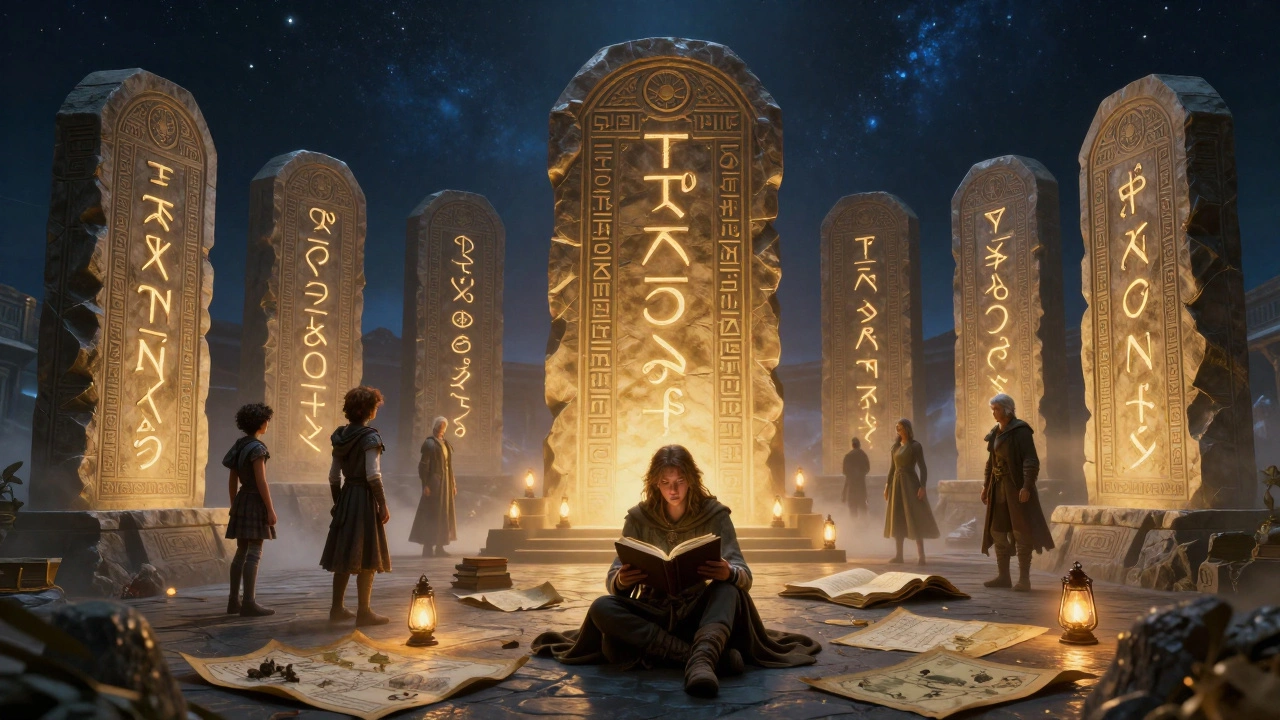
Reading Time Calculator for Long Fantasy Series
Estimate Your Reading Journey
A 12-book fantasy series typically contains 8,000-12,000 pages. Calculate how long it will take you to complete this epic adventure based on your reading habits.
Note: This is an estimate. Actual reading speed may vary based on complexity of content and your reading environment.
When someone asks, what is a 12-book series called? they’re usually thinking about one of the most ambitious forms of storytelling in fantasy literature. A 12-book series isn’t just a long read-it’s a world built from the ground up, with its own history, languages, gods, and wars. Unlike shorter trilogies or quartets, a 12-book saga gives authors room to let characters grow over decades, to weave in side stories that feel as real as the main plot, and to change the rules of magic itself by book seven. It’s not just about quantity. It’s about depth.
Why 12 Books? The Scale of Epic Fantasy
Most fantasy series start with three books: the setup, the rise, the climax. But when a story grows beyond that, it often becomes something bigger. A 12-book series usually means the author isn’t just telling a story-they’re building a civilization. Think about Robert Jordan’s The Wheel of Time. It began in 1990 and ended in 2013 with 14 volumes. That’s not an accident. Jordan didn’t just write about a hero fighting a dark lord-he wrote about how societies react to prophecy, how economies collapse under war, and how ordinary people become legends over time.
Why 12? Because it’s long enough to show generational change. A child born in book one might be leading an army by book ten. A kingdom that seems invincible in book three might be in ruins by book eight. You don’t get that kind of scale in a five-book arc. The 12-book format is the fantasy equivalent of a Shakespearean history cycle-it spans reigns, revolutions, and rebirths.
What Makes a Series Reach 12 Books?
Not every fantasy world can handle that much length. Most series fizzle out after six or seven books because the story runs out of steam. But a 12-book series survives because it has:
- Multiple point-of-view characters-not just one hero, but dozens. Each book might focus on a different person’s journey.
- Deep worldbuilding-maps, languages, political systems, religions, and histories that aren’t just backstory-they affect every decision.
- Slow-burn consequences-a choice made in book two might trigger a famine in book nine.
- Legacy characters-people who appear as legends in early books and then show up alive decades later.
Look at George R.R. Martin’s A Song of Ice and Fire. Even though it’s unfinished, the structure is clear: each book introduces a new region, a new faction, a new way power is gained or lost. The story isn’t about who wins the throne-it’s about what happens when no one wins. That kind of complexity needs space. Twelve books isn’t excessive. It’s necessary.
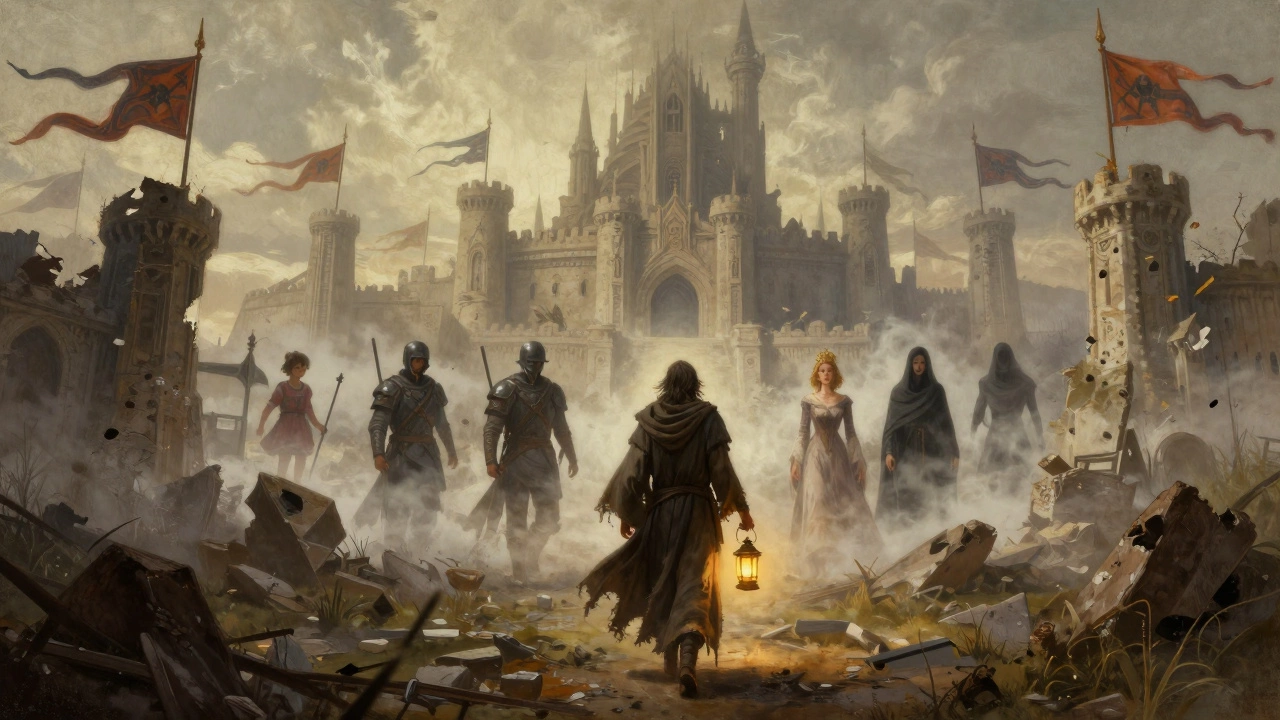
Not All 12-Book Series Are Fantasy
But fantasy is the only genre where 12 books is common. Why? Because fantasy doesn’t have to obey real-world rules. You can’t write a 12-book historical fiction about Napoleon without repeating the same battles. You can’t write a 12-book mystery without repeating the same detective. But in fantasy? You can invent a new continent every two books. You can kill off a god and replace it with another. You can make magic a disease, then a cure, then a weapon.
That’s why 12-book series are almost always fantasy. The genre allows for infinite expansion. Science fiction sometimes tries-like Isaac Asimov’s Foundation series-but even that was mostly seven books, and many were short stories. Romance? Thrillers? Literary fiction? They don’t scale like this. Only fantasy can sustain that kind of growth.
Examples of 12-Book Fantasy Series
There aren’t many 12-book fantasy series-because they’re rare. But here are the ones that matter:
- The Wheel of Time by Robert Jordan and Brandon Sanderson (14 books total, with the last three completed by Sanderson after Jordan’s death)
- The Malazan Book of the Fallen by Steven Erikson (10 main books, plus 4 companion novels-often counted as a 14-book saga)
- The Chronicles of Thomas Covenant by Stephen R. Donaldson (10 books, split into three series, but often read as one continuous arc)
- The Dark Tower by Stephen King (8 books, but with 4 supplemental novels and comics-sometimes grouped as a 12-part epic)
Notice something? None of these are neatly labeled as "12-book series." They’re just long. Readers don’t count the books. They count the years. They count the emotional weight. That’s what makes a 12-book series special-it’s not about the number. It’s about the legacy.
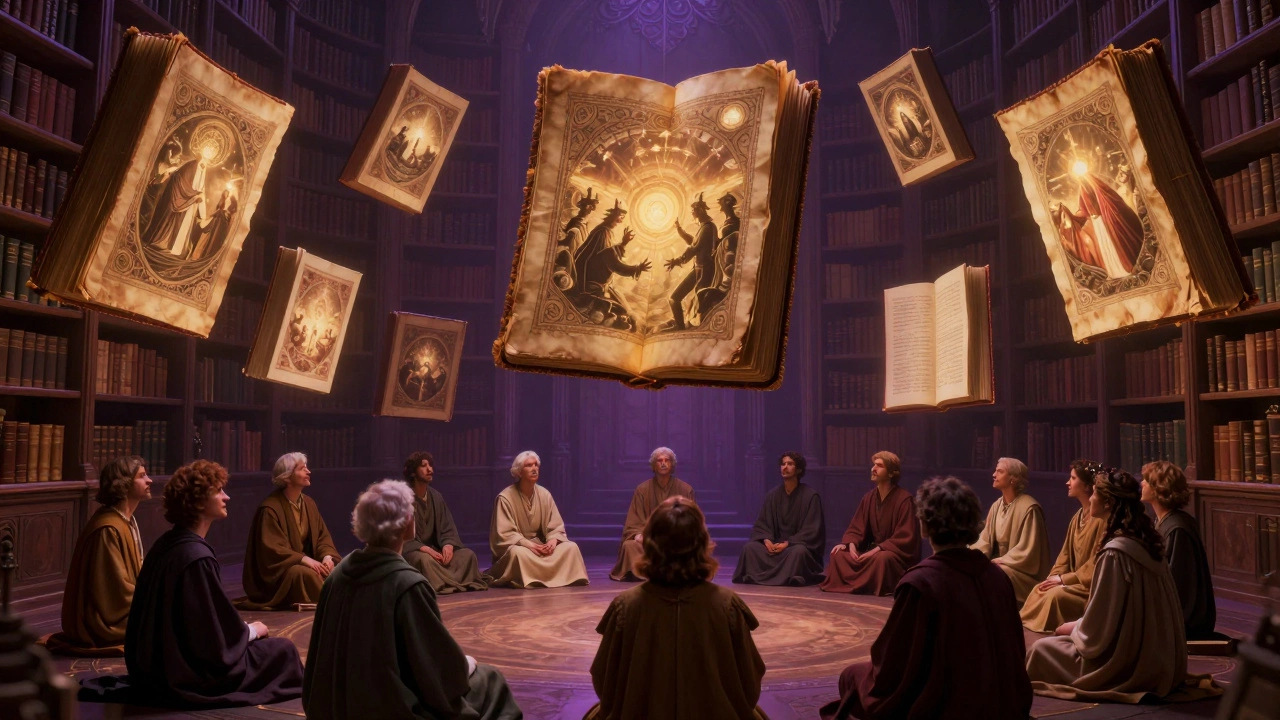
What Do You Get From a 12-Book Series?
If you’ve only read trilogies, starting a 12-book fantasy series is like stepping into a new country. You’ll spend months, maybe years, with these characters. You’ll forget what life was like before they existed. You’ll dream about their battles. You’ll argue with friends about whether a character made the right choice in book six.
You’ll also get:
- Realistic character aging-no magical youth potions here. People get tired. They get scarred. They lose hope.
- Political complexity-no simple good vs. evil. Just factions, betrayals, and shifting alliances.
- World-changing consequences-a spell cast in book three might rewrite the laws of nature by book nine.
- Emotional payoff you can’t get anywhere else-when a minor character you met in book one dies in book twelve, you’ll feel it.
It’s not for everyone. Some readers hate the wait. Some give up after book five. But for those who stick with it? It’s the closest thing to living another life.
Is a 12-Book Series Worth It?
Yes-if you’re ready for the commitment. A 12-book fantasy series isn’t a quick escape. It’s a lifelong companion. You’ll carry it with you through job changes, breakups, moves, and losses. It becomes part of your story.
Start with The Wheel of Time if you want the most complete example. It’s got everything: magic, war, prophecy, betrayal, love, death, and rebirth. It’s long. It’s messy. It’s brilliant. And it’s exactly what happens when a writer refuses to rush.
If you’ve ever wondered what a 12-book series is called? It’s called a legend in the making.
Is there a specific term for a 12-book series?
There’s no official term like "trilogy" or "tetralogy" for a 12-book series. The closest you’ll get is "epic fantasy series" or "long-form saga." Some fans call it a "dodecology," but that’s not widely used or recognized. In publishing, it’s usually just called a "long-running series" or "multi-volume epic." The number 12 doesn’t have a special name-it’s the length that defines it, not a label.
Why are most 12-book series fantasy?
Fantasy allows for endless expansion. Unlike real-world genres, fantasy isn’t bound by history, science, or logic. Authors can introduce new lands, gods, magic systems, and civilizations with each book. A 12-book series lets them explore how entire societies evolve over generations. Other genres-like mystery or romance-rely on repetition and resolution, which doesn’t work at this scale. Only fantasy can sustain that kind of depth.
Can a 12-book series be completed by one author?
Yes, but it’s rare. Robert Jordan started The Wheel of Time and completed 11 books before passing away. Brandon Sanderson finished the final three based on Jordan’s notes. Stephen R. Donaldson wrote his 10-book Chronicles of Thomas Covenant over 30 years. These are exceptions. Most authors can’t sustain the pace, creativity, or personal investment over decades. That’s why many long series are either unfinished, ghostwritten, or expanded by other writers after the original author’s death.
How long does it take to read a 12-book fantasy series?
On average, a 12-book fantasy series totals between 8,000 and 12,000 pages. At a reading speed of 250 words per minute (about average), that’s roughly 150 to 200 hours of reading. If you read one book per month, it’ll take you 12 years. Most readers take 3 to 5 years to finish, depending on how often they read. It’s not a sprint-it’s a marathon.
Are 12-book series better than shorter ones?
Not better-just different. Shorter series are tighter, more focused, and easier to finish. A 12-book series offers unmatched depth, emotional weight, and worldbuilding. But it also risks dragging, repeating, or losing momentum. Neither is superior. It depends on what you want: a quick escape or a lifelong immersion. Many readers start with a trilogy, then move to longer series once they’re hooked.
What’s the longest fantasy series ever written?
The longest widely recognized fantasy series is The Wheel of Time with 14 volumes. Other contenders include The Malazan Book of the Fallen (10 core books + 4 companion novels) and The Chronicles of Thomas Covenant (10 books). Some fan-made or obscure series go longer, but these are the only ones with major commercial success and critical acclaim. Length alone doesn’t make a series great-it’s how the story grows with each book.