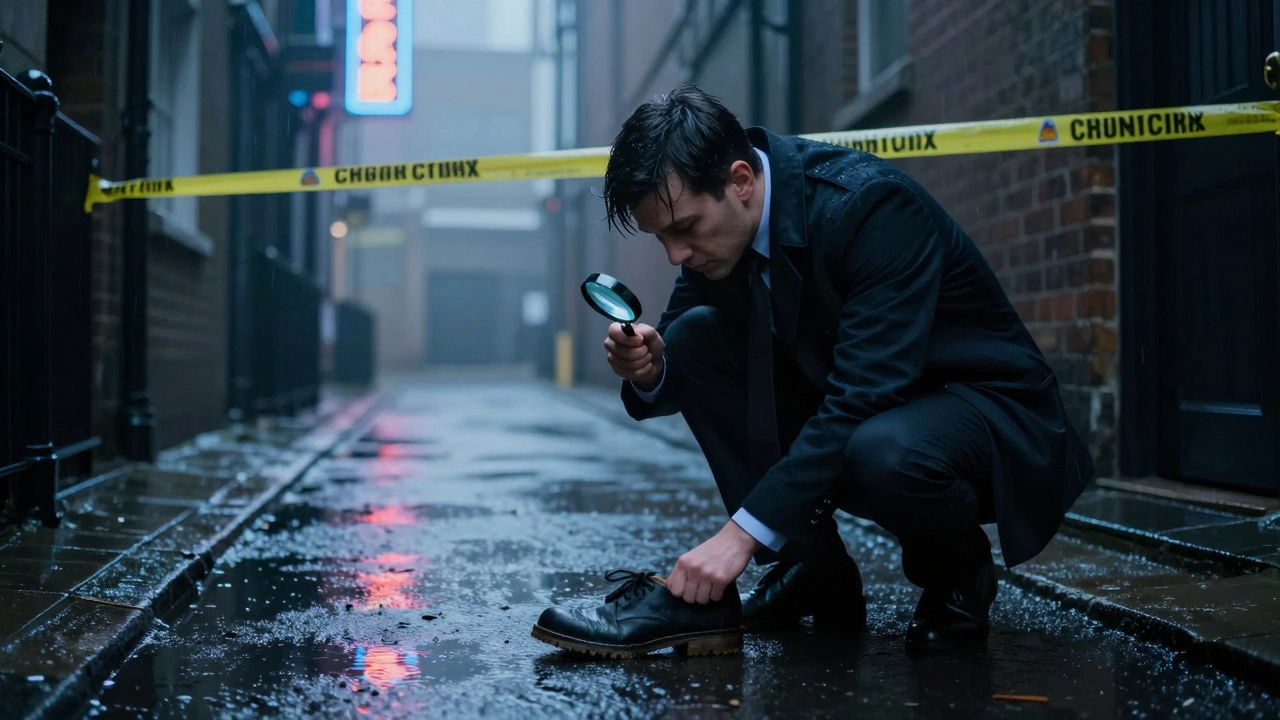
A detective thriller isn’t just a story with a murder and a cop. It’s a tightly wound machine built on tension, logic, and the slow unraveling of truth. If you’ve ever stayed up past midnight because you couldn’t stop turning pages, you’ve felt its pull. But what exactly makes a detective thriller different from any other crime story? The answer lies in how it works - not just what happens.
The Detective Isn’t Just a Character - They’re the Engine
In a detective thriller, the protagonist isn’t a hero in a trench coat. They’re usually flawed, obsessive, and often isolated. Think of Sherlock Holmes a fictional British detective created by Sir Arthur Conan Doyle, known for his deductive reasoning and eccentric personality Holmes or Harry Bosch a fictional LAPD detective created by Michael Connelly, known for his relentless pursuit of justice and personal demons Bosch. They don’t solve crimes because they’re lucky. They solve them because they can’t stop. Their obsession becomes the story’s heartbeat.
This isn’t about catching the bad guy. It’s about how the detective sees patterns no one else does. They notice a shoe scuff, a misplaced clock, a hesitation in a witness’s voice. These details aren’t just set dressing - they’re clues. And the reader is invited to play along. You’re not passive. You’re hunting for the same clues. That’s what makes the genre addictive.
Structure: The Clock Is Ticking
A detective thriller follows a rhythm. It starts with a disruption - usually a death. Then comes the investigation. Not the kind with flashy car chases, but the quiet work: interviews, evidence logs, forensic reports, dead ends. The pacing is deliberate. Each chapter peels back a layer. The tension doesn’t come from explosions. It comes from silence. From a suspect who won’t meet your eyes. From a file that went missing.
The best detective thrillers use time as a weapon. A body found on a Monday. The killer strikes again by Wednesday. The detective has 48 hours before the evidence dries up. This isn’t just a plot device. It forces the detective - and you - to make choices under pressure. You don’t have time to doubt. You have to trust your gut.
The Thriller Part: It’s Not About the Crime - It’s About the Cost
Here’s where it diverges from a simple mystery. In a detective thriller, the stakes aren’t just about justice. They’re personal. The detective might be haunted by a past failure. Maybe they lost someone to a similar killer. Or they’re on the verge of retirement, and this case is their last shot at redemption.
Take Veronica Mars a fictional teenage detective from the TV series created by Rob Thomas, known for solving crimes while navigating high school politics and personal trauma Veronica. She doesn’t solve crimes because she loves the law. She solves them because she needs to understand why people hurt each other. The thriller element isn’t the murder. It’s the emotional toll.
This is why detective thrillers often feel heavier than other genres. You’re not just guessing who did it. You’re watching someone break a little more with every clue they uncover. The killer might be caught. But the detective? They’re left changed.

Setting: The City as a Character
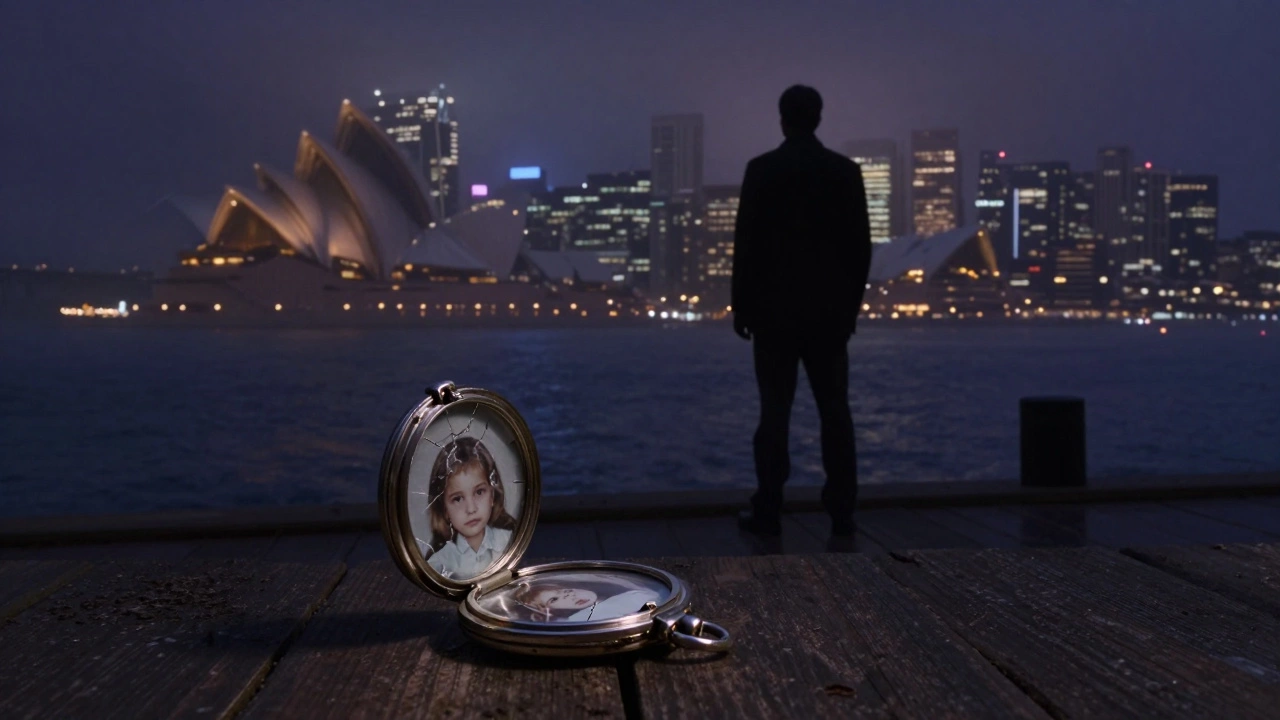
Most detective thrillers aren’t set in quiet suburbs. They’re set in places that feel broken - rain-slicked alleys in London, neon-lit docks in Los Angeles, or the foggy harbor of Sydney. These places aren’t just backdrops. They’re full of secrets. Corruption hides in plain sight. Power moves in shadows. The detective walks through these spaces like a ghost, knowing everyone’s lying - even the ones who seem innocent.
The setting shapes the story. A detective in a small town might be fighting local politics. One in a big city might be up against a corrupt system. The environment isn’t just where the crime happened. It’s why it happened.
Twists: The Truth Is Never Simple
True detective thrillers don’t end with a neat confession. The twist isn’t "the butler did it." It’s "the detective was wrong about everything."
Take The Girl with the Dragon Tattoo a novel by Stieg Larsson featuring journalist Mikael Blomkvist and hacker Lisbeth Salander investigating a decades-old disappearance Lisbeth Salander. The surface mystery is a disappearance. The real story? A web of family secrets, institutional abuse, and a killer who’s been invisible for years. The twist doesn’t come from a surprise reveal. It comes from realizing the detective’s entire worldview was built on lies.
This is why the best detective thrillers make you question your own assumptions. The killer isn’t always the obvious suspect. Sometimes, they’re the one everyone trusts. Sometimes, they’re the victim. Sometimes, they’re the detective themselves.
Why It Still Matters Today
In a world full of fast-paced action and CGI explosions, the detective thriller survives because it asks something deeper: How do we find truth when everything is designed to hide it?
Modern detective thrillers reflect our distrust. We live in an age of misinformation, hidden algorithms, and institutions that don’t answer to anyone. The detective - flawed, alone, but relentless - is the last person who still believes in facts. They dig through noise. They follow paper trails. They refuse to accept the easy answer.
That’s why books like The Thursday Murder Club a novel by Richard Osman featuring retired detectives solving crimes in a quiet English village Thursday Murder Club and shows like True Detective a TV series with anthology format, each season following a different set of detectives unraveling a dark, complex crime True Detective still draw millions. We need stories where someone refuses to look away.
What Makes a Detective Thriller Different From Other Crime Stories?
Not all crime fiction is a detective thriller. Here’s how to tell the difference:
| Feature | Detective Thriller | Police Procedural | Hard-Boiled Noir | Cozy Mystery |
|---|---|---|---|---|
| Focus | Psychological unraveling, personal stakes | Step-by-step police process | Atmosphere, moral decay, cynical tone | Light tone, amateur sleuth, minimal violence |
| Protagonist | Flawed, obsessive, often isolated | Team of professionals, institutional | World-weary loner, antihero | Amateur, usually charming |
| Pacing | Slow build, tension from silence | Methodical, procedural | Fast, gritty, relentless | Light, humorous, episodic |
| Twist | Truth redefines the detective | Reveals the killer | Reveals systemic corruption | Usually predictable |
| Ending | Justice served, but at great personal cost | Case closed, system intact | Corruption remains | Happy ending, community restored |
The detective thriller isn’t about solving a puzzle. It’s about surviving the truth.
Is a detective thriller the same as a mystery?
Not exactly. All detective thrillers are mysteries, but not all mysteries are detective thrillers. A mystery is any story centered around solving a crime or puzzle. A detective thriller adds psychological tension, personal stakes, and a slow-burning sense of dread. It’s not just "who did it?" - it’s "what will it cost to find out?"
Do detective thrillers always have a detective?
Usually, but not always. Some stories feature journalists, historians, or even ordinary people who stumble into a crime and refuse to let go. What matters isn’t their job title - it’s their obsession. If they’re the one chasing the truth when everyone else looks away, they’re the detective.
Why do detective thrillers often feel so dark?
Because they’re not just about crime - they’re about how crime reveals the cracks in society and in people. The genre explores guilt, trauma, corruption, and the cost of truth. The darkness isn’t there for shock value. It’s there because the truth, when fully uncovered, is rarely pretty.
Can a detective thriller have a happy ending?
Technically, yes - but it’s rare. Most detective thrillers end with justice served, but the detective is left broken, changed, or alone. A truly happy ending - where everyone walks away unscathed - usually belongs to cozy mysteries. The detective thriller asks: What price did you pay to find the truth? And the answer is almost always too high.
What are some must-read detective thrillers?
Start with The Hound of the Baskervilles a classic Sherlock Holmes novel by Sir Arthur Conan Doyle, involving a legendary ghostly hound and a family curse The Hound of the Baskervilles for the classic style. Move to The Silence of the Lambs a novel by Thomas Harris featuring FBI trainee Clarice Starling hunting a serial killer with the help of imprisoned psychiatrist Hannibal Lecter The Silence of the Lambs for psychological depth. Then try The Girl on the Train a novel by Paula Hawkins, featuring an alcoholic woman who becomes entangled in a missing person investigation The Girl on the Train for modern unreliable narration. Each one shows a different side of the genre.
If you’ve ever wondered why detective thrillers stick with you long after the last page - it’s because they don’t just tell you a story. They make you feel like you were there. And once you’ve seen what the truth looks like, you can’t unsee it.