Phonics Instruction: How It Helps Kids Learn to Read
When we talk about phonics instruction, the systematic teaching of letter-sound relationships to help children decode written words. Also known as sound-based reading instruction, it’s the most proven way to teach kids how to read—especially in the early grades. It’s not about memorizing whole words. It’s about understanding that c-a-t makes the sound "cat," and once you know that pattern, you can read bat, hat, and rat too.
This method doesn’t just help with spelling. It builds confidence. Kids who struggle with reading often get stuck because they don’t know how to break words apart. Phonics instruction gives them a tool, not a guess. Teachers who use it well don’t just drill sounds—they connect them to real books, real stories, and real moments when a child reads something on their own for the first time. That moment? It changes everything.
It’s not magic. It’s method. And it works best when it’s clear, consistent, and tied to actual reading practice. You can’t just teach the sounds and stop. You have to let kids use them—right away. That’s why effective phonics programs include blending sounds, segmenting words, and reading simple texts daily. It’s the same way you learn to ride a bike: you don’t just watch someone else do it. You get on the saddle and try.
Some people think kids should learn to read by context or pictures. But research shows that’s not enough. A child might guess "dog" from a picture, but what happens when they see "fog" or "log"? Without phonics, they’re lost. That’s why the best reading programs start with sound, then build up to meaning. It’s not just about decoding—it’s about giving kids control over language.
And it’s not just for struggling readers. Even kids who pick up reading fast benefit from strong phonics foundations. They read faster, spell better, and understand harder words later on. It’s the hidden engine behind fluent reading.
Below, you’ll find real discussions about how reading skills develop, what works in classrooms, and why some kids still fall behind—even with good teaching. You’ll see how phonics connects to bigger ideas like early literacy, reading comprehension, and the real challenges parents and teachers face every day. No theory. No fluff. Just what actually helps kids learn to read.
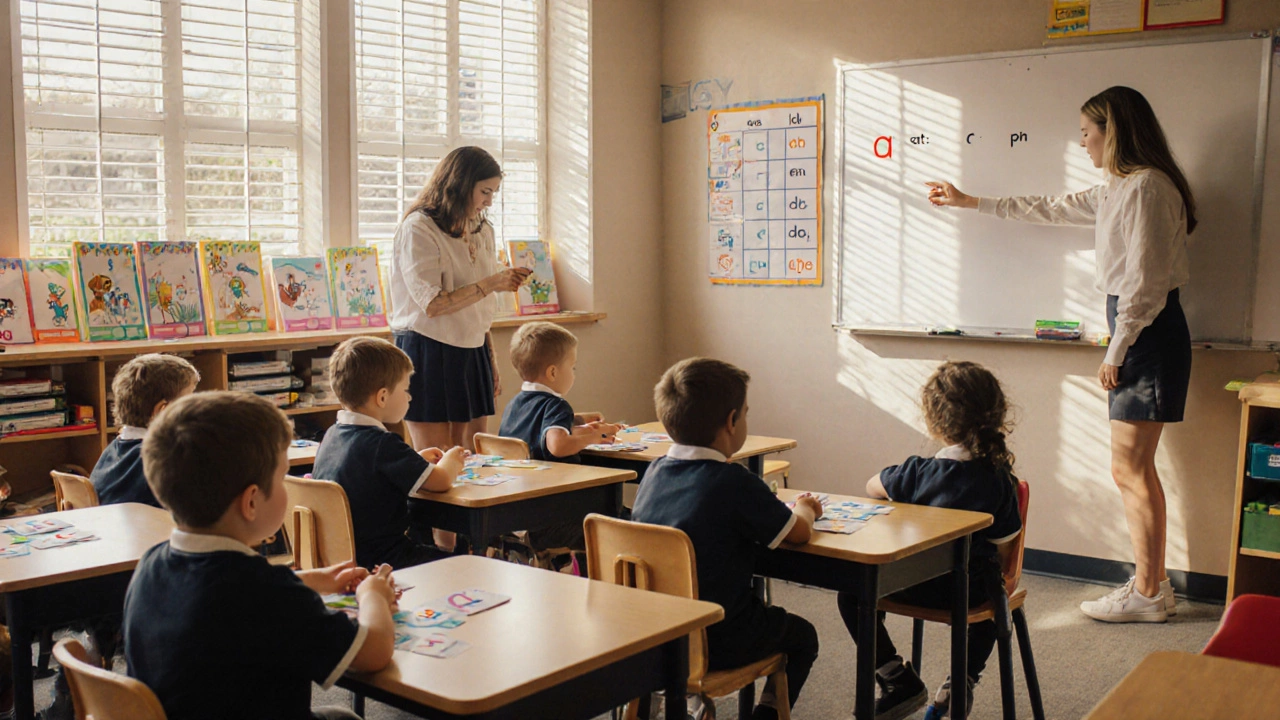
Are phonics still taught in schools today?
Phonics is still taught in many schools, but not always well. Learn how it works, where it’s thriving, and why it’s critical for every child’s reading success.