Early Literacy: What It Is and Why It Matters for Kids and Parents
When we talk about early literacy, the collection of skills children develop before they can read words on a page. Also known as pre-reading skills, it’s not about flashcards or drills—it’s about building a relationship with language through stories, sounds, and everyday conversations. This isn’t just for future readers. It’s the quiet, daily work that turns babbling into vocabulary, scribbles into symbols, and curiosity into confidence.
Early literacy includes things like recognizing rhymes, understanding that words have meaning, holding a book right-side up, and knowing that pictures tell stories too. These aren’t fancy academic terms—they’re the things toddlers do naturally when you read to them, sing nursery rhymes, or point at letters on a cereal box. Research from the National Institute of Child Health and Human Development shows kids who are exposed to rich language before age three are far more likely to read on grade level by third grade. And it’s not about how many books you own—it’s about how often you talk, laugh, and respond to their questions.
Parents don’t need to be teachers to build early literacy. Just talking during diaper changes, naming objects at the grocery store, or letting your child turn pages while you read gives them the building blocks. It’s also why some kids leap ahead in school—not because they’re smarter, but because they’ve heard more words, more often. The gap isn’t created in kindergarten. It’s built in the first three years, one bedtime story, one repeated song, one answered "why?" at a time.
Related to this are skills like phonological awareness, the ability to hear and play with the sounds in words, which helps kids decode new words later. And print awareness, knowing that text flows left to right and that letters stand for sounds—both are invisible until you look for them. You’ll see them in kids who point at words while you read, or pretend to read their favorite book back to you.
What you’ll find in the posts below aren’t step-by-step guides or rigid curriculums. They’re real conversations about how kids connect with stories, what makes a book stick with a toddler, and why some children fall in love with reading before they even know what reading is. You’ll see how early literacy shows up in unexpected places—in the way a child asks about characters, repeats lines from a book at dinner, or draws their own version of a story. These aren’t just milestones. They’re signs of a mind learning how to think through language.
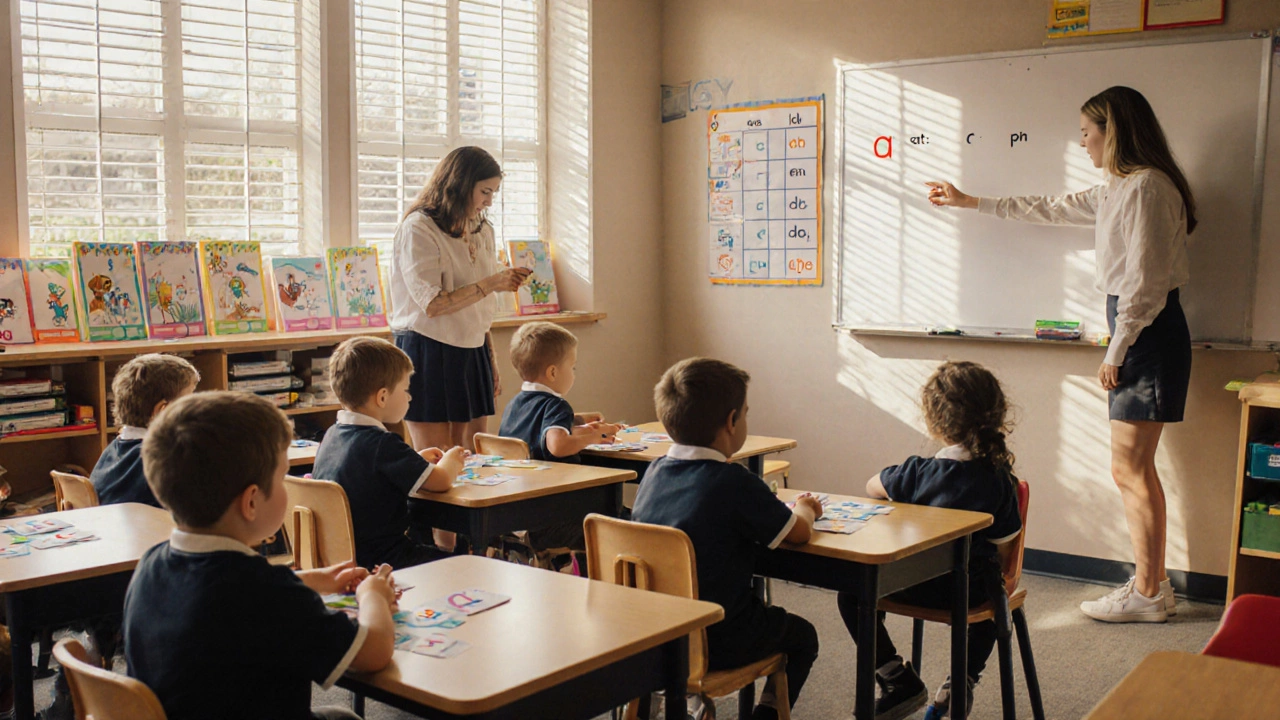
Are phonics still taught in schools today?
Phonics is still taught in many schools, but not always well. Learn how it works, where it’s thriving, and why it’s critical for every child’s reading success.