Music Education Impact Calculator
Calculate Your School's Music Impact
Based on research from Johns Hopkins and National Endowment for the Arts studies, music programs impact student outcomes. Enter your school's size and budget to see potential benefits.
It’s not just about notes and instruments. When schools cut music programs, they’re not just removing a class-they’re silencing a vital part of how kids learn, grow, and connect.
Music Isn’t a Luxury-It’s a Learning Tool
Back in the 1990s, researchers at the University of Southern California found that kids who studied music for just two years showed measurable improvements in memory, attention, and language processing. These weren’t just test scores. These were real changes in how their brains worked. Fast forward to today, and schools are ditching band, choir, and orchestra not because they’re unimportant, but because they’re seen as expendable.
When budgets shrink, music is often the first to go. It doesn’t show up on standardized tests. It doesn’t count toward graduation requirements in most states. So districts make the math: fewer teachers, less space, lower costs. But what they’re losing is harder to measure. Music doesn’t just teach rhythm-it teaches pattern recognition, discipline, and emotional regulation. A 2023 study from the National Endowment for the Arts tracked over 12,000 students and found that those in music programs were 30% more likely to stay engaged in school and 25% less likely to drop out.
The Myth of "More Time for Math and Reading"
Every time a school cuts music, the justification is the same: "We need to focus on reading and math." But here’s the twist: music helps reading. Not in a vague, feel-good way. In a concrete, neuroscience-backed way.
When kids learn to read sheet music, they’re practicing the same skills needed to decode written language: recognizing symbols, understanding sequence, matching sound to meaning. A 2022 Johns Hopkins study compared two groups of third graders-one with daily music instruction, one without. After six months, the music group scored 18% higher on reading comprehension tests. Why? Because playing an instrument trains the brain to process rapid auditory information. That’s the same skill used when sounding out words or catching subtle tone in a story.
And it’s not just reading. Math? Music teaches fractions. Timing. Patterns. A student who learns to count eighth notes in 4/4 time is already doing math without a calculator. Yet schools are cutting the very thing that makes abstract concepts tangible.
Who Gets Left Behind?
Music programs don’t disappear evenly. They vanish first in low-income districts. In wealthier schools, parents fund private lessons, buy instruments, and lobby for retention. In poorer ones, the only music left is what’s played over the PA system during lunch.
According to a 2025 report from the U.S. Department of Education, 78% of schools in the lowest income quartile have no full-time music teacher. In contrast, just 29% of high-income schools lack one. That’s not an accident. It’s a pattern. And it’s creating a gap not just in skills, but in opportunity. Kids who learn music in school are more likely to pursue higher education, apply to competitive programs, and even land internships in creative industries.
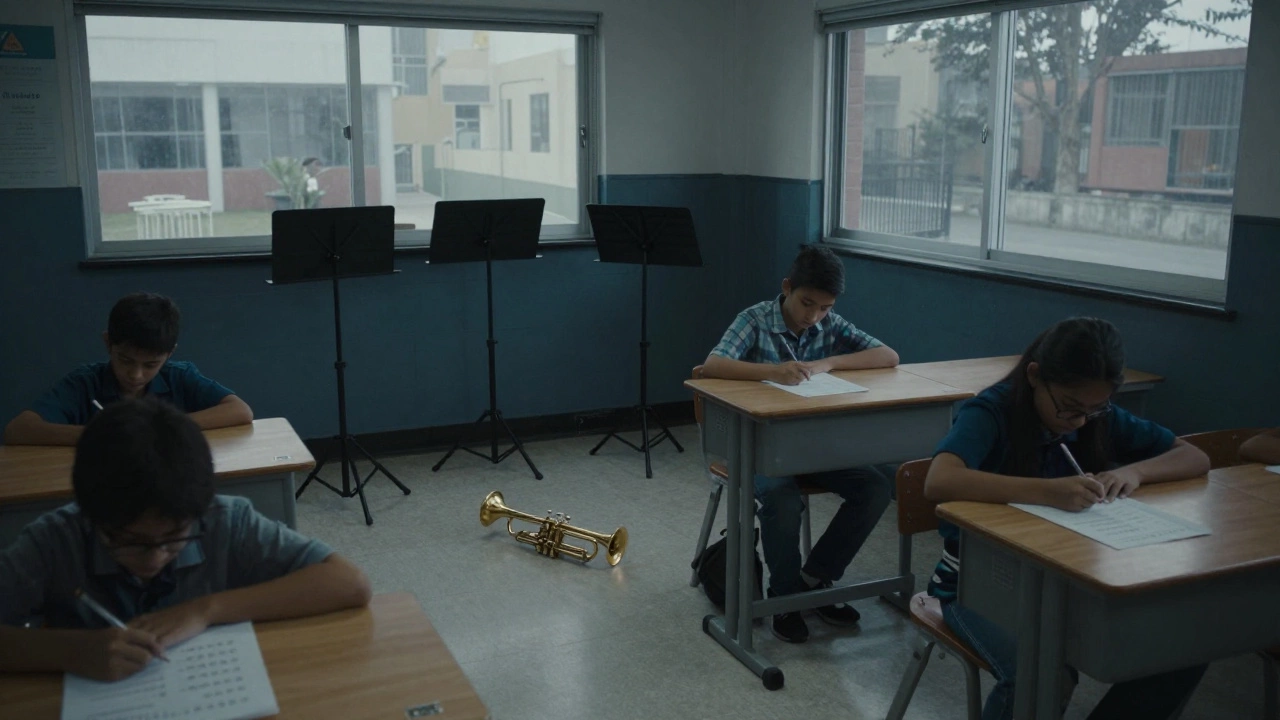
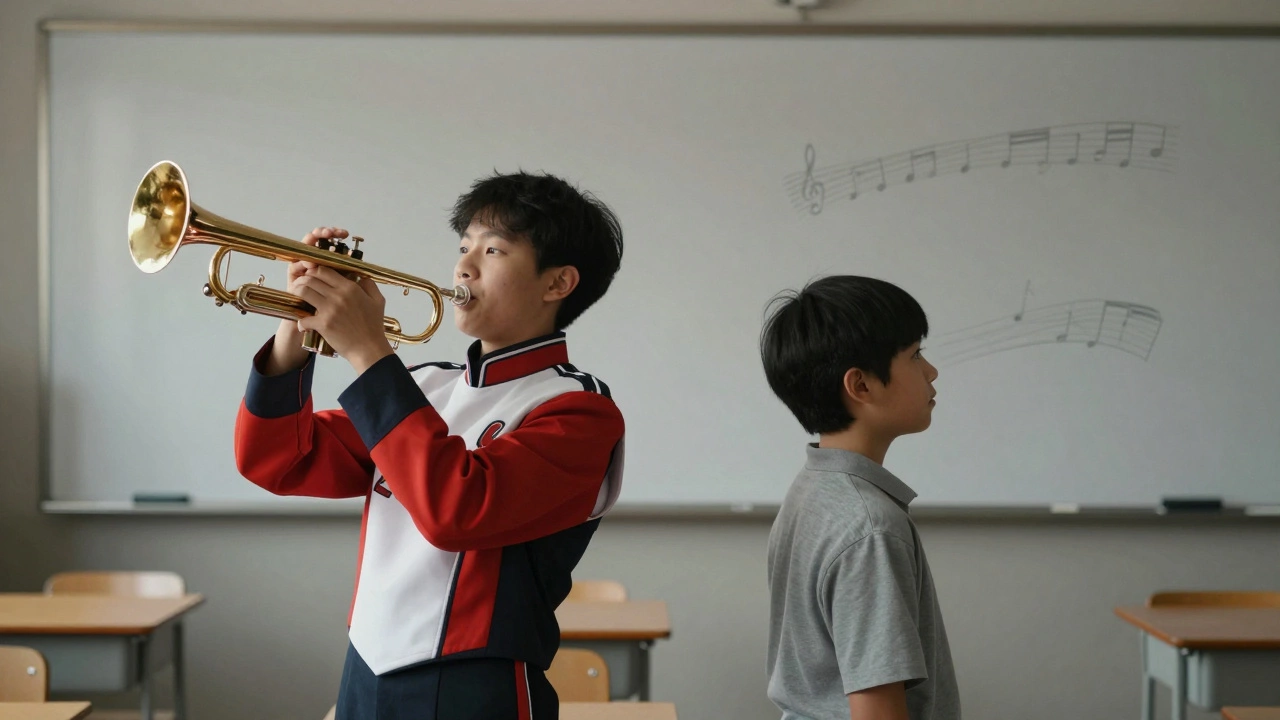
Imagine two eighth graders. One has access to a trumpet, a band director, and weekly rehearsals. The other has never held an instrument. One might find confidence on stage. The other might never discover a voice that feels like theirs. That’s not just unfair-it’s preventable.
What’s Really at Stake?
It’s easy to think of music as entertainment. But for many kids, it’s survival. A 2024 survey of 5,000 teens in Title I schools found that 62% said music class was the only time they felt truly heard. For kids dealing with anxiety, trauma, or isolation, choir or band isn’t a class-it’s a lifeline.
One school in Detroit shut down its orchestra program in 2022. A year later, counselors reported a 40% increase in student-reported loneliness. Teachers noticed fewer students volunteering to speak up in class. Attendance in other subjects dropped. The school brought music back in 2024, not because it was "nice," but because the data showed it was working.
Music builds social cohesion. It teaches kids to listen-not just to notes, but to each other. It requires collaboration, patience, and trust. These aren’t soft skills. They’re essential ones.
It’s Not Too Late to Bring It Back
Some schools are reversing course. In Oregon, a district that cut music in 2020 restored it in 2023 after parents collected 8,000 signatures and partnered with local musicians to fund instruments. In Chicago, a nonprofit now supplies free instruments and after-school lessons to 200 underfunded schools. Enrollment in those programs jumped 150% in two years.
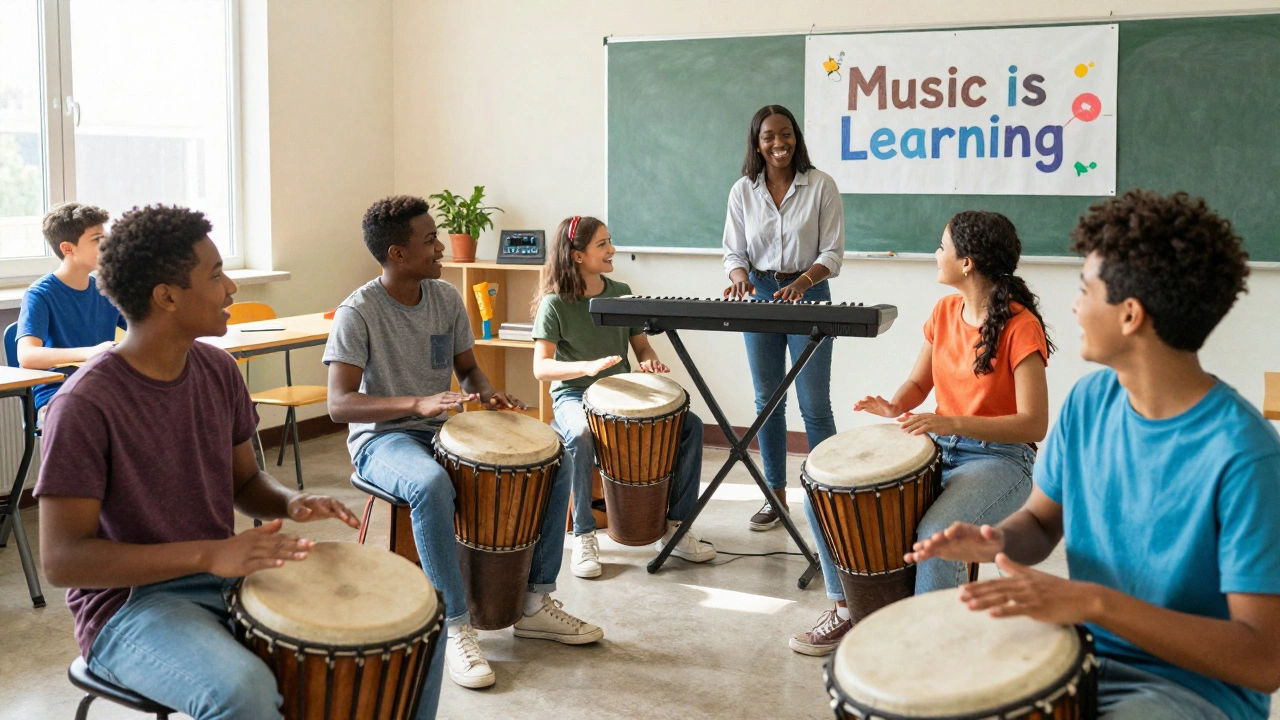
You don’t need a full orchestra to make a difference. A single guitar, a set of hand drums, even a digital keyboard can start a program. What matters isn’t the equipment-it’s the access. Kids don’t need perfection. They need a chance to try.
And it’s not about turning every student into a professional musician. It’s about giving them the space to explore, fail, and find something that sticks. Something that makes them feel like they belong.
The Bigger Picture
When we remove music from schools, we’re sending a message: creativity is optional. Emotion is secondary. Expression is a perk, not a priority.
But kids aren’t just data points. They’re not just test scores. They’re people learning how to feel, think, and connect. Music doesn’t just teach notes. It teaches humanity.
Maybe it’s time we stopped asking if we can afford music-and started asking if we can afford not to have it.
Why do schools cut music programs first?
Schools cut music first because it doesn’t appear on standardized tests and isn’t required for graduation in most states. Budgets are tight, and music programs require instruments, space, and trained teachers-costs that are easy to cut. But this decision ignores research showing music improves memory, reading, and emotional well-being. It’s not that music is unimportant-it’s that its value isn’t measured the way math or reading is.
Does music really help with reading skills?
Yes. Learning music trains the brain to process rapid sounds, recognize patterns, and match symbols to meaning-all skills directly tied to reading. A 2022 Johns Hopkins study found that third graders with daily music instruction scored 18% higher on reading comprehension tests than peers without music. The rhythm and structure of music help kids decode language more efficiently.
Is music education only for talented students?
No. Music education isn’t about producing prodigies-it’s about inclusion. Every child can benefit from learning rhythm, listening, and working in a group. Programs that focus on participation, not perfection, help students build confidence, reduce anxiety, and find belonging. Even playing a simple drum or singing in a choir can make a lasting difference.
What can parents do if their child’s school cuts music?
Parents can organize petitions, partner with local musicians or arts nonprofits, and advocate for using federal or state arts funding. Many communities have successfully restored programs by crowdfunding instruments or volunteering to lead after-school sessions. The key is showing the school that music isn’t a luxury-it’s a tool for learning and emotional health.
Are there alternatives to full music programs?
Yes. Even small steps help. A single digital keyboard, weekly rhythm circles, or a student-led songwriting club can make a difference. Some schools use free online tools like GarageBand or Chrome Music Lab to introduce music basics without needing instruments. The goal isn’t to replicate a full orchestra-it’s to give every student a chance to engage with sound and expression.