Dune Mythology: Origins, Themes, and Why It Still Rules Sci-Fi
When you hear Dune mythology, a complex blend of religion, politics, ecology, and prophecy built by Frank Herbert in his 1965 novel. Also known as the Dune universe, it doesn't just tell a story—it creates a belief system that feels older than fiction. This isn't fantasy with dragons. It's sci-fi that treats space empires like ancient civilizations, where control of a single spice turns planets into holy lands and messiahs into weapons.
The heart of Dune mythology, a system of beliefs, symbols, and rituals woven into a futuristic society. Also known as the Dune cosmology, it revolves around Arrakis, the desert planet that produces the only source of melange, a substance that extends life and unlocks prescience. Also known as Dune, it —a world where water is more sacred than gold, and sandworms are both gods and beasts. This isn't just setting. It's theology. The Fremen turn survival into scripture. The Bene Gesserit manipulate faith like a tool. The Emperor rules not just by army, but by myth. And the messiah? He’s not chosen—he’s manufactured.
Spice melange, the addictive, consciousness-expanding drug at the center of Dune’s economy and power structure. Also known as the spice, it is the real villain and hero of the story. It’s what lets people see the future, what fuels interstellar travel, and what turns ordinary people into prophets. No other sci-fi universe ties a substance so tightly to religion, war, and evolution. It’s not just a plot device—it’s the engine of belief.
What makes Dune mythology stick isn’t the giant worms or the laser swords. It’s how deeply it asks: What happens when a religion is built on lies people want to believe? When a savior is engineered by secret societies? When ecology becomes destiny? These aren’t abstract questions. They’re alive in every page, every prophecy, every whispered prayer in the desert.
What you’ll find in the posts below isn’t just analysis of Dune. It’s the ripple effect—the way its ideas show up in other stories, in how we think about power, in why we still chase messiahs today. You’ll see how it connects to historical fiction, to dark romance, even to how we read about real-world myths. Dune didn’t just invent a world. It gave us a mirror.
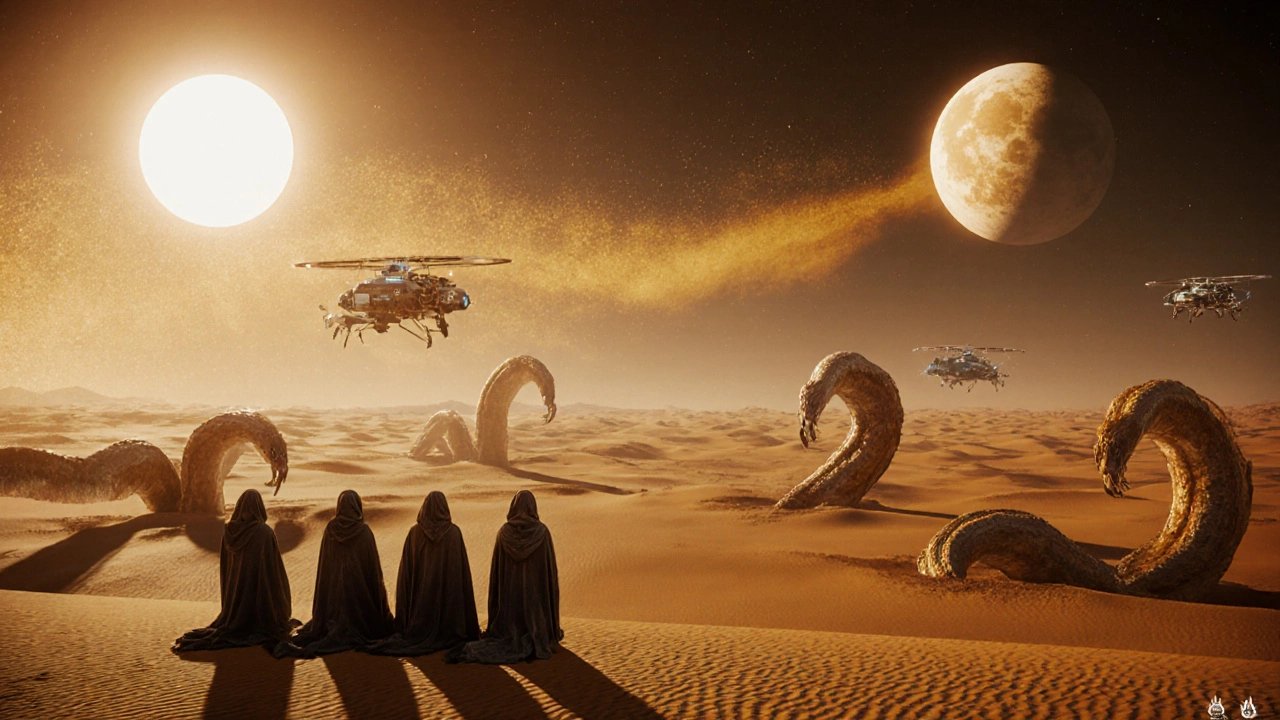
Is Dune Fantasy or Sci-Fi? The Truth Behind the Genre Debate
Dune blends science fiction and fantasy by using advanced technology as a backdrop for deep mythological themes. It's not just about space travel-it's about how belief turns science into religion.