Cultural Differences: Why They Matter in Books, Beliefs, and Everyday Life
When we talk about cultural differences, the ways groups of people understand the world through language, traditions, values, and social norms. Also known as cultural diversity, it's not just about food or holidays—it's about how people see love, power, time, and even silence. These differences show up everywhere in books, even when you don’t notice them. A romance novel where love is quiet and slow-burning might feel strange to someone raised on grand gestures. A historical story set in 19th-century India won’t make sense if you don’t know how caste, family honor, or colonial rule shaped daily choices. Cultural differences aren’t background noise—they’re the engine of the story.
That’s why books like historical fiction, stories that blend real events with imagined lives to help us feel the past work so well. They don’t just tell you what happened—they show you how people thought, grieved, loved, and resisted based on their culture. When you read about a character hiding their true identity in a society that punishes difference, you’re not just reading a plot twist—you’re seeing how culture controls who gets to be seen. Same with young adult fiction, stories often marketed to teens but read mostly by adults, shaped by shifting ideas about identity, belonging, and rebellion. The reason adults connect with YA isn’t just nostalgia—it’s that these books tackle questions of self-worth, family pressure, and social rules in ways that mirror real cultural tensions. Even romance novels, stories built on connection, intimacy, and emotional risk change dramatically across cultures. What’s considered bold in one place is scandalous in another. The rise of queer love stories or grief-centered plots in 2025 isn’t just a trend—it’s a sign that readers are demanding stories that reflect the messy, beautiful truth of how different cultures experience love.
These aren’t just academic ideas. They’re the reason you put down a book and think, "I never thought about it that way." That’s the power of cultural differences—they don’t divide us. They teach us. When you read a novel set in a world you don’t know, you’re not just learning about characters. You’re learning how to see the world through someone else’s eyes. And that’s the quietest, most powerful kind of change.
Below, you’ll find real discussions about how culture shapes what we read, who reads it, and why some stories stick with us long after the last page. From the hidden rules in dark romance to the unspoken pressures in historical settings, these posts don’t just describe culture—they show you how it works in the books you love.
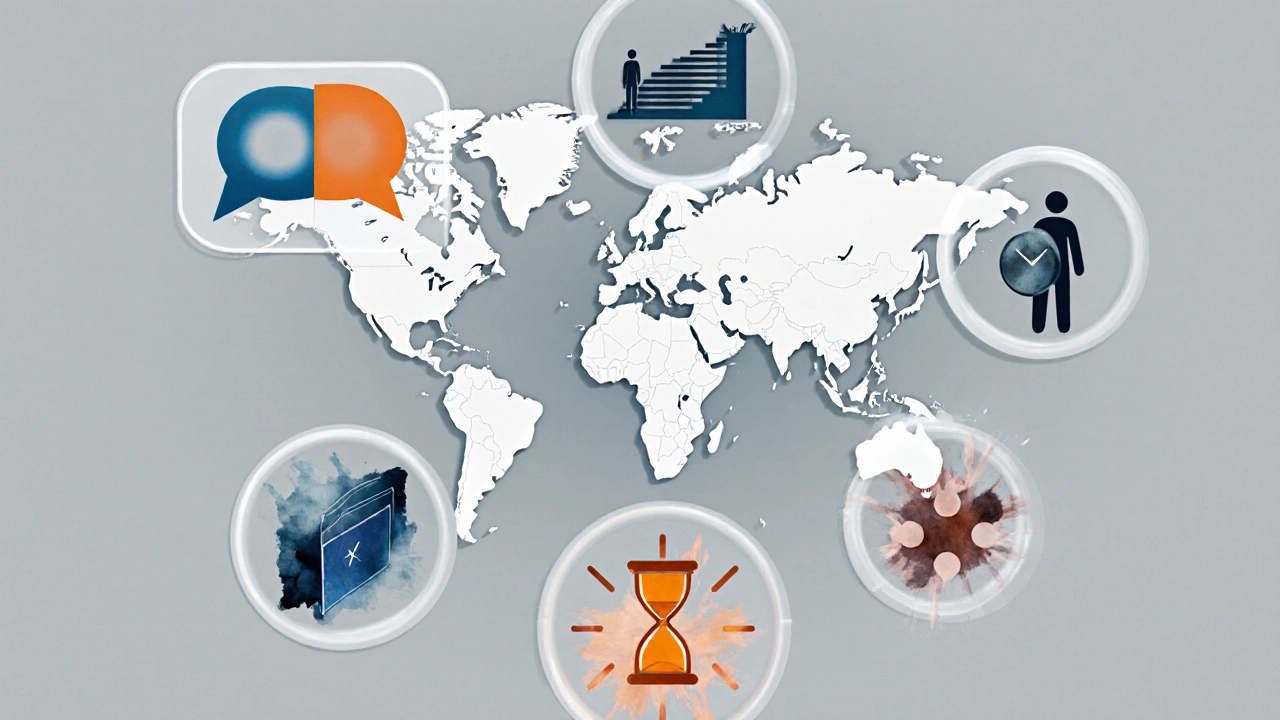
8 Key Types of Cultural Differences Explained
Explore the eight core types of cultural differences, from communication styles to gender norms, with practical tips, a comparison table, and FAQs to help you navigate global interactions.