Child Development: What Really Shapes a Child's Growth
When we talk about child development, the process through which children grow physically, emotionally, socially, and intellectually from birth through adolescence. Also known as early childhood development, it's not a checklist of milestones—it's a living, messy, beautiful chain of moments that build a person. Many parents think it’s about teaching ABCs early or pushing reading before five. But real development happens in the quiet spaces—in the way a child feels safe to fail, heard when they ask "why," and trusted to figure things out on their own.
One of the biggest misunderstandings? That early literacy, the foundation of reading skills built before formal schooling through exposure to language, stories, and print. Also known as pre-reading skills, it isn’t just about flashcards or apps. It’s about being read to, not just read at. It’s about a parent pointing to a picture and saying, "Look, that’s a dog," and letting the child name it next time. And when schools skip proper phonics instruction, a method of teaching reading by connecting sounds with letters or groups of letters. Also known as sound-based reading, it—as many do—kids don’t just fall behind. They start believing they’re "bad at reading," when really, they just weren’t taught the right way.
cognitive development, how a child’s thinking, reasoning, problem-solving, and memory abilities grow over time. Also known as mental development, it isn’t something you can speed up with expensive toys. It’s built through play, boredom, conflict, and curiosity. A child who builds a tower of blocks and watches it fall learns cause and effect better than any worksheet. A child who argues about bedtime learns negotiation, boundaries, and emotional regulation. These aren’t distractions from learning—they are learning.
And then there’s the emotional side—the part no one talks about enough. A child who feels safe to cry, to be angry, to be quiet, grows more resilient than one who’s told to "be strong" all the time. Parenting isn’t about fixing every problem. It’s about being the steady presence while they learn to solve them. That’s where real growth happens.
You’ll find posts here that dig into why phonics still matters in schools today, how reading habits shape young minds, what really happens when kids hit certain emotional thresholds, and why some children seem to "slow down"—not because they’re behind, but because they’re processing differently. There’s no magic formula. But there are patterns. There are truths. And there are stories from real parents, teachers, and researchers who’ve seen what works—and what doesn’t.
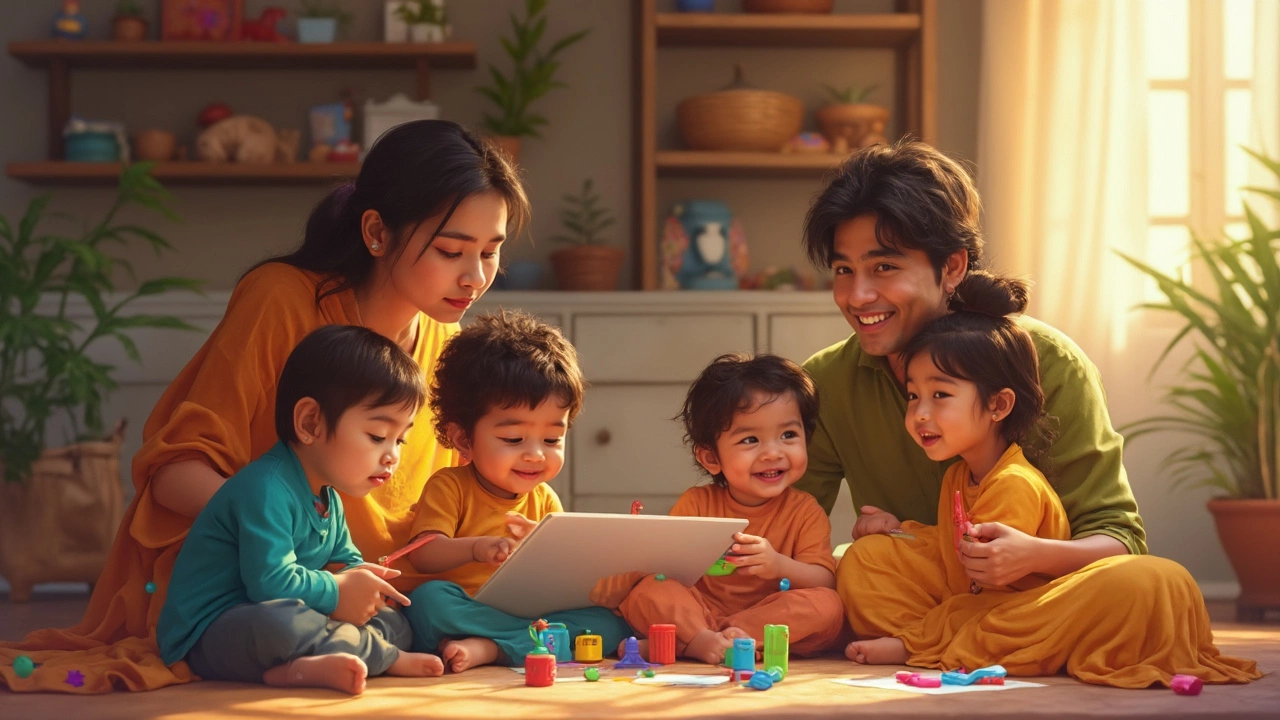
5 Essential Developmental Skills Every Child Needs to Succeed
Explore the five fundamental developmental skills children need for healthy growth. Learn real-life tips and practical facts for parents and caregivers.