Best-Selling Books Explorer & Quiz
Click on a book card to see details about its sales estimates and context.
You probably know that the Bible is the best-selling book of all time. It’s a safe bet, with estimates ranging from 5 to 7 billion copies distributed globally over two millennia. But what comes in second? If you guessed Harry Potter, you’re close, but not quite right. The answer is a Spanish novel written four centuries ago, long before modern publishing existed.
The second most-selling book of all time is Don Quixote by Miguel de Cervantes. Published in two parts in 1605 and 1615, this satirical masterpiece has sold an estimated 500 million copies worldwide. That number puts it ahead of the Harry Potter series (approx. 600 million) depending on how you count box sets versus individual volumes, but consistently places it just behind the Bible and often ahead of the Quran in secular sales metrics due to its massive educational adoption.
Why Don Quixote Holds the Silver Medal
It sounds counterintuitive. How does a dense, 17th-century Spanish text outsell modern thrillers? The answer lies in longevity and institutional support. Don Quixote isn’t just a story; it’s a cultural pillar. It has been translated into more languages than any other work except the Bible. Schools around the world mandate it. Governments fund editions. Libraries stock it. Unlike a trend-based bestseller that spikes and fades, Don Quixote has had 400 years to accumulate sales.
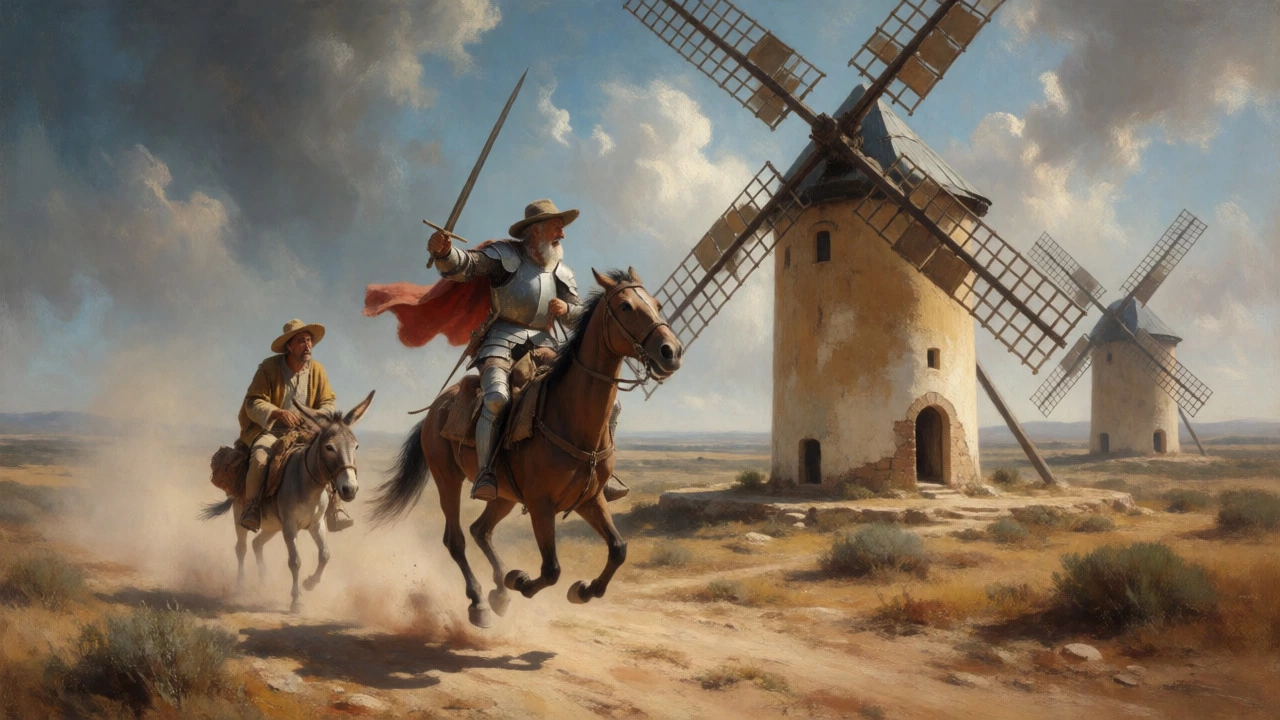
Cervantes didn’t write a simple adventure tale. He wrote a parody of chivalric romances that became the first modern novel. The protagonist, Alonso Quijano, reads so many knightly tales he loses his mind and decides to become a knight-errant named Don Quixote. His squire, Sancho Panza, provides the grounded, realistic counterpoint. This dynamic-idealism versus realism-is why the book remains relevant. Every generation sees themselves in one of those characters.
The Controversy Behind the Numbers
Counting book sales is messy. There’s no central database for every book ever printed. Publishers report different figures. Some count only hardcovers; others include paperbacks, e-books, and audiobooks. For religious texts, "sales" are tricky because billions of copies are given away for free or bought in bulk by churches. This makes comparing them to commercial novels like Don Quixote difficult.
Here’s where the debate gets heated. Some lists place the Quran second, citing similar distribution methods to the Bible. Others argue that since the Quran is primarily recited orally and memorized, its physical copy sales might be lower than a widely read novel. However, most independent literary analysts lean toward Don Quixote as the top non-religious seller. The Guinness World Records recognizes Don Quixote as the best-selling fiction book of all time, which implicitly makes it second overall if you exclude religious texts.
| Rank | Title | Author | Estimated Copies Sold | Category |
|---|---|---|---|---|
| 1 | The Bible | Various | 5-7 Billion | Religious Text |
| 2 | Don Quixote | Miguel de Cervantes | ~500 Million | Fiction / Satire |
| 3 | A Tale of Two Cities | Charles Dickens | ~200 Million | Historical Fiction |
| 4 | The Lord of the Rings | J.R.R. Tolkien | ~150 Million | Fantasy |
| 5 | Harry Potter Series | J.K. Rowling | ~600 Million* | Young Adult Fantasy |
*Note: Harry Potter figures often refer to the total series volume. Individual titles like Philosopher's Stone sell fewer units than the entire Don Quixote catalog across centuries.
How Sales Data Actually Works
You might wonder how we even know these numbers. In the early 20th century, tracking was nonexistent. We rely on publisher archives, library circulation data, and rights licensing records. For older books, estimates are educated guesses based on print runs. For newer books, we have better data thanks to ISBN tracking and digital platforms like Amazon and Kindle.
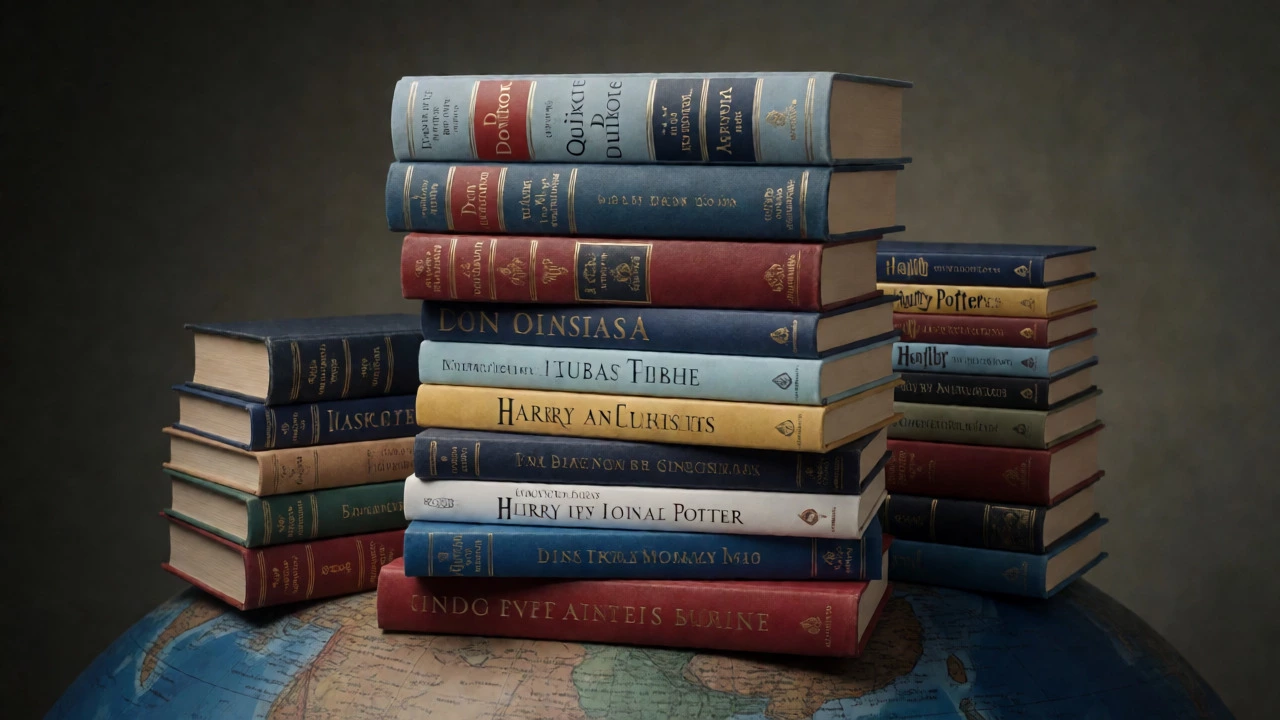
This shift matters. J.K. Rowling’s Harry Potter benefits from modern marketing machinery. A single launch day can move millions of copies. Don Quixote accumulated its sales slowly, through steady demand rather than hype cycles. This distinction helps explain why some lists fluctuate. If you count box sets as one sale, Harry Potter looks smaller. If you count each book in the set separately, it jumps up. Don Quixote is usually sold as one or two volumes, keeping its per-unit sales high but its aggregate series count lower.
Other Heavyweights in the Race
If Don Quixote feels too old-fashioned, look at the runners-up. Charles Dickens’ A Tale of Two Cities is often cited as the third best-selling book, with roughly 200 million copies sold. Its appeal spans classrooms and casual readers alike, driven by its dramatic plot set during the French Revolution.
J.R.R. Tolkien’s The Lord of the Rings sits near the top of the fiction list, too. While often counted as three separate books, they were originally conceived as one narrative. With over 150 million copies sold, it paved the way for the fantasy boom that later allowed Harry Potter to thrive. Without Tolkien, there likely wouldn’t be a Hogwarts.
Then there’s The Little Prince by Antoine de Saint-Exupéry. With about 140 million copies sold, it’s arguably the most translated novel after the Bible. It’s short, poetic, and universally loved, making it a staple in households worldwide. It proves that length doesn’t dictate sales power.
Why Historical Fiction Dominates the Lists
Notice a pattern? Many top sellers fall under historical fiction or classic literature. Why? Because these genres transcend trends. They deal with universal human experiences: love, war, identity, and loss. Contemporary thrillers might sell fast, but they rarely sustain sales over decades unless they become classics.
Don Quixote works because it’s funny, tragic, and deeply human. It questions reality. Are we living our own stories, or just acting out roles society gave us? That question keeps readers coming back, whether they’re students in Madrid or retirees in Tokyo. Modern historical fiction authors, like Ken Follett or Hilary Mantel, aim for this same timeless quality, though few achieve the multi-century staying power of Cervantes.
Should You Read It?
Yes, but choose your edition wisely. Translations vary wildly. Edith Grossman’s translation is praised for its readability and fidelity. Gregory Rabassa’s version is also highly regarded. Avoid overly archaic translations if you’re new to the text. Start with Part One. It’s shorter and introduces the core humor effectively.
Reading Don Quixote isn’t just about checking off a "greatest hits" list. It’s about understanding the roots of modern storytelling. Every meta-narrative, every unreliable narrator, every character who breaks the fourth wall owes a debt to Cervantes. When you read it, you’re connecting with a tradition that started 400 years ago and hasn’t stopped evolving.
Is Harry Potter the second best-selling book?
No, Harry Potter is typically ranked lower when considering individual titles, though the entire series sells hundreds of millions. Don Quixote generally holds the spot for the highest-selling single fictional work, excluding religious texts.
Why is the Bible considered the best-selling book?
The Bible is distributed freely by religious organizations and purchased by individuals globally for over 2,000 years. Estimates range from 5 to 7 billion copies, far exceeding any commercial novel.
How accurate are book sales estimates?
They are approximations. Older books lack precise records, relying on print run estimates. Modern books have better tracking via ISBNs and digital platforms, but self-published and international sales remain hard to quantify perfectly.
Does the Quran rank higher than Don Quixote?
Some lists place the Quran second due to high distribution in Muslim-majority countries. However, because many copies are given away or used for prayer rather than linear reading, secular rankings often prioritize Don Quixote as the top-selling narrative fiction.
What is the easiest translation of Don Quixote?
Edith Grossman’s translation is widely recommended for modern English readers. It balances accuracy with accessible language, making the humor and wit shine without feeling outdated.