Harry Potter Genre Analyzer
Answer these questions about what you love most in the Wizarding World to see where you fall on the spectrum.
Recommended Reads Based on Your Score:
Most people think of Harry Potter as the ultimate example of low fantasy, but that label misses half the story. J.K. Rowling didn't just drop a wizard into London; she built an entire parallel society with its own physics, politics, and history. This creates a fascinating hybrid that defies simple categorization. If you've ever argued with friends about whether Hogwarts counts as a secondary world or just a hidden corner of our own, you're touching on one of the most debated topics in modern literature.
The confusion stems from how we define "fantasy" itself. It's not just about magic spells or flying broomsticks. It's about where the story lives and how it interacts with reality. To settle this debate, we need to look at what actually defines high versus low fantasy, examine the specific mechanics of the Wizarding World, and see why Harry Potter sits comfortably in the messy middle ground known as urban fantasy or portal fantasy.
Defining the Spectrum: High vs. Low Fantasy
Before we judge Harry Potter, we have to agree on the rules of the game. Literary critics generally divide fantasy into two main camps based on the relationship between the fictional world and the real world.
High Fantasy is a subgenre set in an entirely fictional universe, often called a secondary world, with its own laws of nature, geography, and history. Think of The Lord of the Rings or A Game of Thrones. In these stories, Earth doesn't exist. The characters don't know what a car or a smartphone is because those things were never invented in their world. The stakes are usually epic-saving the world, stopping a dark lord, or fulfilling an ancient prophecy. The tone is often grand, mythic, and detached from modern daily life.
Low Fantasy is a subgenre where magical elements intrude upon the real, contemporary world. Also known as urban fantasy or contemporary fantasy, this type keeps the setting grounded in places we recognize-New York, London, Tokyo-but adds supernatural layers. Characters still pay rent, go to school, and worry about jobs. Examples include Neverwhere by Neil Gaiman or The Dresden Files. Here, the conflict often feels more personal or localized, even if the consequences are big.
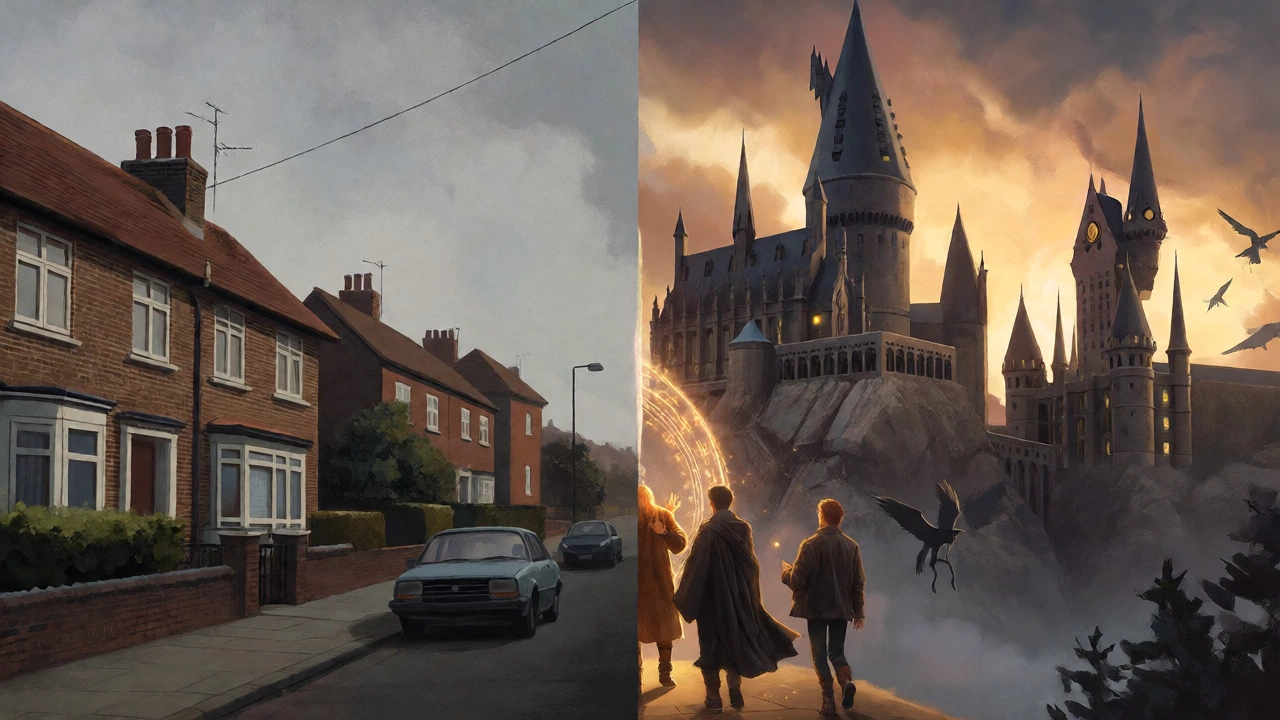
So, where does Hogwarts fit? It has the epic scope of high fantasy but the familiar setting of low fantasy. This duality is exactly why fans struggle to pick a side.
The Case for Low Fantasy: Grounded in Reality
If you look at the surface level, Harry Potter looks like classic low fantasy. The story starts in Surrey, England, in a normal house with a normal staircase under the stairs. Harry isn't born into royalty in a distant land; he's an orphan living with relatives who drive a Ford Anglia and watch television.
Several key factors push Harry Potter toward the low fantasy category:
- Familiar Geography: London, Diagon Alley, and Hogsmeade are mapped onto real-world locations. You can theoretically walk from King's Cross Station to Platform 9¾.
- Contemporary Timeline: The books take place in the 1990s. Muggles use computers (eventually), cars fly (rarely), and pop culture references align with our own timeline.
- Hidden Society Trope: The core premise is that magic exists alongside non-magic people. This "masquerade" setup is a hallmark of urban fantasy, where the secret world hides in plain sight.
- Relatable Problems: Despite the dragons, Harry deals with homework, bullying, exams, and awkward teenage romance. These are universal human experiences, not mythical quests.
Because the boundary between the magical and mundane worlds is porous, readers can easily imagine themselves stepping through the veil. That accessibility is a defining trait of low fantasy. It invites the reader to ask, "What if magic was real, but hidden right next door?"
The Case for High Fantasy: A Secondary World Within Our Own
Now, let's flip the script. Many scholars argue that Harry Potter is secretly high fantasy wearing a trench coat. Why? Because the Wizarding World functions almost independently of the Muggle world. Once you cross the threshold into Hogwarts, the rules of reality change completely.
Consider the isolation of the magical community. Wizards largely ignore Muggle technology. They don't understand electricity, they find airplanes baffling, and they view banking systems as quaint curiosities. This cultural separation suggests that the Wizarding World is effectively a separate civilization-a secondary world nested inside ours.
Here’s why the high fantasy argument holds weight:
- Distinct Laws of Physics: Magic operates on its own logic. Transfiguration, potion-making, and time-turners follow internal consistency that has nothing to do with real-world science.
- Epic Stakes: By the later books, the plot involves global wars, the rise of a dark lord seeking immortality, and the fate of the entire magical species. This scale matches traditional high fantasy epics.
- Mythological Depth: Rowling drew heavily from Celtic mythology, alchemy, and folklore. Creatures like hippogriffs, basilisks, and phoenixes are archetypal high fantasy staples.
- Institutional History: Hogwarts has a thousand-year history, founded by four legendary wizards. The Ministry of Magic has centuries of bureaucratic tradition. This depth of lore mirrors the world-building found in Tolkien’s Middle-earth.
In essence, while the map overlaps with Earth, the culture, history, and physics form a distinct entity. If you removed all Muggles, the Wizarding World would continue to function perfectly. That autonomy is a key characteristic of high fantasy settings.
The Hybrid Solution: Portal Fantasy and Urban Fantasy
Trying to force Harry Potter into a single box leads to frustration. Instead, it helps to look at more precise subgenres that capture its hybrid nature. Two terms fit best: Portal Fantasy and Urban Fantasy.
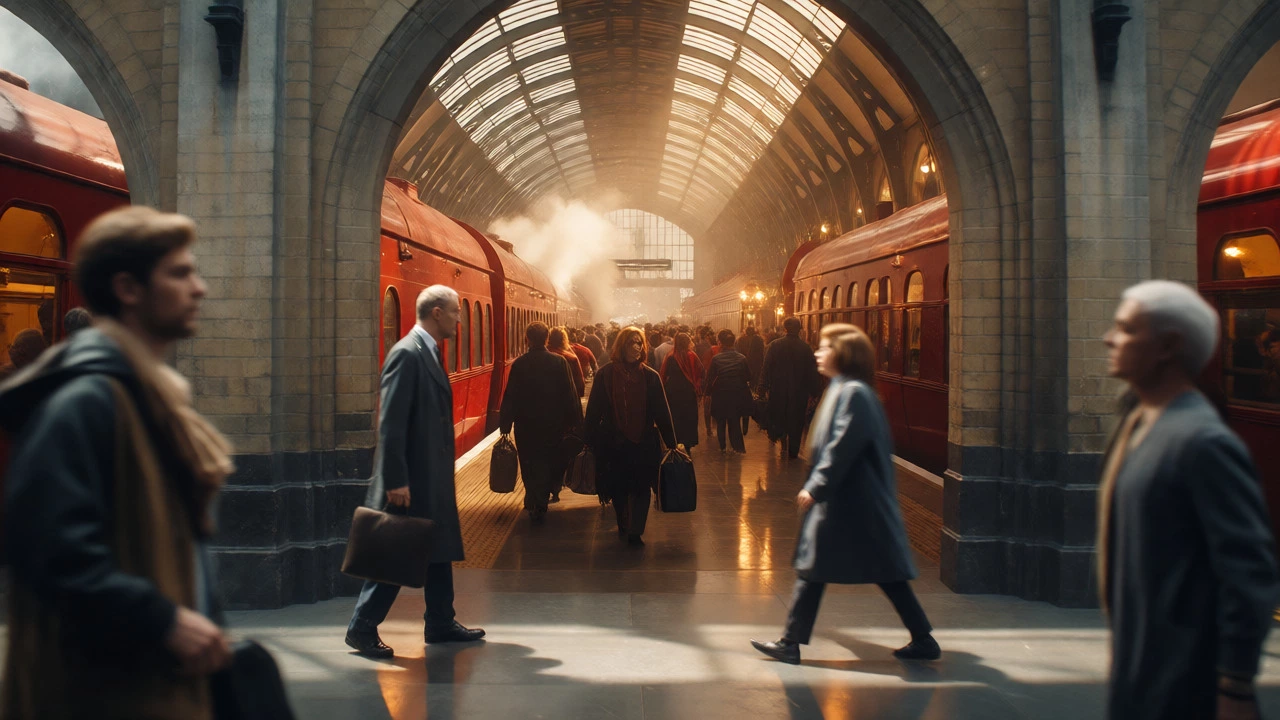
Portal Fantasy describes stories where characters travel from the ordinary world to a magical realm via a specific gateway. For Harry, the train station platform, the Leaky Cauldron brick wall, and the Portkeys serve as these portals. Each book reinforces the idea that leaving the Muggle world is a deliberate act of crossing over. This structure allows Rowling to switch tones seamlessly. When Harry is at the Dursleys', it's realistic fiction. When he's at Hogwarts, it shifts to high-stakes adventure.
Urban Fantasy focuses on the interaction between magic and modern city life. While Hogwarts is rural, much of the action happens in London. The contrast between the chaotic, magical energy of Diagon Alley and the rigid order of Muggle London drives much of the narrative tension. The series explores how a hidden society adapts to-or rejects-modern progress. This sociological focus is typical of urban fantasy, which often uses magic as a metaphor for social class, secrecy, and identity.
| Feature | High Fantasy | Low Fantasy | Harry Potter |
|---|---|---|---|
| Setting | Secondary World (e.g., Middle-earth) | Real World (e.g., Modern NYC) | Hybrid: Real World with Hidden Magical Zones |
| Protagonist Origin | Native to the Fantasy World | Ordinary Human discovering Magic | Ordinary Human entering Magical Society |
| Magic System | Integral to World Physics | Intrusive/Exceptional | Systematic but Separate from Muggle Life |
| Tone | Mythic/Epic | Gritty/Personal | Coming-of-Age/Adventure |
| Relationship to Earth | Earth does not exist | Earth is the stage | Earth is the container; Magic is a subset |
Why the Classification Matters for Readers
You might wonder, "Who cares what label we put on it?" Well, understanding the genre helps you predict the reading experience and find similar books. If you love Harry Potter because of the cozy, hidden-world aspect, you’re likely drawn to low fantasy vibes. If you love it for the intricate lore and epic battles, you’re leaning toward high fantasy preferences.
Knowing this distinction saves you time when shopping for your next read. Let's break down recommendations based on which part of Harry Potter appeals to you most.
If you prefer the Low Fantasy/Urban aspect: Look for books where magic bleeds into modern cities. Try Sidewalk School by Sarah Rees Brennan or Rivers of London by Ben Aaronovitch. These series keep the protagonist in the real world, dealing with police work, taxes, and dating, all while handling supernatural threats. The magic feels dangerous and unpredictable, just like the early chapters of Harry Potter.
If you prefer the High Fantasy/World-Building aspect: You’ll want books with deep histories and complex magic systems. Consider The Name of the Wind by Patrick Rothfuss or The Fifth Season by N.K. Jemisin. These authors build worlds from scratch, with unique languages, religions, and political structures. The immersion is total, removing the safety net of recognizing street names or brands.
If you want the exact Hybrid Blend: Check out Percy Jackson & The Olympians by Rick Riordan. Like Harry Potter, it mixes Greek mythology with modern American suburbia. Or try The Magicians by Lev Grossman, which deconstructs the boarding school fantasy trope by placing it in a gritty, realistic college setting.
J.K. Rowling’s Intent: Accessibility Over Purity
Rowling herself has rarely commented on academic genre debates, but her writing choices reveal her priorities. She wanted children to feel that magic could be close to home. By anchoring the story in recognizable British culture-boarding schools, public transport, family dynamics-she lowered the barrier to entry for young readers.
Had she written pure high fantasy, the learning curve would have been steeper. Readers would need to grasp new currencies, calendars, and social norms before even meeting the hero. By using a low fantasy framework, she allowed readers to learn the magical rules gradually, alongside Harry. This pedagogical approach is a masterclass in genre blending. It proves that strict adherence to genre definitions isn’t necessary for commercial success or emotional resonance.
Furthermore, the ambiguity serves the theme. The central conflict in Harry Potter isn’t just good vs. evil; it’s purity vs. mixing. The villains want to keep the magical world separate and superior. The heroes embrace the connection between worlds. In a way, the genre structure mirrors the moral argument. The "hybrid" nature of the story validates the mixed heritage of characters like Hermione Granger and Harry himself.
Beyond the Binary: Other Classifications to Consider
While "high" and "low" are the standard terms, other labels offer useful nuance. Some critics classify Harry Potter as Children’s Fantasy or Young Adult Fantasy, focusing on the target audience rather than the world structure. Others call it Boarding School Fantasy, highlighting the institutional setting.
There’s also the term Cozy Fantasy, though Harry Potter is too violent for that label. However, the comfort provided by Hogwarts-the warm common rooms, the food, the friendships-is a crucial element. This "coziness" contrasts sharply with the brutal realism of many adult high fantasies. It’s a reminder that genre isn’t just about geography; it’s about emotional tone.
Ultimately, asking if Harry Potter is high or low fantasy is like asking if a sandwich is bread or filling. It’s both. The magic works because it bridges the gap. It offers the escape of a secondary world without the alienation of losing touch with reality. That balance is its greatest strength.
Frequently Asked Questions
Is Harry Potter considered urban fantasy?
Yes, partially. While much of the action takes place in the rural setting of Hogwarts, the series relies heavily on urban fantasy tropes, such as a hidden magical society existing within modern London. The interaction between the magical and non-magical worlds in cities like London fits the definition of urban fantasy.
Why is Harry Potter not considered pure high fantasy?
Pure high fantasy typically features a secondary world completely disconnected from Earth. Harry Potter is set in a version of our real world where magic coexists with mundane life. Because characters reference real historical events, use modern technology (or reject it knowingly), and live in recognizable countries, it lacks the total isolation required for the "pure" high fantasy label.
Does the classification affect the book's themes?
Absolutely. The hybrid nature of the genre supports the theme of integration versus segregation. The tension between the hidden magical world and the visible Muggle world mirrors the social commentary on prejudice and acceptance. A purely high fantasy setting wouldn't allow for the same direct critique of contemporary societal issues.
Are there other famous examples of hybrid fantasy?
Yes, many popular series blur the lines. The Chronicles of Narnia uses portal fantasy to connect Earth to a high fantasy world. His Dark Materials by Philip Pullman mixes our world with parallel universes. Discworld by Terry Pratchett is a secondary world that frequently comments on and interacts with concepts from our own reality.
Which subgenre should I explore if I like Harry Potter?
If you liked the mystery and hidden world aspects, try urban fantasy like Rivers of London. If you preferred the detailed world-building and epic battles, try high fantasy like The Stormlight Archive. If you enjoyed the coming-of-age boarding school vibe, look for contemporary fantasy series focused on magical academies.