Cultural Forms Identifier
Analysis
Primary Function
Cultural Type
Select an example to see how it functions as a cultural form.
Think about your morning routine. You wake up, check your phone, maybe grab a coffee, and head to work or school. Now imagine someone from a completely different part of the world doing the same thing. Their "morning" might involve a specific prayer, a communal meal, or a greeting ritual that signals respect to elders. These aren't just random habits; they are cultural forms. They are the visible, tangible ways we express who we are as groups.
If you've ever wondered why people celebrate certain holidays, wear specific clothing, or tell stories in particular ways, you're looking at cultural forms in action. This concept sits right at the heart of how societies function. It’s not just about art or music; it’s about the structures that hold our shared meanings together. Understanding these forms helps us see the invisible threads that connect individuals into communities.
Defining Cultural Forms: More Than Just Art
When people hear the term "culture," they often think of museums, operas, or traditional dances. While those are definitely part of it, Cultural forms are the distinct patterns, structures, and mediums through which a society expresses its values, beliefs, and social norms. Think of them as the vessels for culture. If culture is the water, cultural forms are the cups, bowls, and bottles we use to carry it.
Sociologists and anthropologists break these down into categories. You have material forms (things you can touch), non-material forms (ideas and rules), and expressive forms (art and communication). For example, a wedding ring is a material form. The promise of lifelong commitment is a non-material form. The ceremony itself is an expressive form. All three work together to create a single cultural event.
Why does this distinction matter? Because it helps us analyze how societies change. When technology shifts, our cultural forms shift with it. We used to pass down family history through oral storytelling around a fire. Today, we do it through digital photo albums and social media posts. The medium changed, but the cultural function-preserving memory and identity-remained the same.
The Power of Rituals and Ceremonies
Rituals are perhaps the most recognizable cultural forms. They are repeated actions that have symbolic meaning. They mark transitions, reinforce social bonds, and provide comfort in uncertain times. You don't need to travel far to see them. Consider the handshake. In many Western business contexts, a firm handshake is a ritual of trust and agreement. In Japan, a bow serves a similar purpose but communicates hierarchy and respect differently.
Let's look at life-cycle rituals. Birth, coming of age, marriage, and death are universal human experiences, but the cultural forms surrounding them vary wildly.
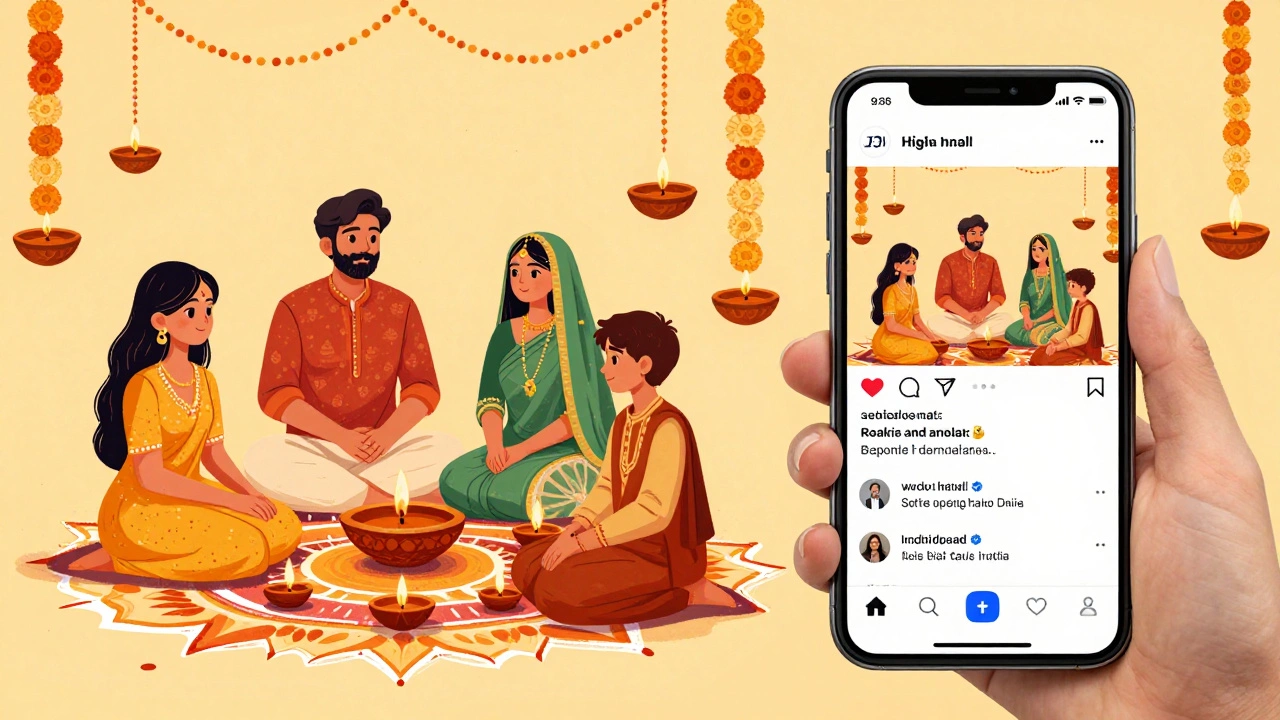
- Weddings: In India, weddings are often multi-day affairs involving complex religious rites, vibrant colors like red and gold, and large community gatherings. In contrast, a secular civil ceremony in Australia might be a brief legal signing followed by a casual dinner. Both are cultural forms of union, but they signal different values regarding religion, community, and individualism.
- Funerals: Some cultures view death as a somber end, marked by black clothing and quiet mourning. Others, like the Day of the Dead in Mexico, celebrate the deceased with bright altars, food, and music. This isn't a contradiction; it's a different cultural form for processing grief and remembering ancestors.
These rituals aren't arbitrary. They serve a "job-to-be-done" for the community. They reduce anxiety during big life changes and remind everyone of their place in the social order. When you participate in a ritual, you're not just going through the motions; you're actively maintaining the social fabric.
Artistic Expression: Music, Dance, and Visual Arts
Art is often seen as separate from daily life, but it is one of the most potent cultural forms. It captures the emotional essence of a society. Music, for instance, is never just sound. It carries history, resistance, joy, and sorrow.
Consider Blues music in the United States. It emerged from the African American experience in the Deep South. Its structure-call and response, specific chord progressions-is a cultural form that encoded pain and resilience. Similarly, K-Pop in South Korea is a highly structured cultural form that blends traditional musical elements with modern pop aesthetics, serving as a vehicle for national soft power and youth identity.
Dance operates on the same level. Ballet in Europe historically reflected aristocratic courtship and discipline. Breakdancing in the Bronx emerged from street culture as a form of competition and self-expression without weapons. When you watch a dance performance, you're watching a physical manifestation of a group's values about movement, space, and interaction.
| Cultural Form | Primary Function | Example Context | Key Attribute |
|---|---|---|---|
| Blues Music | Emotional catharsis / Historical record | African American communities, USA | Call-and-response structure |
| Ballet | Aesthetic display / Courtly tradition | European courts / Modern theaters | Strict technique / Hierarchy |
| K-Pop | Youth identity / National branding | South Korea / Global fans | High production value / Group harmony |
| Day of the Dead Altars | Ancestor veneration / Celebration | Mexico / Latin America | Visual symbolism / Food offerings |
Visual arts, including architecture and fashion, also act as cultural forms. The design of a building tells you what a society prioritizes. A cathedral points upward, emphasizing spirituality. A glass skyscraper emphasizes commerce and transparency. Even your choice of jeans versus a kimono is a cultural statement about comfort, tradition, and status.
Narratives and Storytelling: How We Make Sense
Humans are storytelling animals. Narratives are the framework through which we understand reality. Cultural narratives are shared stories that explain a society's origins, values, and moral codes. These aren't just fairy tales; they include news media, political speeches, religious texts, and even memes.
Myths are foundational cultural forms. The Greek myth of Prometheus stealing fire explains the origin of human knowledge and the cost of defying authority. Indigenous Australian Dreamtime stories map the land and define spiritual responsibilities. These stories aren't "facts" in a scientific sense, but they are true in a cultural sense because they guide behavior.
In the modern era, cinema and television have become dominant narrative forms. Hollywood films often promote individualism and the "self-made" hero. Bollywood films frequently emphasize family duty, romance, and collective joy. When you watch a movie, you're absorbing a cultural script about how life should be lived. This is why cross-cultural misunderstandings happen so easily-we're operating on different narrative software.
Even humor is a cultural form. What is funny in one culture might be offensive or incomprehensible in another. Stand-up comedy relies on shared assumptions. If you don't share the cultural context, the joke falls flat. This highlights how tightly bound our expressive forms are to our specific social environments.
Languages and Communication Styles
Language is the ultimate cultural form. It doesn't just describe reality; it shapes it. The Sapir-Whorf hypothesis suggests that the structure of your language affects how you perceive the world. While extreme versions of this theory are debated, it's clear that language carries cultural baggage.
Consider honorifics. In Japanese and Korean, you must change your speech depending on who you're talking to-your boss, your friend, or your child. This linguistic form reinforces social hierarchy and respect. In English, we largely lost these distinctions, reflecting a cultural shift toward egalitarianism (even if it's not always practiced).
Non-verbal communication is equally important. Eye contact, personal space, and silence all have cultural meanings. In some Middle Eastern cultures, standing close and maintaining intense eye contact shows sincerity. In Northern European cultures, that same behavior might feel aggressive or intrusive. These are subtle cultural forms that regulate social interaction without a single word being spoken.
Digital communication has created new sub-forms. Emojis, GIFs, and texting abbreviations are evolving rapidly. Gen Z uses sarcasm and irony differently than Millennials did. These micro-forms help build in-group identity and exclude outsiders, functioning just like traditional dialects or slang.
Material Culture: Objects That Define Us
We often overlook the objects around us as cultural forms, but they are deeply meaningful. Material culture includes tools, clothing, food, and technology. Every object tells a story about resource availability, aesthetic preferences, and social status.
Food is a prime example. The French baguette isn't just bread; it's a symbol of daily routine, craftsmanship, and national identity. Fast food chains represent globalization, efficiency, and standardization. When you eat, you're participating in a cultural ritual that connects you to farmers, cooks, and historical trade routes.
Clothing serves multiple functions. It protects from the elements, yes, but it also signals gender, profession, and affiliation. A judge's robe signifies impartiality and authority. A sports jersey signals team loyalty. Religious garments, like hijabs or turbans, visibly declare faith and devotion. Fashion trends cycle rapidly, showing how cultural forms adapt to economic and social pressures.
Technology is the newest major player in material culture. Smartphones are now extensions of ourselves. The way we use them-checking notifications constantly, curating Instagram feeds-reflects cultural values around connectivity, validation, and immediacy. The shift from landlines to mobiles changed not just how we talk, but how we structure our days and relationships.
How Cultural Forms Change Over Time
Culture is not static. Cultural forms evolve through innovation, diffusion, and collision. Globalization accelerates this process. You can find sushi in Sydney, tacos in Tokyo, and hip-hop in Berlin. This mixing creates hybrid cultural forms. K-Pop, for instance, blends American R&B with Korean traditions. Nollywood (Nigerian cinema) adapts Hollywood tropes to local realities.
Resistance also drives change. Subcultures create counter-cultural forms to challenge the mainstream. Punk rock, with its ripped clothes and anti-establishment lyrics, was a direct rejection of 1970s consumerism. Today, digital activism and meme culture serve similar roles, allowing marginalized groups to voice dissent and reshape narratives.
Understanding these dynamics helps us navigate a complex world. It allows us to appreciate diversity without judgment. It helps businesses market effectively across borders. And it helps individuals find their own place within the larger human story.
What is the difference between material and non-material culture?
Material culture refers to physical objects created by a society, such as buildings, clothing, tools, and art. Non-material culture consists of intangible ideas, beliefs, values, norms, and languages. For example, a church building is material culture, while the religious beliefs practiced inside it are non-material culture. Both are essential cultural forms that work together.
Can technology be considered a cultural form?
Yes, technology is a significant material cultural form. However, the way a society uses technology reflects its non-material culture. For instance, while smartphones are global, the apps people use, the content they share, and the etiquette around screen time vary culturally. Technology shapes and is shaped by cultural values.
Why do rituals persist in modern societies?
Rituals persist because they fulfill deep psychological and social needs. They provide structure, reduce anxiety during transitions, and strengthen group cohesion. Even secular rituals like New Year's Eve countdowns or graduation ceremonies offer a sense of shared experience and continuity in a fast-changing world.
How do cultural forms affect international business?
Cultural forms influence communication styles, negotiation tactics, and consumer preferences. Misunderstanding local rituals or symbols can lead to failed deals. Successful global companies adapt their marketing and operations to respect local cultural forms, such as adjusting product packaging for religious holidays or hiring local managers who understand social nuances.
What role do myths play in contemporary culture?
Myths continue to shape modern culture through movies, literature, and political rhetoric. Superhero films are modern myths that explore themes of justice, power, and sacrifice. Political leaders often use mythic narratives to inspire nationalism or unity. These stories provide frameworks for understanding complex societal issues.