
Every story you’ve ever loved - from bedtime tales to blockbuster movies - isn’t just entertainment. It’s a tool. A quiet, powerful one that shapes how we see the world, who we think we are, and what we believe is possible. The ultimate purpose of a narrative isn’t to amuse. It’s to make sense of chaos.
Stories Give Order to the Unexplainable
Life doesn’t come with a script. Bad things happen to good people. Jobs vanish. Relationships break. Wars start over land no one can name. Without stories, these events feel random. Meaningless. That’s why every culture, no matter how isolated, invented myths, legends, and parables. They didn’t do it to pass time. They did it to say: this happened for a reason.
Take the Greek myth of Sisyphus. Condemned to roll a boulder up a hill forever, he never wins. But the story doesn’t end with despair. It asks: What if meaning isn’t in the outcome, but in the act itself? That’s not just philosophy. It’s survival. People facing impossible odds - famine, oppression, grief - hold onto stories that say: your struggle matters.
Narratives Build Identity - Individual and Collective
Who are you? Not just your name or job, but the core of your identity. You didn’t figure that out by reading a spreadsheet. You figured it out through stories. The ones your family told about your grandparents. The ones your school taught about heroes. The ones your society repeats in songs, films, and news cycles.
Native American tribes passed down origin stories not as history lessons, but as maps of belonging. They didn’t just say, we came from the earth. They said, we are the earth. That’s not poetry. It’s a declaration of relationship. It tells a child: you are part of something older than your worries.
On a national level, the American Dream isn’t a policy. It’s a narrative: work hard, pull yourself up, succeed. Millions believe it. Some do. Others are crushed by it. But the story persists because it answers a deep question: Can I change my life? The answer isn’t always true - but the story gives people something to reach for.
Cultural Narratives Hold Societies Together
Imagine a country with no shared stories. No founding myths. No national holidays rooted in legend. No songs about sacrifice or resilience. It wouldn’t just feel empty. It would fall apart. People need common ground. Stories create it.
Japan’s mono no aware - the awareness of impermanence - isn’t just an aesthetic. It’s a cultural narrative that shapes everything from architecture to business. It tells people: things end. That’s not failure. That’s beauty. This belief softens loss. It reduces panic over change. It’s why a cherry blossom falling is mourned, not ignored.
Compare that to the Western narrative of progress: always moving forward, always improving. It drives innovation. But it also makes people feel like failures when they slow down. Both stories are true in their own context. Neither is universal. But both are necessary. They keep groups aligned, even when they disagree.
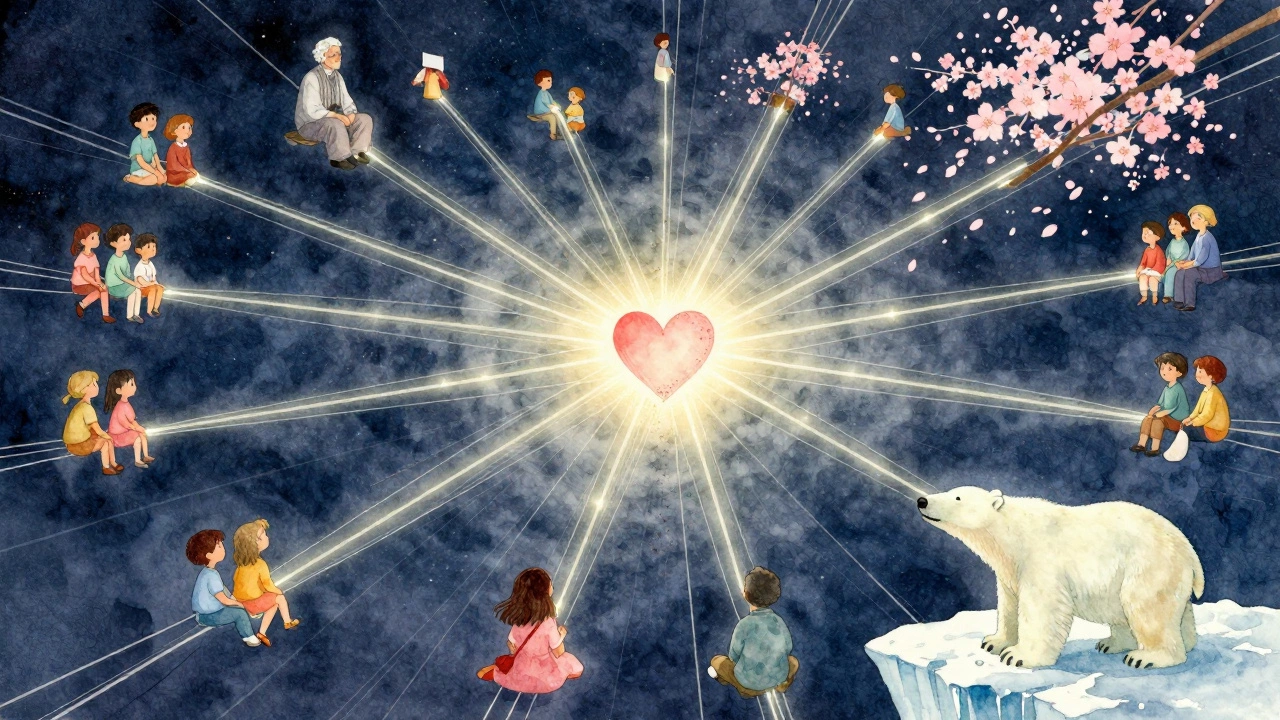
Narratives Shape Behavior - Without Commands
Do you recycle? Vote? Speak up when someone’s treated unfairly? You didn’t do it because someone gave you a rulebook. You did it because a story convinced you it was the right thing.
Environmental movements don’t win by showing graphs of CO2 levels. They win by telling stories: the polar bear on melting ice, the child breathing polluted air, the farmer watching crops die. These aren’t statistics. They’re characters. And characters make us feel. Feelings move us to act.
Same with civil rights. Martin Luther King Jr. didn’t just give speeches. He told a story: the arc of the moral universe bends toward justice. That phrase didn’t come from a law. It came from a biblical narrative. It gave people hope when the system was stacked against them. It turned anger into action.
Stories Are the Original Software
Think of your brain as a computer. It doesn’t run on facts. It runs on narratives. That’s why you can remember a story from childhood but forget your last email. Your brain is wired to track cause and effect, characters and change, tension and resolution.
Neuroscience confirms this. When you hear a story, multiple areas of your brain light up - not just the language centers, but the ones tied to emotion, memory, and even movement. You don’t just listen. You experience. That’s why a well-told story can change your mind faster than a thousand data points.
Advertisers know this. Politicians know this. Religious leaders know this. They don’t sell products or policies. They sell stories. Be the hero. Save the day. Rise above. Those aren’t slogans. They’re ancient narrative templates that still work because they tap into something deeper than logic.
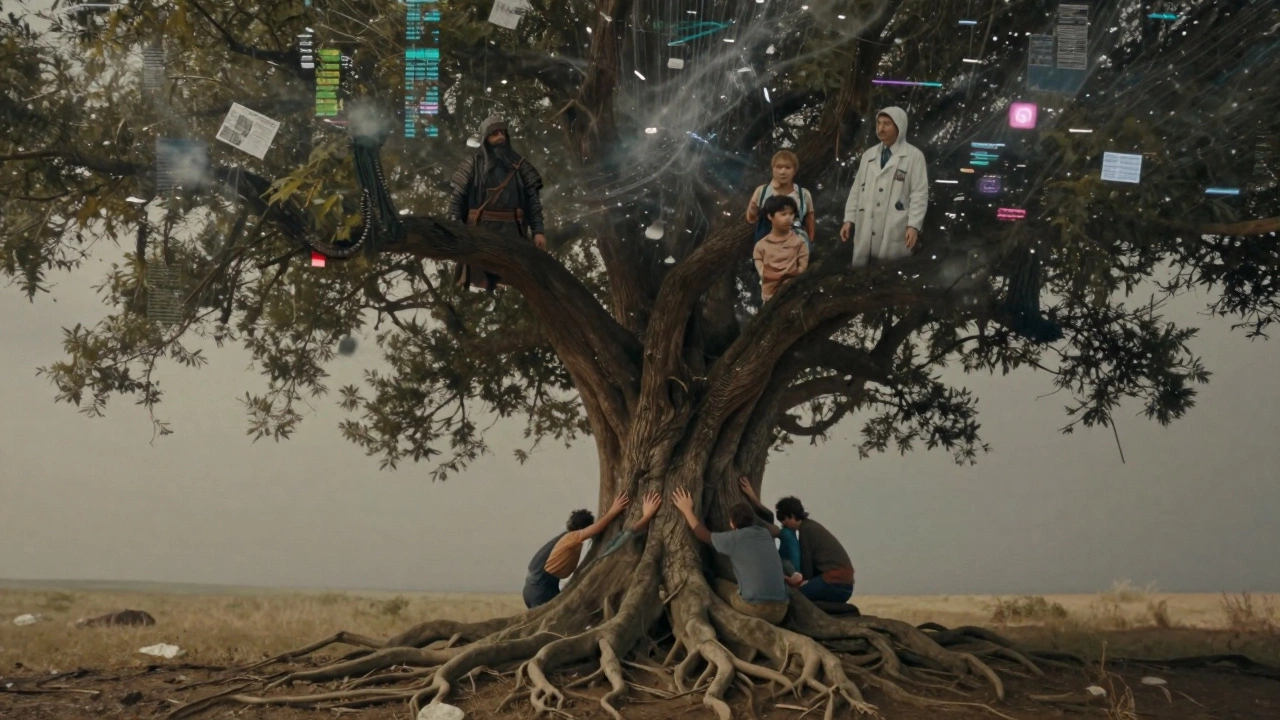
The Dark Side: Narratives Can Trap Us Too
But stories aren’t neutral. They can be weapons. The narrative that some people are naturally superior has justified slavery, genocide, and discrimination for centuries. The story that success means wealth makes people feel worthless if they’re poor. The myth that hard work always pays off blames victims instead of systems.
These aren’t accidents. They’re narratives designed to maintain power. They sound like truth because they’re repeated so often - in news, schools, movies, even family conversations. The danger isn’t that stories are false. It’s that we forget they’re stories at all.
Recognizing a narrative as a story - not a law of nature - is the first step to changing it. That’s why critical thinking isn’t about memorizing facts. It’s about asking: Whose story is this? Who benefits? What’s left out?
Why We Still Need Stories in a Digital Age
We live in a world of data. Algorithms. Real-time updates. Yet, we’re more lost than ever. Why? Because information doesn’t give meaning. Stories do.
Scrolling through endless feeds doesn’t connect us. It isolates us. But a shared story - a viral video of strangers helping each other, a podcast about grief, a novel about immigration - brings us back to each other. We don’t just see someone’s pain. We feel it. And that’s what moves humanity forward.
The ultimate purpose of a narrative isn’t to inform. It’s to connect. To remind us we’re not alone. To show us that even in darkness, there’s a path. Not because the path is easy. But because someone told us it exists.
Is the purpose of a narrative always positive?
No. Narratives can be used to uplift or to control. A story that says everyone has a chance can inspire. A story that says only certain people deserve success can justify inequality. The same structure - character, conflict, resolution - can serve justice or oppression. What matters is who tells it, who benefits, and whether it includes or excludes.
Can a single story change a culture?
Yes, but rarely alone. A single story needs repetition, reinforcement, and time. The #MeToo movement didn’t start with one tweet. It grew because thousands of people told variations of the same story: I was silenced. When enough voices align, the narrative shifts. Cultural change happens when the old story loses its power to explain reality, and a new one takes its place.
How do I recognize a cultural narrative I’ve internalized?
Look for beliefs you never questioned. Work hard and you’ll succeed. Men don’t cry. Family comes first, always. These aren’t facts. They’re stories you absorbed from TV, school, family, or religion. Ask yourself: When did I first hear this? Who said it? What happens if I don’t follow it? If the answer feels scary or shameful, you’ve likely internalized a cultural narrative.
Are personal stories different from cultural ones?
Personal stories are individual experiences shaped by culture. A woman telling how she survived abuse is a personal story. But when millions of women tell similar stories, and society starts listening - that becomes a cultural narrative. Personal stories are the raw material. Cultural narratives are the patterns that emerge when those stories repeat across groups.
Why do some stories last thousands of years?
Because they answer timeless human questions: Why are we here? What happens after death? How do we live with suffering? Stories like the hero’s journey, the flood myth, or the trickster figure appear in cultures across the globe because they reflect deep psychological patterns. They’re not about events. They’re about inner struggles - fear, courage, loss, rebirth - that every person faces, no matter the time or place.