
Self-Help vs Personal Development Assessment Tool
Growth Strategy Check
Are you fixing problems or building potential?
I have a problem (anxiety, procrastination, debt) I need to fix immediately.
I want to understand myself better and build long-term resilience.
💡Recommended Action
You’ve probably noticed that bookstores and online stores often put Self-help books are publications designed to help readers solve personal problems or improve their lives through practical advice right next to sections labeled "Personal Growth" or "Development." It feels like they’re the same thing. After all, aren’t we all just trying to get better at life? But if you’ve ever bought a quick-fix guide on how to stop procrastinating and then felt guilty for not sticking to it, while also reading a deep dive into habit formation that changed your perspective over months, you might sense there’s a distinction here.
The confusion is understandable. The terms are used interchangeably in marketing, social media, and even casual conversation. However, understanding the gap between Self-help is a genre focused on immediate solutions and specific problem-solving techniques and Personal development is a lifelong process of enhancing one's skills, character, and overall well-being through continuous learning and reflection can save you time, money, and frustration. One offers a band-aid; the other builds the immune system. Let’s break down exactly what separates them, why it matters, and how to use both effectively.
The Core Philosophy: Fixing vs. Growing
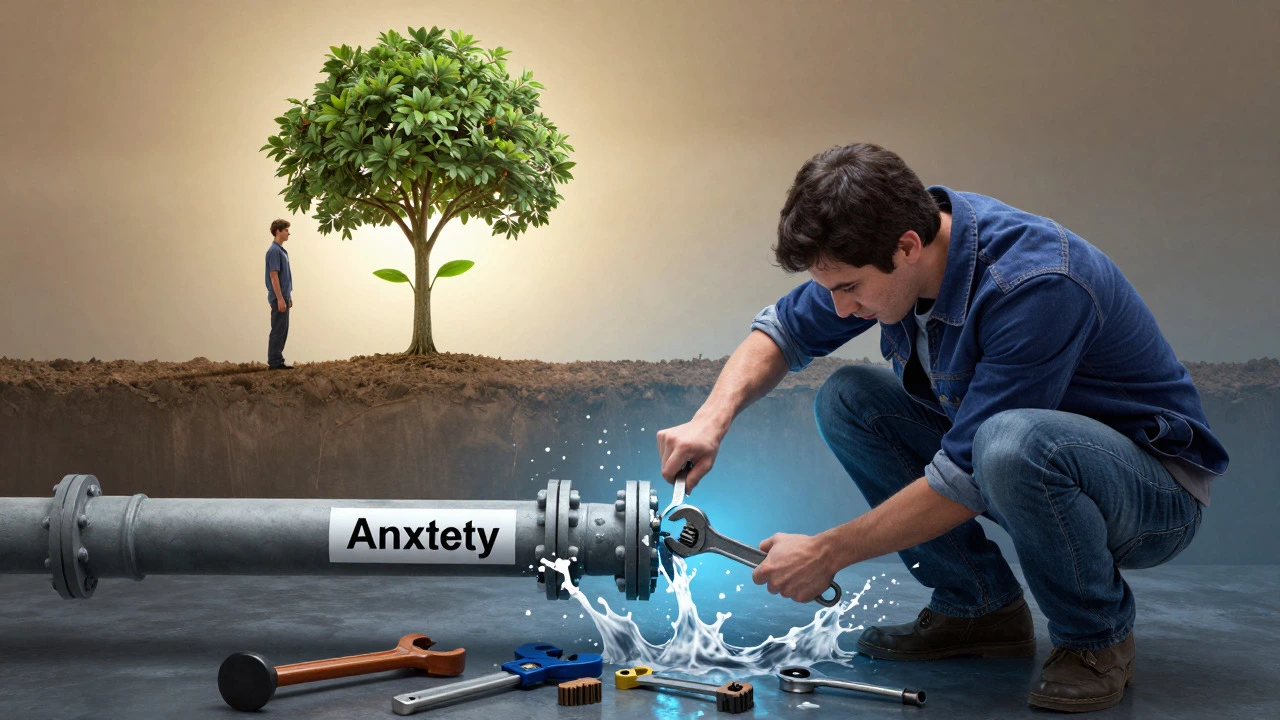
At its heart, self-help is reactive. It usually starts with a pain point. You have a problem-maybe you’re anxious, maybe you’re broke, maybe you can’t sleep-and you look for a solution. Self-help content is designed to address that specific issue. It’s tactical. Think of it as a toolkit. If your sink is leaking, you don’t study plumbing theory for three years; you buy a wrench and follow a tutorial. Self-help gives you the wrench.
Personal development, on the other hand, is proactive. It’s not necessarily about fixing something broken. It’s about expanding who you are. It’s less about "how to stop being shy" and more about "how to build confidence through consistent exposure and self-reflection." It’s strategic. It involves long-term vision, value alignment, and holistic growth. While self-help asks, "How do I fix this?" personal development asks, "Who do I want to become?"
This philosophical difference shapes everything else: the tone, the methods, the expected timeline, and the results. Recognizing which approach you need in a given moment is the first step toward actual progress.
Timeline and Expectations: Quick Wins vs. Long-Term Shifts
One of the biggest reasons people get frustrated with self-help is unrealistic expectations. Many self-help resources promise rapid transformation. "Get rich in 30 days!" "Cure anxiety in 7 steps!" These promises appeal to our desire for immediate relief. And sometimes, they work. A specific breathing technique from a self-help article might calm you down during a panic attack right now. That’s valuable. But it’s temporary.
Personal development operates on a different clock. It acknowledges that meaningful change takes time. Building emotional intelligence, developing leadership skills, or cultivating a resilient mindset isn’t something you can download in an afternoon. It requires repetition, failure, adjustment, and patience. The results are slower but tend to be more durable because they’re integrated into your identity rather than applied as a surface-level tactic.
If you’re looking for a quick fix for a specific situation, lean into self-help. If you’re aiming for sustained evolution, commit to personal development. Mixing them up leads to disappointment. Trying to achieve deep character change with a quick-tip list won’t stick. Conversely, using broad developmental theories to solve an urgent crisis might feel too abstract to be useful in the moment.
Content and Methods: Tactics vs. Principles
Let’s look at what you actually consume. Self-help content is often highly structured and prescriptive. It provides checklists, scripts, routines, and direct instructions. For example, a self-help book on productivity might give you a specific email management system: "Inbox Zero by 5 PM." It tells you exactly what to do, when to do it, and how to measure success. The focus is on external behavior modification.
Personal development content tends to be more exploratory and principle-based. It encourages introspection, journaling, mentorship, and experiential learning. Instead of giving you a rigid email system, a personal development resource might explore your relationship with control, perfectionism, and fear of missing out. It helps you understand *why* you struggle with productivity so you can design a system that fits your unique psychology. The focus is on internal awareness and alignment.
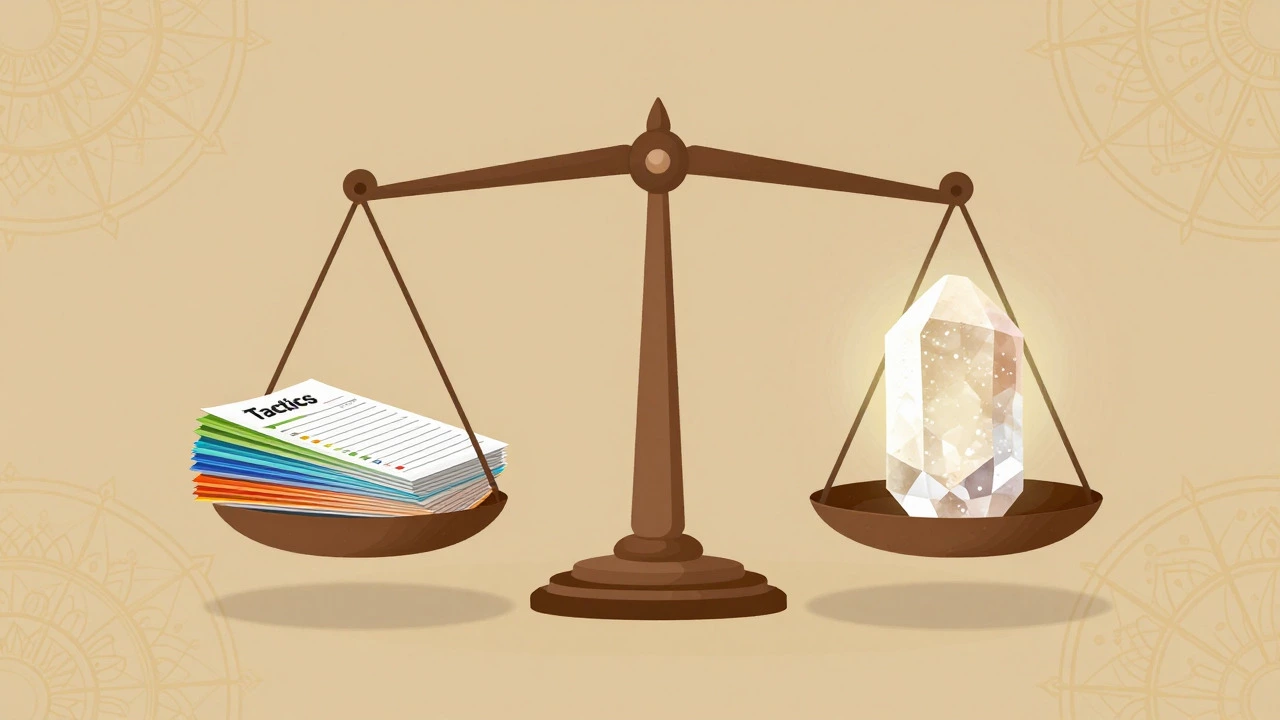
This doesn’t mean one is better than the other. They serve different functions. Tactics (self-help) are essential for execution. Principles (personal development) provide direction. Without tactics, principles remain vague ideals. Without principles, tactics become mechanical habits that lose meaning over time.
| Aspect | Self-Help | Personal Development |
|---|---|---|
| Primary Focus | Solving specific problems | Holistic growth and potential |
| Timeframe | Short-term / Immediate | Long-term / Lifelong |
| Approach | Tactical, prescriptive | Strategic, reflective |
| Source of Authority | Experts, gurus, bestsellers | Inner wisdom, mentors, experience |
| Outcome | Behavioral change, symptom relief | Identity shift, increased capacity |
| Example Resource | "Atomic Habits" (specific strategies) | Mindfulness meditation practice |
The Role of External vs. Internal Validation
Where does the authority come from? In self-help, the authority is usually external. You trust the author, the coach, or the influencer because they claim expertise. Their success story validates their method. You adopt their framework hoping it will work for you too. This can be powerful, especially if you’re stuck and need a new model to try. But it carries a risk: dependency. If the method fails, you might blame yourself or seek another guru, creating a cycle of consumption without integration.
In personal development, the authority shifts inward. While mentors and teachers play a role, the ultimate judge of progress is your own experience and values. You experiment, reflect, and adjust based on what resonates with *your* life. It’s less about following a map and more about learning to navigate. This fosters autonomy and resilience. When challenges arise, you don’t look for a new tip; you draw on your developed capacity to adapt.
This distinction is crucial for sustainability. Relying solely on external validation makes growth fragile. Cultivating internal validation makes it robust. The most effective individuals blend both: they borrow tactics from experts but filter them through their own evolving self-awareness.
Common Pitfalls: When Each Approach Backfires
Even though both paths aim for improvement, they have distinct traps. With self-help, the danger is "solution hopping." You read one book, try the tips for a week, see no magical transformation, and move to the next book. You accumulate knowledge but lack depth. This creates a paradoxical effect: the more self-help you consume, the more overwhelmed you feel because you’re constantly comparing yourself to idealized outcomes without building the foundational strength to sustain change.
With personal development, the pitfall is "analysis paralysis." You spend so much time reflecting, journaling, and theorizing about your potential that you never take concrete action. You become comfortable with the *idea* of growth without engaging in the messy reality of it. Insight without implementation is just entertainment. You feel enlightened but stagnant.
Avoiding these pitfalls requires intentionality. Use self-help to spark action, but don’t let it replace discipline. Use personal development to deepen understanding, but don’t let it excuse inaction. Balance is key.
How to Integrate Both for Maximum Impact
You don’t have to choose one over the other. In fact, the most effective growth strategy uses both in tandem. Think of personal development as the foundation and self-help as the tools you use to build upon it.
Start with personal development to clarify your direction. Ask yourself: What values matter most to me? What kind of person do I want to be in five years? How do I want to show up in my relationships? This clarity prevents you from chasing irrelevant goals. Then, use self-help resources to address specific obstacles along the way. Need to communicate better? Read a communication guide. Struggling with fitness? Try a workout plan. These are tactical supports for your broader journey.
Regularly review your progress through a developmental lens. Are these tactics serving my long-term vision? Or am I just collecting hacks? Adjust accordingly. This integrated approach ensures that your actions are aligned with your identity, making change more natural and lasting.
Remember, growth isn’t linear. Some days you’ll need a quick tip to get through a tough meeting. Other times, you’ll need quiet reflection to process a major life transition. Being aware of the difference between self-help and personal development allows you to pick the right tool for the job, leading to a richer, more fulfilling life.
Is self-help bad for personal growth?
No, self-help is not inherently bad. It provides valuable tactics and immediate solutions for specific problems. The issue arises when it’s used exclusively without deeper reflection, leading to superficial changes that don’t last. Used wisely, it complements personal development.
Can personal development happen without reading books?
Absolutely. Personal development is primarily about experience, reflection, and action. Books are just one source of input. Mentorship, therapy, travel, challenging projects, and honest conversations with friends can be far more impactful than any book.
Why do self-help books often fail to deliver lasting results?
They often focus on behavior change without addressing underlying beliefs, emotions, or environmental factors. Lasting change requires shifting identity and context, which takes more than adopting a new routine. Self-help books rarely provide the ongoing support needed for deep transformation.
What is the first step in starting personal development?
Begin with self-assessment. Identify your current strengths, weaknesses, values, and goals. Understanding where you are and where you want to go creates a roadmap. Journaling, taking personality assessments, or talking to a trusted mentor can help kickstart this process.
How do I know if I’m relying too much on self-help?
If you find yourself constantly seeking new advice but struggling to implement anything consistently, you may be over-relying on self-help. Signs include feeling overwhelmed by information, neglecting daily responsibilities in favor of "learning," and experiencing guilt when you don’t follow every tip perfectly.