Ever picked up a self-help book hoping it would fix your anxiety, low self-esteem, or burnout-only to wonder if anyone actually thinks these books work? You’re not alone. Millions buy them every year. But do therapists, the people trained to help with emotional pain, really recommend them? The answer isn’t yes or no. It’s more complicated-and more useful-than you think.
Some therapists use self-help books as part of treatment
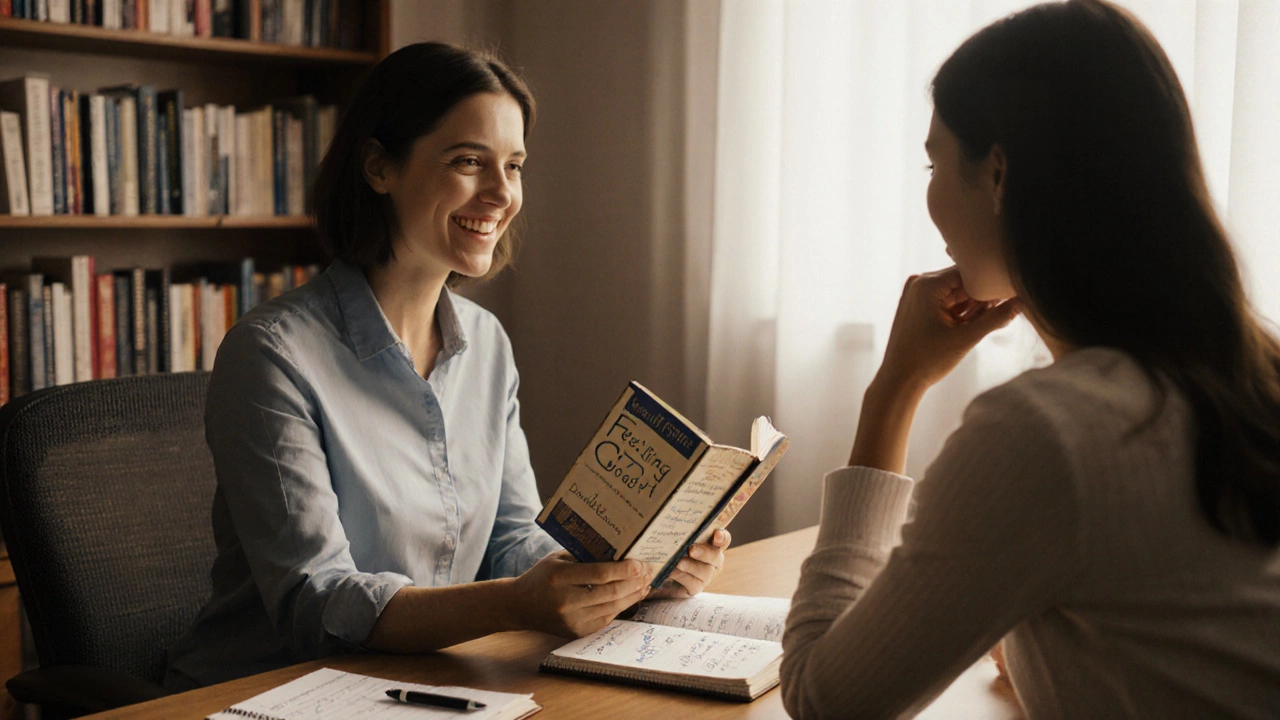
Many licensed therapists, especially those trained in cognitive behavioral therapy (CBT), regularly assign self-help books to clients. It’s not a replacement for therapy-it’s a tool. Books like Feeling Good by David Burns or The Happiness Trap by Russ Harris are common because they teach specific skills: how to spot negative thought patterns, how to challenge irrational beliefs, how to practice mindfulness. These aren’t vague affirmations. They’re structured exercises you can do between sessions.
In Australia, a 2023 survey of 200 clinical psychologists found that 68% routinely recommended evidence-based self-help books to clients with mild to moderate depression or anxiety. The most common reasons? Cost, accessibility, and reinforcement. Therapy sessions are often once a week. A book gives you daily practice. It’s like having a coach in your pocket.
Not all self-help books are created equal
Here’s the catch: therapists don’t recommend just any book with a smiling person on the cover. They look for three things: research backing, clear structure, and no pseudoscience.
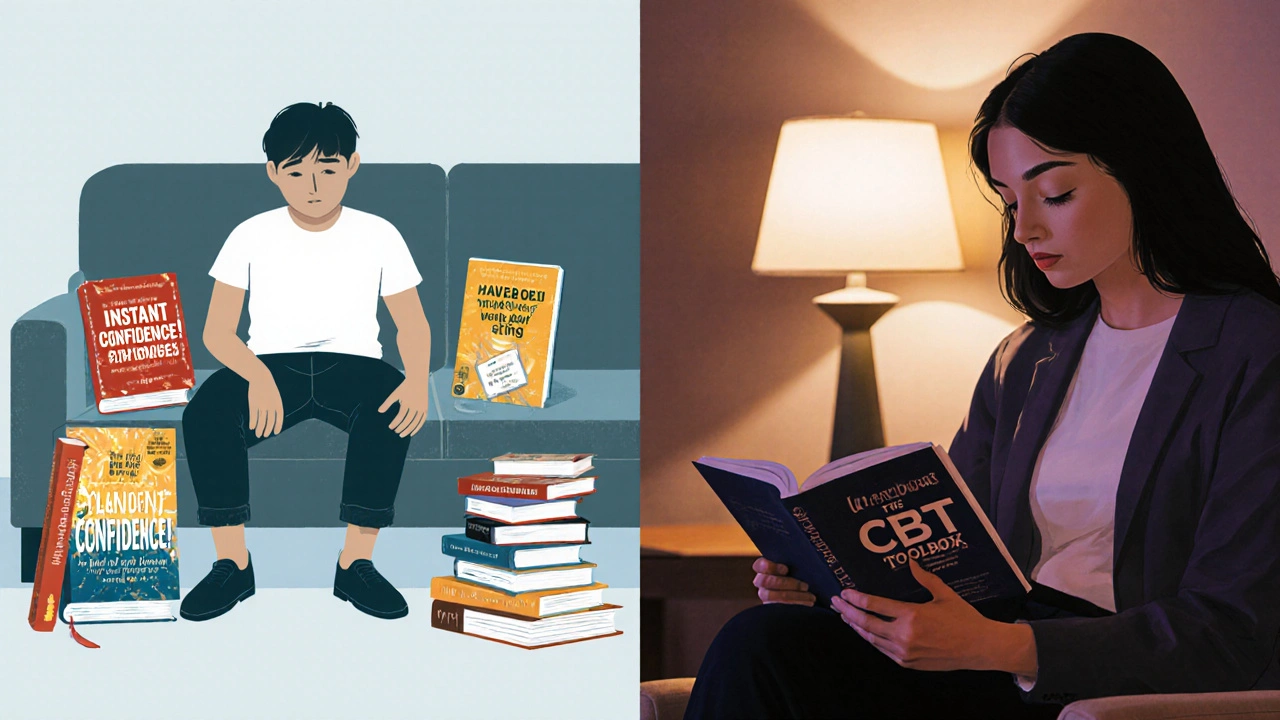
Books based on CBT, Acceptance and Commitment Therapy (ACT), or dialectical behavior therapy (DBT) get the green light. These approaches have been tested in hundreds of clinical trials. On the other hand, books that promise quick fixes-“Manifest your dream life in 7 days!” or “The Secret to Instant Confidence”-are usually avoided. Why? Because they lack evidence. Worse, they can make people feel like failures when the magic doesn’t work.
Therapists know this. One therapist in Melbourne told me, “I’ve had clients come in crying because they read a book that said ‘just believe in yourself’ and they still feel worthless. That’s not helpful. That’s harmful.”
Therapists recommend books for specific problems, not general life advice
There’s a big difference between a book that helps someone manage panic attacks and one that tells you how to “unlock your inner power.” Therapists match books to diagnoses and goals.
- For social anxiety: The Shyness and Social Anxiety Workbook by Martin Antony
- For OCD: Freedom from OCD by Jonathan Grayson
- For grief: The Grief Recovery Handbook by John James and Russell Friedman
- For ADHD: Driven to Distraction by Edward Hallowell
These books come with worksheets, step-by-step exercises, and measurable progress markers. They’re designed to be used with professional guidance-not as standalone cures.
When self-help books don’t help-or make things worse
Not everyone benefits. Some people read self-help books and feel worse. Why?
One common issue is self-blame. If a book says “You’re the reason you’re stuck,” and you’re already struggling with depression, that message can deepen shame. Another problem is avoidance. Someone might read five books on confidence instead of talking to a therapist about why they feel inadequate in the first place. Books can become a distraction from real work.
Therapists warn against using self-help as a substitute when you need real support. If you’re having suicidal thoughts, severe trauma, or can’t get out of bed for days, a book won’t fix that. It might even delay getting the help you need.
What therapists look for in a good self-help book
Therapists don’t just pick books they like-they pick ones that meet clinical standards. Here’s what they check:
- Author credentials: Is the author a licensed psychologist, researcher, or clinician? Or just a motivational speaker?
- References: Does the book cite peer-reviewed studies? Or just personal stories?
- Structure: Are there clear exercises, progress tracking, or homework?
- No magic bullets: Does it promise instant results? If yes, skip it.
- Empathy: Does it validate struggle, or just tell you to “get over it”?
For example, Radical Acceptance by Tara Brach is often recommended because it blends mindfulness with psychological insight-and doesn’t shame people for not being “positive enough.”
How to use self-help books the way therapists intend
If you’re going to use a self-help book, don’t just read it. Do it.
- Choose one book based on a specific issue, not a vague goal like “be happier.”
- Set aside 15-20 minutes a day to work through the exercises.
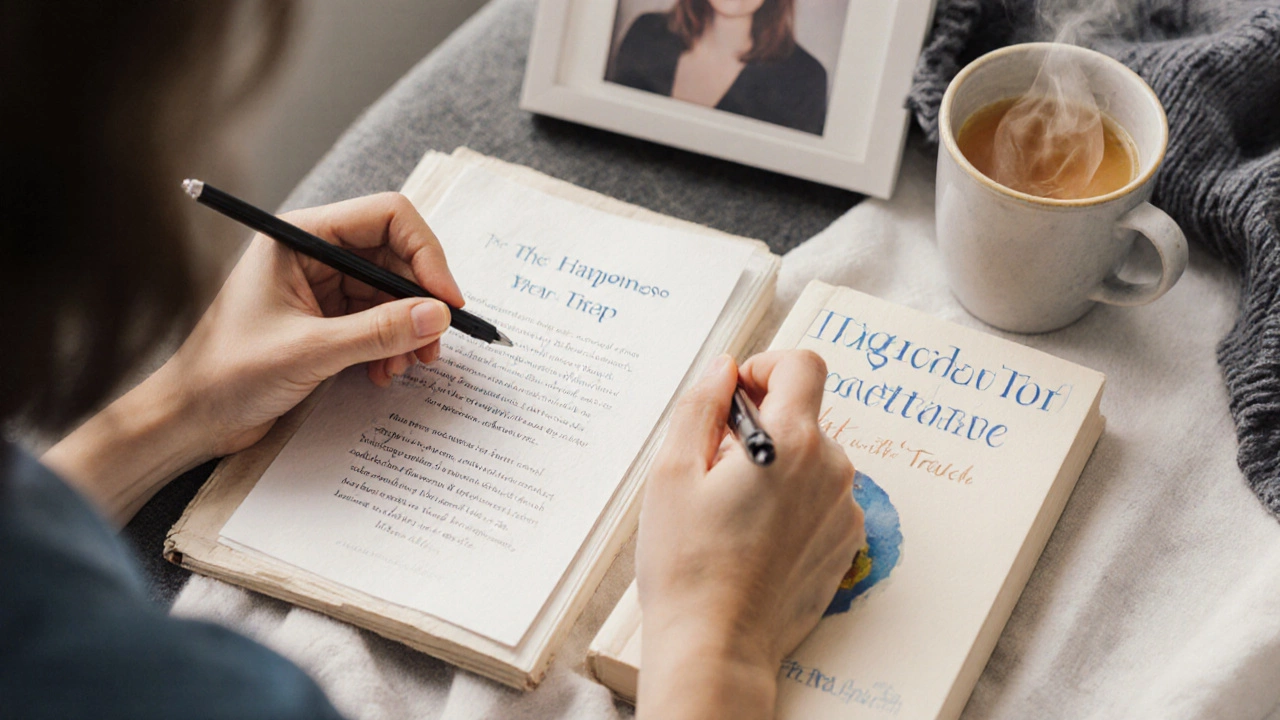
- Write down your thoughts. Don’t just highlight passages.
- Bring your notes to therapy. Tell your therapist what worked and what didn’t.
- Stop if it makes you feel worse. That’s a signal, not a failure.
One client in Sydney used The CBT Toolbox for her panic attacks. She did the breathing exercises every morning. After six weeks, she brought her journal to therapy. Her therapist said, “You’ve done more work in six weeks than most people do in six months.” That’s the power of using a book the right way.
Self-help books are tools-not magic
Therapists don’t see self-help books as a cure-all. They see them as part of a toolkit. Like a hammer or a wrench, they’re useful only if you know how to use them-and when to call in a professional.
Books can teach you skills. But they can’t replace the relationship you build with a therapist. That connection-the trust, the feedback, the tailored guidance-is what changes lives.
If you’re reading this because you’re stuck, don’t blame the book. Don’t blame yourself. Ask: Is this helping me move forward, or just keeping me busy? If it’s the latter, it’s time to talk to someone who can help you go deeper.
Do therapists actually read self-help books themselves?
Yes, many do-but not the flashy, viral ones. Therapists often read clinical manuals, research-based guides, or books on therapeutic techniques. Some read memoirs or narrative nonfiction to better understand human experience. But they rarely use self-help books for their own mental health. Most rely on therapy, supervision, or peer support instead.
Are free self-help books online worth reading?
Sometimes. But most free online resources lack peer review. Look for materials from universities, mental health nonprofits, or government health sites (like Beyond Blue or the NHS). Avoid blogs with no author credentials or citations. Quality matters more than price.
Can self-help books replace therapy?
No. Self-help books are great for mild issues and skill-building, but they can’t replace the personalized feedback, emotional safety, and deep exploration that therapy provides. If you’re dealing with trauma, severe anxiety, or persistent low mood, therapy is the better first step.
Why do some therapists dislike self-help books?
Because too many are misleading. Some promote toxic positivity, oversimplify complex issues, or blame the reader for not “trying hard enough.” Therapists see the damage this causes-clients feeling guilty for not being fixed by a book. That’s why they’re picky about what they recommend.
What’s the most recommended self-help book by therapists?
There’s no single #1 book, but Feeling Good by David Burns consistently ranks high among therapists in Australia and the U.S. for depression and anxiety. It’s practical, evidence-based, and includes real exercises. Other top picks include The Happiness Trap for ACT-based strategies and DBT Skills Training Manual for emotional regulation.
Next steps if you’re considering a self-help book
Start by naming your biggest struggle. Is it sleep? Anger? Shame? Then look for a book that targets that exact issue-not general “happiness.” Check the author’s credentials. Look for exercises, not just stories. And if you’re unsure, ask a therapist. Most will happily give you a short list of trusted books.
Self-help books aren’t the enemy. But they’re not the whole solution either. They’re one tool. Use them wisely-and don’t be afraid to ask for more help when you need it.