The Book Fame Calculator
There is no single answer to "What is the most famous book ever?" It depends entirely on how you measure fame. Adjust the weights below to see which title wins according to your personal definition of success in literature.
You walk into a bookstore or scroll through Amazon, and you see lists of "bestsellers." But those lists change every week. They measure what people are buying right now. That’s not the same thing as fame. True fame in literature is about staying power, cultural penetration, and raw volume over centuries. If you’re asking, "What is the most famous book ever?", you’re stepping into a debate that has kept librarians, historians, and casual readers arguing for decades.
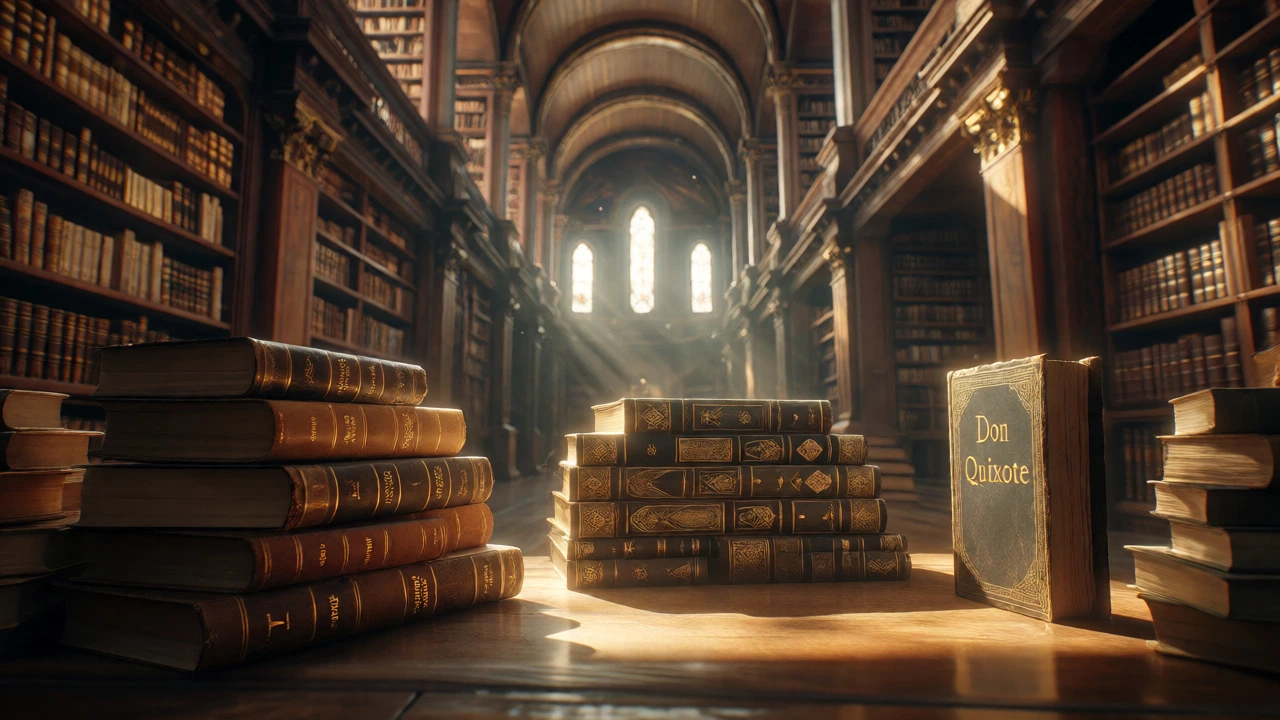
The answer isn’t just one title. It depends on how you define "famous." Are we talking about copies sold? Copies printed? Cultural recognition? Or academic study? The top contenders usually boil down to three heavyweights: the Bible, a collection of religious texts central to Christianity and Judaism, estimated to have sold over 5 billion copies, the Quran, the central religious text of Islam, with billions of copies distributed globally, and Don Quixote, Miguel de Cervantes' novel often cited by authors as the first modern novel, with an estimated 500 million copies sold.
The Religious Giants: Volume vs. Distribution
Let’s start with the obvious elephant in the room: religious texts. If you judge fame by sheer numbers, the Bible wins hands down. Estimates suggest over 5 billion copies have been sold or distributed since its inception. That’s roughly one copy for every person who has ever lived in the last few centuries. But here’s the catch: distribution doesn’t always equal reading. Many Bibles sit on shelves, passed down as heirlooms, or given as gifts without being read cover-to-cover.
The Quran follows closely, with estimates ranging from 800 million to over 1 billion copies. In many Muslim-majority countries, the Quran is treated with such reverence that it’s recited daily, memorized by millions (Hafiz), and used in legal systems. Its fame is undeniable, but again, is it "read" in the way we think of novels? For many, it’s a liturgical object as much as a literary one.
Why does this matter for your question? Because if you ask someone on the street to name a book they’ve read, they might say "Harry Potter," not "Leviticus." Fame in the secular sense often requires active engagement, not just passive ownership. So while the Bible and Quran are undeniably the most distributed books, their status as "famous books" in the literary canon is complicated by their sacred nature.
The Literary Contender: Don Quixote
If we strip away religious texts, the conversation shifts dramatically. Enter Don Quixote by Miguel de Cervantes. Published in two parts in 1605 and 1615, this Spanish novel is frequently voted the "greatest book of all time" by authors and critics. Why? Because it invented the template for the modern novel.
Cervantes wrote a story about a man who reads so many chivalric romances he loses his mind and decides to become a knight-errant. It’s meta-fiction before meta-fiction was cool. It questions reality, mocks bad writing, and explores human delusion. With an estimated 500 million copies sold, it’s a massive seller. But its fame goes beyond sales. It’s taught in almost every university literature course worldwide. Phrases like "tilting at windmills" come directly from this book. When you hear someone reference a "quixotic" idea, they’re referencing Cervantes.
Is it the most famous? Among educated Westerners, yes. Globally? Maybe not. But in terms of shaping how we tell stories today, nothing else comes close. Without Don Quixote, there’s no Dickens, no Austen, no Joyce. It’s the grandfather of the genre.
The Modern Phenomenon: Harry Potter and The Little Prince
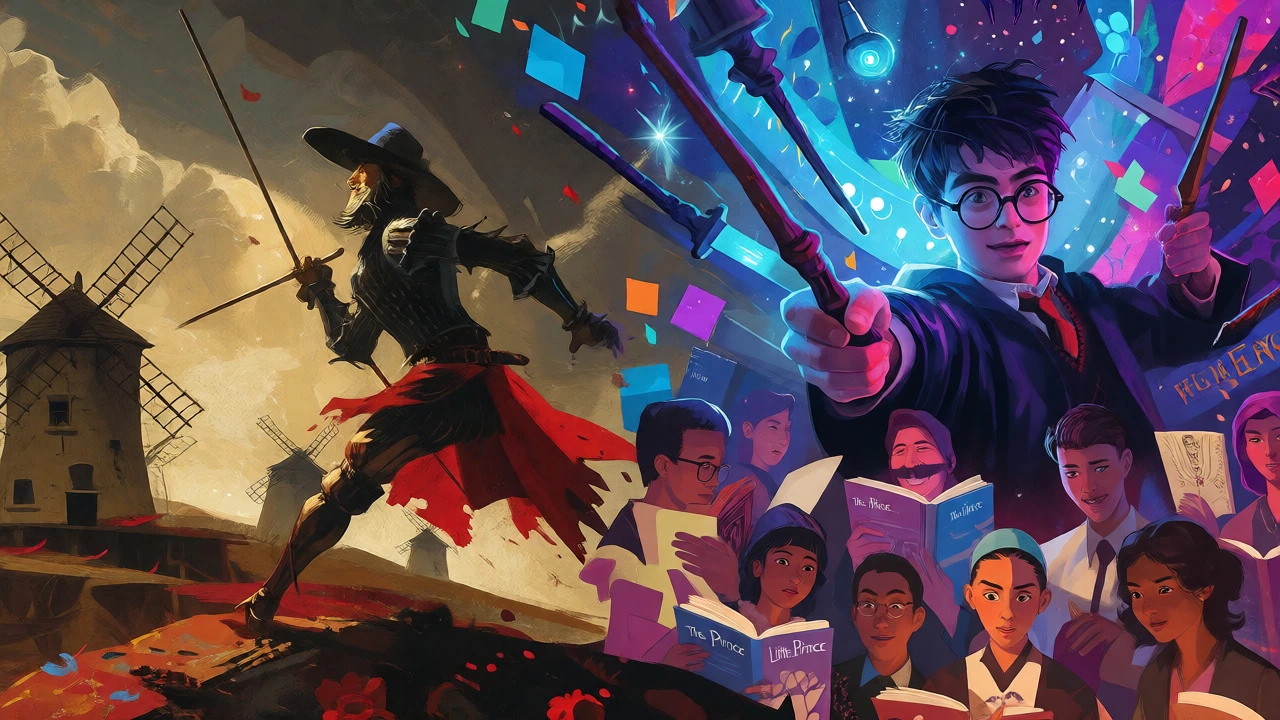
Some argue that true fame must be accessible to everyone, regardless of education level. Here, two books stand out: Harry Potter series by J.K. Rowling and The Little Prince by Antoine de Saint-Exupéry.
The Harry Potter series has sold over 500 million copies since 1997. It’s a global phenomenon that transcended language barriers. Kids in Tokyo, Toronto, and Tehran know who Hermione Granger is. It’s arguably the most recognizable fictional universe in history. But is it a single book? No, it’s seven. Does that count? Purists say no. But culturally, it’s a monolith.
The Little Prince, however, is a single novella. With over 200 million copies sold and translated into more than 300 languages, it’s the second most translated book after the Bible. It’s short, poetic, and philosophical. You can read it in an hour, but it sticks with you for life. Its fame is quiet but pervasive. It’s the book adults pretend to understand when they’re actually just moved by its simplicity.
| Book Title | Estimated Sales | Primary Audience | Cultural Impact Type |
|---|---|---|---|
| Bible | 5+ Billion | Global / Religious | Spiritual & Moral Foundation |
| Quran | 800M - 1B+ | Global / Religious | Liturgical & Legal Authority |
| Don Quixote | ~500 Million | Academic / Literary | Genre Definition & Critique |
| Harry Potter | ~500 Million | Young Adult / General | Media Franchise & Community |
| The Little Prince | ~200 Million | All Ages | Philosophical Accessibility |
Defining "Fame": Three Lenses
To pick a winner, you need to decide which lens you’re looking through. Let’s break it down.
- The Quantitative Lens: This is pure numbers. Who sold the most? The Bible wins. It’s not even close. If fame equals ubiquity, the Bible is the undisputed king.
- The Critical Lens: What do experts respect? Don Quixote takes the crown here. It’s the book other writers point to when they talk about craft. It’s the gold standard of narrative structure.
- The Pop Culture Lens: What does the average person recognize? Harry Potter or maybe Alice in Wonderland. These books have spawned movies, theme parks, and merchandise empires. Their fame is visual and immediate.
There’s also the Tao Te Ching, attributed to Laozi. With hundreds of millions of copies sold, it’s one of the most translated works in philosophy. It’s short, cryptic, and endlessly quotable. In the East, it’s foundational. In the West, it’s trendy among self-help seekers. It bridges the gap between ancient wisdom and modern mindfulness.
Why There’s No Single Answer
Here’s the uncomfortable truth: the concept of a "single most famous book" is a Western construct. In oral cultures, the "book" might be a spoken epic like the Epic of Gilgamesh or the Mahabharata. The Mahabharata, for instance, is seven times longer than the Iliad and Odyssey combined. It’s known by heart by millions in India. Does it count if it wasn’t originally "sold" in bookstores?
Fame is also tied to literacy rates. For most of human history, books were rare objects owned by elites. The printing press changed everything. Before Gutenberg, only monks and nobles had access to texts. After him, ideas spread like wildfire. The books that survived the test of time did so because they resonated across generations, classes, and borders.
So, when you ask "what is the most famous book ever," you’re really asking, "which story has touched the most lives?" And that’s impossible to quantify perfectly. But if forced to choose one secular novel that balances sales, critical acclaim, and cultural recognition, Don Quixote remains the safest bet for literary circles, while Harry Potter dominates the popular imagination.
How to Choose Your Own "Most Famous" List
Instead of chasing a definitive answer, try building your own list based on criteria that matter to you. Do you value emotional resonance? Pick The Little Prince. Do you care about historical significance? Go with Don Quixote. Do you want something everyone knows? Harry Potter is your ticket.
Consider the impact on your own life. Which book changed how you think? That’s the most famous book to you. Literature isn’t a competition; it’s a conversation. The fact that we’re still debating these titles five hundred years after Don Quixote was published proves that great books don’t die-they evolve.
Next time someone asks you this question, don’t just give them a title. Ask them what they mean by "famous." Then share your perspective. It’s a better conversation starter than any trivia answer.
Is the Bible considered a book in this context?
Yes, technically it is a collection of books, but it is widely regarded as a single entity in terms of fame and distribution. However, some literary discussions exclude religious texts to focus on secular fiction and non-fiction.
Why is Don Quixote often called the greatest book?
It is credited with establishing the structure of the modern novel. Its themes of idealism versus realism, unreliable narration, and meta-fiction influenced countless authors, including Charles Dickens, Jane Austen, and Fyodor Dostoevsky.
Does Harry Potter count as one book or several?
The series consists of seven individual novels. While collectively they hold immense fame, strict definitions of "a book" would require selecting a single title, such as 'Harry Potter and the Philosopher's Stone,' which launched the franchise.
What is the most translated book after the Bible?
The Little Prince is frequently cited as the second most translated work, available in over 300 languages. Other contenders include the Quran and various editions of the Tao Te Ching.
Are e-books included in these sales figures?
Historical sales figures primarily reflect physical copies. E-book data is newer and harder to track due to licensing models where users buy access rather than ownership. Most "all-time" records rely on print distribution.