
Book Distribution Comparison Tool
Select a book to see how its distribution compares to the all-time leader (The Bible).
100%
The baseline for all distribution.
The Problem With Counting Old Books
Why is it so hard to give a straight number? Before the mid-19th century, books weren't tracked with barcodes or digital registers. We rely on historical estimates, printing press records, and library archives. For example, if a book was printed in 1600, we don't know how many copies were burned, lost in floods, or simply fell apart over centuries of use. When we talk about the best selling book, we usually separate the world into two camps: religious/political texts and commercial fiction. It's not a fair fight. A religious text often has an institutional engine driving its distribution, whereas a novel relies on a writer's popularity and a publisher's marketing budget.The Heavy Hitters of Fiction
If we push the Bible and the Quran aside to focus on books people actually bought at a store, the conversation shifts to a few legendary titles. One of the biggest contenders is Don Quixote by Miguel de Cervantes. Published in two parts in 1605 and 1615, it is often cited as the first modern novel. Some estimates suggest it has sold over 500 million copies, though that number is debated by historians who argue that early printing methods make such tallies guesswork. Then you have the modern era, where we have actual data. A Tale of Two Cities by Charles Dickens is frequently listed as one of the top-selling novels of all time, with some sources claiming 200 million copies. The reason? It became a staple of education systems worldwide for decades. When every school in a country requires a book, the numbers skyrocket.| Book Title | Estimated Copies | Category | Primary Driver |
|---|---|---|---|
| The Bible | 5+ Billion | Religious | Global Faith/Institutions |
| Don Quixote | 500 Million | Literary Fiction | Historical Longevity |
| A Tale of Two Cities | 200 Million | Historical Fiction | Academic Requirements |
| Harry Potter and the Philosopher's Stone | 120 Million | Fantasy | Global Pop Culture |
The Harry Potter Effect and Modern Publishing
In the last 30 years, we've seen a different kind of bestseller. The Harry Potter series by J.K. Rowling changed how we measure success. Instead of a book slowly gaining popularity over 200 years, these books exploded globally in a matter of months. The first book alone has sold over 120 million copies, and the series as a whole has surpassed 600 million. This represents a shift in "commercial intent." In the past, a book became a bestseller by being "important" or "classic." Today, a book becomes a bestseller through a combination of viral marketing, movie adaptations, and a dedicated fanbase. It's the difference between a slow burn and a supernova.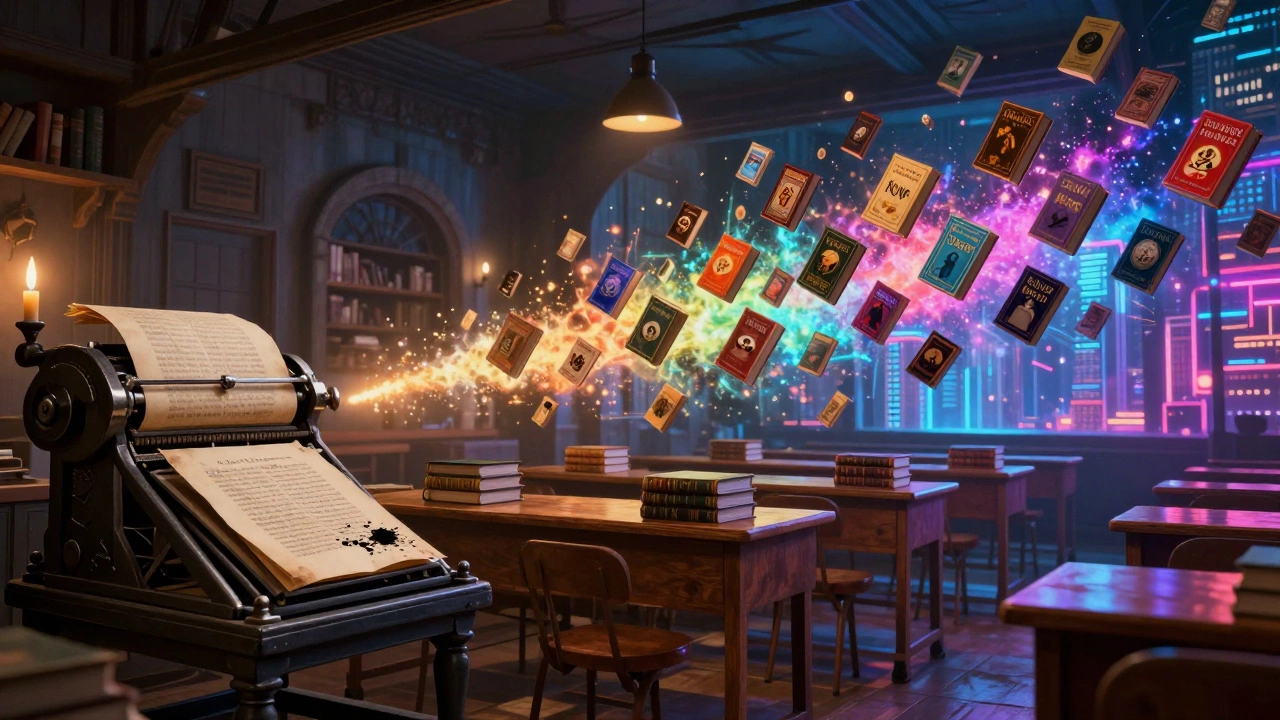
Why Some "Bestsellers" Are Actually Misleading
Have you ever noticed how some books are called "#1 New York Times Bestseller" even if they didn't actually sell millions of copies? There is a secret to this. The New York Times Best Seller list isn't a raw count of every book sold in the US. It's a curated list. The publishers report sales, but the NYT uses a proprietary formula that weights sales from different types of retailers. For instance, if a publisher buys 10,000 copies of their own book and distributes them to libraries, it can sometimes manipulate the ranking. This is why a "best selling" label on a cover doesn't always mean it's the most read book in the world; it just means it had a very successful launch window in specific markets.Comparing Genre Success
If we look at different genres, the "best seller" varies wildly. In the realm of Fantasy, the Harry Potter series is the gold standard. In Historical Fiction, Dickens still looms large. But if you look at Self-Help, books like "Think and Grow Rich" have maintained steady sales for nearly a century, proving that the desire for financial success is a timeless motivator. Comparing a modern thriller to a 17th-century Spanish novel is like comparing a TikTok video to a Renaissance painting. One is designed for immediate, widespread consumption, while the other was designed for an elite few and slowly trickled down to the masses over centuries.
The Impact of Digital Reading
Now we enter the era of E-books and audiobooks. How do we count a "sale" when a book is read via a Kindle subscription? If a million people read a book on a subscription service, does that count as a million sales? Most industry trackers are still struggling with this. We are moving away from "copies sold" and toward "reach" or "impressions." This makes the title of "No. 1 Best Selling Book" even more slippery. A book might have fewer physical sales but more unique readers than a classic that's only sitting on a shelf in a classroom.What Should You Actually Read?
Just because a book is the best seller doesn't mean it's the best book for you. High sales numbers often reflect marketing power more than literary quality. Many of the most influential books in history started as failures. For example, many authors who are now considered "classics" died in poverty, unaware that their work would one day be printed in the millions. If you're looking for a great read, don't just follow the charts. Look for the books that have "staying power"-the ones people are still talking about fifty years after they were written. That's a different kind of bestseller; that's a cultural phenomenon.Is the Bible technically a "best selling book"?
Yes, by any objective measure of distribution. While many copies are given away for free, the sheer volume of production and the number of people who own a copy make it the most successful book in history.
What is the best selling novel of all time?
It depends on the source, but Don Quixote is often cited with estimates around 500 million copies. In the modern era, the Harry Potter series holds the record for the most sales in the shortest time.
How are bestseller lists calculated?
Lists like the New York Times use a mix of reported sales from bookstores and proprietary weighting systems. They don't just count every single copy sold globally; they focus on specific retail trends in the US.
Does an e-book count as a sale?
Generally, yes. However, the industry distinguishes between a direct purchase of an e-book and a "read" via a subscription service, which is often tracked as a different metric.
Why is A Tale of Two Cities so high on the list?
Its popularity is largely due to its inclusion in school curriculums around the world for over a century, leading to massive institutional purchases.