Creative Adventure Spark Generator
Ready to leave the map? According to the guide, a Creative Adventure starts when you introduce friction and embrace the unknown. Use this tool to generate a random Medium and a Constraint to push your boundaries.
Most people think an adventure requires a passport, a hiking boot, and a map of a place they've never been. But there is another kind of exploration that happens entirely within the mind. It doesn't require a plane ticket, just a willingness to get lost in an idea. That is the core of a creative adventure.
At its simplest, a Creative Adventure is the process of using imagination and artistic experimentation to explore unknown intellectual or emotional territories. Whether you are writing a sprawling epic, painting a surreal landscape, or just brainstorming a wild business idea, you are embarking on a journey where the destination is less important than the act of discovery. It is the intersection of curiosity and courage.
Key Takeaways
- It is an internal journey of discovery through art and imagination.
- It focuses on the process of exploration rather than a polished end product.
- It applies to both professional creators and people seeking personal growth.
- The goal is to break routine and challenge your own mental boundaries.
The Anatomy of a Creative Journey
When we talk about Adventure Stories, we usually think of the narrative arc involving a protagonist leaving their comfort zone to face challenges in a strange land. A creative adventure mirrors this structure. Your "comfort zone" is your current skill level or your habitual way of thinking. The "strange land" is a medium or concept you've never touched before.
Think about a writer who has spent ten years writing cozy mysteries. If they suddenly decide to write a hard sci-fi novel set on a water planet, they aren't just changing genres; they are on a creative adventure. They have to build a new world, learn the physics of buoyancy in alien oceans, and figure out how a society would function without dry land. The struggle to solve these problems is where the adventure happens.
This process usually follows a specific pattern. First, there is the spark-a "what if" question. Then comes the plunge, where you start creating without knowing if it will work. Finally, there is the synthesis, where you bring back a new perspective or skill to your everyday life.
Why We Need Intellectual Exploration
Modern life is designed to be frictionless. We have algorithms that tell us what music we like and GPS that ensures we never take a wrong turn. While efficient, this kills the spirit of discovery. When you engage in creative exploration, you intentionally introduce friction. You ask yourself, "What happens if I do this the wrong way?"
Psychologically, this is similar to what researchers call "flow state." When you are deep in a creative adventure, you lose track of time because your brain is fully engaged in solving a complex, rewarding puzzle. It's not about the prestige of the final piece of art; it's about the dopamine hit you get when a stubborn plot hole suddenly closes or a color palette finally clicks.
Consider the Hero's Journey, a concept popularized by Joseph Campbell. He argued that all great myths follow a similar path: departure, initiation, and return. A creative adventure is the personal application of this myth. You depart from your known style, undergo the initiation of failure and trial, and return with a more expanded version of yourself.
Turning Storytelling into an Active Experience
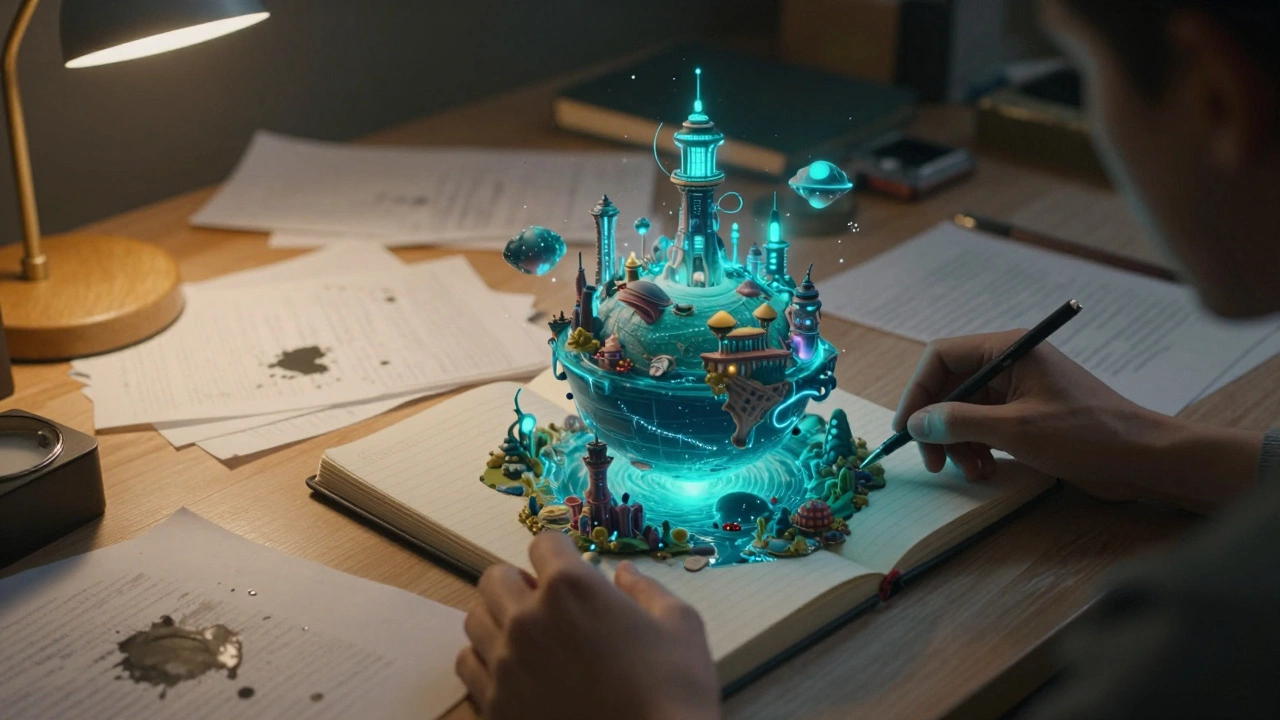
For many, the creative adventure is found within the act of writing. But how do you move beyond just "writing a story" and actually turn it into an exploration? The secret is to stop planning everything. If you have a 50-page outline, you aren't adventuring; you're following a map. To truly experience a creative adventure, you need to leave some room for the unknown.
Try a technique called "discovery writing" or "pantsing" (writing by the seat of your pants). Start with a character and a conflict, then let the characters make decisions that surprise you. When a character does something you didn't plan, that's the moment the adventure begins. You are now reacting to your own creation, discovering the logic of your world in real-time.
| Feature | Planned Creation | Creative Adventure |
|---|---|---|
| Goal | Specific outcome/Product | Exploration/Discovery |
| Process | Following a roadmap | Following curiosity |
| Risk Level | Low (Controlled) | High (Unpredictable) |
| Emotional Payoff | Satisfaction of completion | Thrill of the unknown |
Practical Ways to Start Your Own Adventure
You don't need to be a professional artist to do this. You just need a set of constraints and a curiosity for the unexpected. Here are a few ways to trigger a creative adventure in your own life:
- The Medium Swap: If you usually write, try to "write" a story through a series of photographs or a mood board. Forcing your ideas into a different format reveals gaps in your thinking.
- The Random Constraint: Use a tool like Oblique Strategies, a deck of cards created by Brian Eno and Peter Schmidt. Each card gives a cryptic instruction like "Honor thy error as a hidden intention." It forces you to pivot when you're stuck.
- Collaborative Chaos: Start a story with a friend where you each write one paragraph and then pass the paper. You lose control over the narrative, which forces you to adapt and react to a foreign influence.
The key is to embrace the "ugly phase." Every creative adventure has a middle part where everything looks like a mess. In a traditional project, this is where people quit. In a creative adventure, this is the most exciting part because it means you've actually left the map and are now in uncharted territory.
The Relationship Between Creativity and Risk
You can't have an adventure without risk. In the creative realm, the risk isn't physical danger; it's the risk of looking foolish or failing. When you try a new style, you might produce something terrible. That's the price of admission.
Take the example of Surrealism. Artists like Salvador Dalí didn't just paint weird things; they engaged in a creative adventure by tapping into the unconscious mind. They used techniques like automatism-drawing without a conscious plan-to see what their brains would surface. They risked creating nonsense to find a deeper truth.
When we apply this to our lives, we start seeing every new hobby or difficult project as a quest. Learning a new language isn't just about vocabulary; it's a creative adventure in how to perceive the world. Learning to cook without a recipe is an adventure in chemistry and taste. The more you treat these activities as explorations rather than chores, the more resilient and imaginative you become.
Is creative adventure the same as just being creative?
Not exactly. Being creative is the act of making something. A creative adventure is specifically about the exploration of the unknown. You can be creative while following a strict set of rules to produce a known result. An adventure requires a level of uncertainty and a willingness to be surprised by the outcome.
Do I need a certain level of skill to start a creative adventure?
Actually, having too much skill in one specific area can sometimes be a barrier because you become afraid to be a beginner again. The only "skill" you truly need is curiosity. The goal of the adventure is often to discover what you don't know, so being a novice is actually an advantage.
How do I know if my creative project is an adventure or just a mess?
The difference is intentionality. If you are simply failing because of a lack of effort, that's a mess. If you are failing because you are pushing a concept to its limit or trying a technique you've never used, that's an adventure. If you're feeling a mix of frustration and excitement, you're likely on an adventure.
Can a creative adventure happen in a corporate environment?
Yes. This often looks like "R&D" (Research and Development) or "design thinking." When a company allows employees to spend time on "skunkworks" projects-experimental tasks without a guaranteed ROI-they are encouraging creative adventures. It's about valuing the learning process over the immediate quarterly result.
What is the best way to document a creative adventure?
Keep a "process journal." Instead of just saving the final version, save the sketches, the deleted scenes, and the notes on why certain ideas didn't work. The value of a creative adventure is in the journey, and a process journal allows you to map the territory you've covered so you can return to it later.
Next Steps for the Curious
If you're feeling the itch to start, don't wait for a "perfect' idea. The biggest mistake people make is waiting for a great idea before they start their adventure. The idea is the result of the adventure, not the prerequisite.
Pick something you are slightly intimidated by. Maybe it's a sketchbook, a blank page, or a piece of software you've never opened. Set a timer for thirty minutes and tell yourself that whatever you produce is allowed to be terrible. The moment you stop caring about the quality of the output is the moment you've officially stepped off the map and into your creative adventure.