Purpose of Historical Fiction: Why We Read Stories Rooted in the Past
When we pick up a historical fiction, a genre that blends real events and people with imagined narratives to bring the past to life. Also known as historical novels, it doesn’t just recreate history—it asks us to feel it, question it, and sometimes, rewrite it in our minds. This isn’t about memorizing dates or battles. It’s about understanding how people lived, loved, feared, and fought when the world looked nothing like today. Why do we keep reading these stories? Because history doesn’t stay in textbooks. It lives in the choices people made, the silences they kept, and the lies they told to survive.
Historical accuracy, the degree to which a story aligns with documented facts. Also known as truth in historical fiction, it’s not always the goal—but it’s the foundation. A novel set during the Civil War shouldn’t have characters using smartphones, but it can stretch the truth about what someone whispered in private. The best historical fiction doesn’t lie—it fills gaps. When records are lost, when women’s voices were erased, when the victors wrote the story, fiction steps in. It gives a face to the nameless soldier, a voice to the enslaved woman, a motive to the king who ordered the execution. That’s not distortion. That’s justice.
People read historical fiction because it makes the past personal. You don’t learn about the Great Depression by reading a statistic—you feel it when a mother sells her wedding ring to feed her kids. You don’t understand the Red Scare by memorizing court cases—you live it when a teacher loses her job for reading the wrong book. Historical novels, stories that use real settings and events as backdrops for human drama connect us to time we never lived in, but still shape us. They show how power works, how fear spreads, how love survives in the worst conditions. And they remind us: today’s headlines? They’ll be tomorrow’s fiction.
What you’ll find here isn’t a list of the best books. It’s a guide to spotting what makes these stories work—and what makes them fail. You’ll learn how to tell if a novel respects history or just uses it as decoration. You’ll see how authors handle real people, real trauma, and real silence. And you’ll understand why some books stick with you long after the last page—because they didn’t just tell you about the past. They made you feel like you were there.
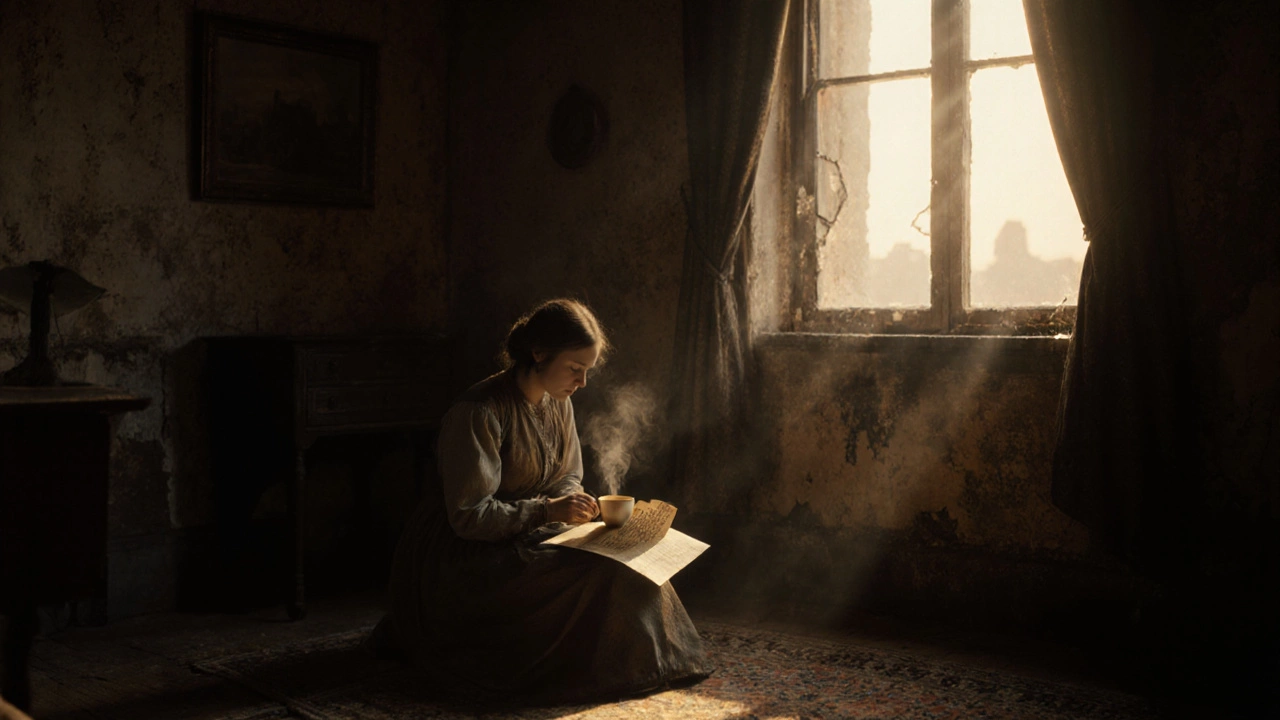
What Is the Point of Historical Fiction? Why We Read Stories Set in the Past
Historical fiction doesn't just retell the past-it makes us feel it. Learn why these stories matter more than ever, how they build empathy, challenge power, and help us understand ourselves today.