
Literary Nonfiction Matchmaker
Not sure where to start? Answer a few quick questions about what you enjoy in a story, and we'll recommend the best example of literary nonfiction for you.
Book Title
Author Name
Description goes here...
Reasoning...
You’ve probably heard the term literary nonfiction thrown around in book clubs or university seminars, but what does it actually mean? It’s not just a dry textbook or a list of facts. Think of it as true stories told with the soul of a novel. If you’re looking for the best example of literary nonfiction, you aren’t searching for a single "correct" answer because the genre is vast and varied. However, certain books stand out as gold standards that define the form.
Why does this matter to you? Maybe you want to read something real but crave the emotional pull of fiction. Or perhaps you’re a writer trying to figure out how to structure your own life story without it feeling like a boring diary entry. Either way, understanding the mechanics behind these masterpieces helps you pick your next great read-or start writing one yourself. Let’s break down the top contenders and why they earn their spot on the shelf.
Defining Literary Nonfiction: Fact Meets Art
Before we name names, we need to clear up the confusion. Literary nonfiction is a genre that uses the techniques of creative writing-like scene-setting, dialogue, and character development-to tell factual stories. Unlike academic papers or standard biographies, which prioritize information density over readability, literary nonfiction prioritizes the reader's experience.
The core rule here is simple: everything must be true. You can’t invent conversations or change the weather if it wasn’t raining. But you can arrange the timeline, focus on sensory details, and build tension just like a novelist would. This hybrid approach creates a unique bond between author and reader. You trust the facts because the style feels honest and intimate.
| Subgenre | Primary Focus | Key Technique | Classic Example |
|---|---|---|---|
| Memoir | Personal experience and memory | First-person reflection | The Year of Magical Thinking |
| Narrative Journalism | Reporting on events/people | Immersive observation | In Cold Blood |
| Personal Essay | Ideas sparked by personal moments | Thematic weaving | Bad Feminist |
| Biography | A subject’s life arc | Historical reconstruction | Steve Jobs |
The Gold Standard: In Cold Blood by Truman Capote
If you ask most critics for the definitive example of literary nonfiction, many will point to In Cold Blood by Truman Capote. Published in 1966, this book tells the true story of the 1959 murder of the Clutter family in Kansas. Capote didn’t just report the news; he invented the "nonfiction novel."
What makes it the best example? Capote spent six years researching the case. He interviewed neighbors, police officers, and even the killers themselves. The result reads exactly like a thriller. There are no footnotes interrupting the flow. No dry summaries of legal proceedings. Instead, you feel the chill of the Kansas winter and hear the creak of the farmhouse floorboards.
Capote proved that truth could be stranger-and more gripping-than fiction. He used literary devices like foreshadowing and multiple perspectives, techniques usually reserved for novels. When you read In Cold Blood, you forget you’re reading history. That immersion is the hallmark of great literary nonfiction.
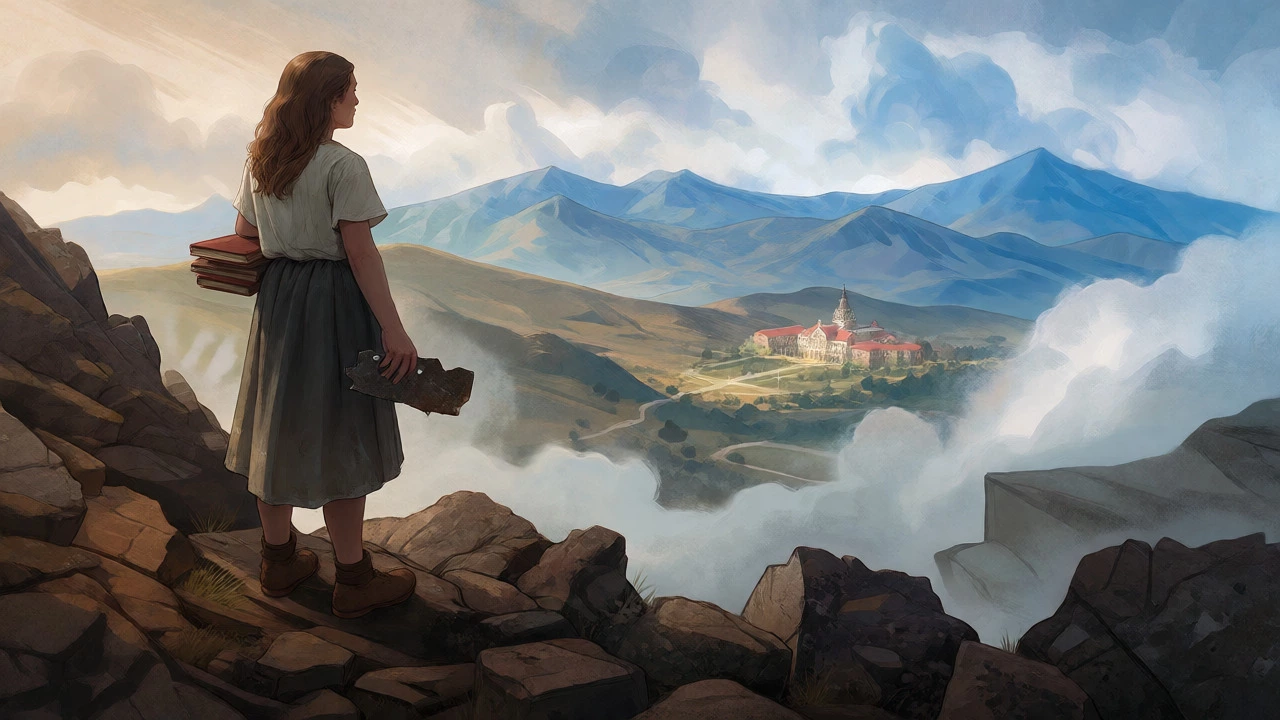
Modern Masterpiece: Educated by Tara Westover
While Capote set the stage, modern authors have refined the craft. Educated by Tara Westover is a contemporary benchmark. Released in 2018, this memoir recounts Westover’s journey from an isolated survivalist family in Idaho to earning a PhD from Cambridge University.
Why is this considered a top-tier example? Westover doesn’t just list dates and degrees. She explores the psychological cost of education. How do you leave your family when leaving means betraying them? The book tackles complex themes of loyalty, mental illness, and identity without ever becoming preachy.
Westover’s prose is lyrical yet precise. She describes the smell of sulfur in her father’s scrapyard and the silence of her mother’s kitchen with vivid clarity. Readers often say they couldn’t put it down, not because of a plot twist, but because of the emotional stakes. This demonstrates that literary nonfiction doesn’t need explosions to be exciting; it needs human conflict.
The Power of the Personal Essay: Bad Feminist by Roxane Gay
Not all literary nonfiction tells a single linear story. Sometimes, it’s a collection of thoughts tied together by a theme. Bad Feminist by Roxane Gay is a prime example of the personal essay collection. Gay blends pop culture criticism, political commentary, and personal anecdotes into a cohesive voice.
This format works because it mirrors how we think. We don’t process the world in chapters; we process it in fragments. Gay writes about her love for Mean Girls alongside her struggles with body image and sexual assault. The transition between topics feels natural, guided by her consistent perspective.
For readers who find long narratives daunting, essay collections offer a manageable entry point. Each chapter stands alone, but together they paint a portrait of the author’s mind. Gay’s honesty about her own contradictions-liking problematic media while advocating for feminism-makes the work relatable. It shows that literary nonfiction can be intellectual without being inaccessible.

Narrative Journalism: The Devil in the White City
Some writers blend historical research with detective-like storytelling. The Devil in the White City by Erik Larson intertwines two true stories: the construction of the 1893 World’s Fair in Chicago and the crimes of serial killer H.H. Holmes.
Larson’s technique involves meticulous archival research. He digs through old newspapers, city records, and diaries to reconstruct scenes that happened over a century ago. He imagines the sights and sounds based on evidence, not invention. This method allows him to write dialogue and describe settings with confidence.
The dual narrative structure keeps readers engaged. One thread offers hope and grandeur (the fair), while the other offers horror and decay (the murders). This contrast highlights the duality of human nature during the Gilded Age. It proves that literary nonfiction can handle complex historical contexts without losing its narrative drive.
How to Choose Your Next Read
So, which example should you start with? It depends on what you’re craving. Do you want a fast-paced thriller vibe? Go with In Cold Blood. Are you interested in psychology and family dynamics? Pick up Educated. If you prefer bite-sized insights on culture and society, try Bad Feminist. For history buffs who love atmosphere, The Devil in the White City is unbeatable.
When evaluating any book in this genre, look for three signs:
- Sensory Detail: Does the author make you see, hear, and smell the setting?
- Voice: Is the narrator’s personality distinct and engaging?
- Structure: Does the story unfold in a way that maintains interest, rather than just listing events chronologically?
Remember, the "best" example is subjective. What resonates with one reader might bore another. But these four titles consistently appear on lists because they mastered the balance between fact and art. They respect the truth while honoring the reader’s need for a good story.
Is literary nonfiction the same as creative nonfiction?
Yes, the terms are often used interchangeably. Both refer to nonfiction writing that employs literary techniques such as metaphor, imagery, and narrative structure. Some scholars distinguish them slightly, suggesting "creative nonfiction" emphasizes the craft of writing, while "literary nonfiction" emphasizes the artistic merit and cultural significance of the work. For general readers, however, they mean the same thing.
Can I use dialogue in literary nonfiction?
You can, but with caution. In memoirs, you can quote conversations you remember clearly. In narrative journalism, you can quote interviews or recorded statements. However, you cannot invent dialogue. If you weren't there and have no record of the exact words, you must paraphrase or acknowledge the uncertainty. Fabricating dialogue crosses the line into fiction.
What is the difference between a memoir and a biography?
A memoir focuses on a specific aspect or period of the author's own life, emphasizing personal growth and emotional truth. A biography covers the entire life of another person, relying heavily on external research and chronological completeness. Memoirs are subjective by design; biographies aim for objective accuracy, though they can still be written in a literary style.
Why is 'In Cold Blood' considered controversial?
Critics argue that Truman Capote took liberties with facts to enhance the dramatic effect. Some quotes were reconstructed rather than verbatim, and timelines were sometimes compressed. Despite this, it remains a foundational text because it pioneered the idea that true stories could be structured like novels, influencing countless writers since.
Are essays considered literary nonfiction?
Absolutely. Personal essays are a major subgenre of literary nonfiction. Works by authors like Joan Didion, James Baldwin, and Roxane Gay demonstrate how short-form pieces can achieve deep philosophical insight and stylistic beauty. Collections of essays often explore broader cultural themes through the lens of individual experience.