Greek to Roman Pantheon Converter
Explore the syncretism between Greek and Roman religions by converting deity names. As Rome conquered Greece, they adopted the gods, changing their names while retaining their core attributes.
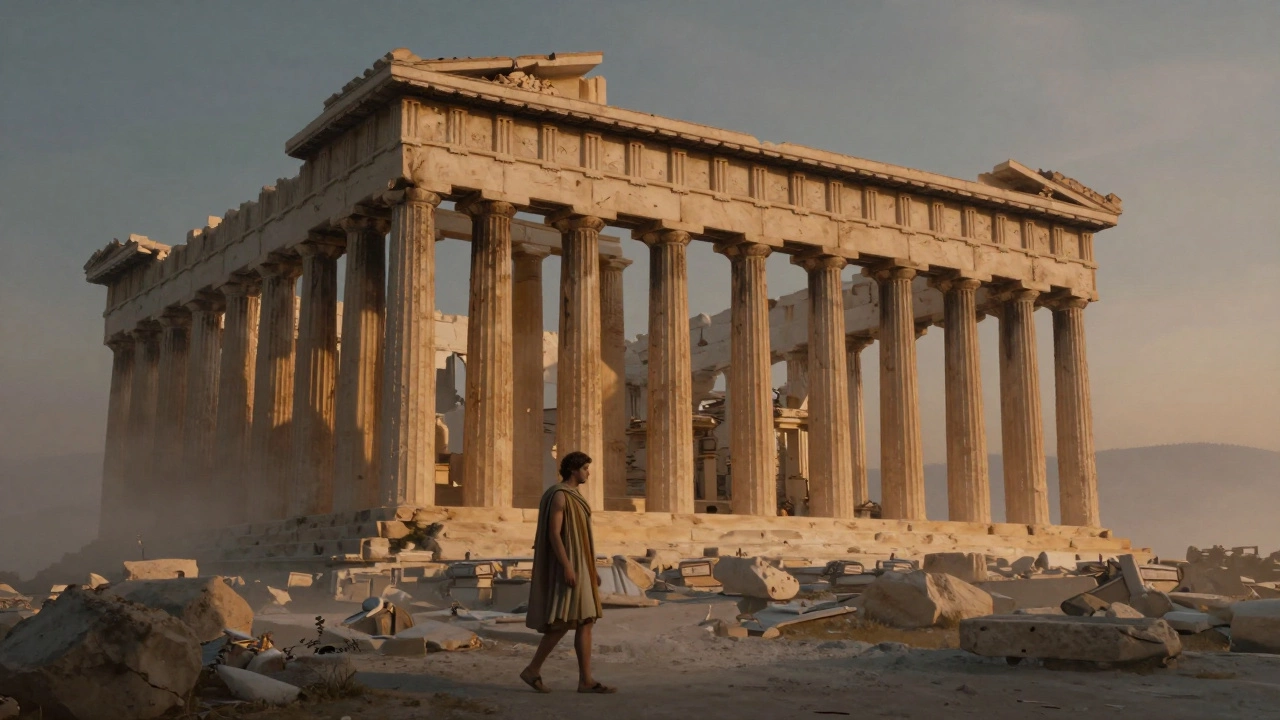
Imagine walking through the streets of Athens around 391 AD. You pass the Parthenon, not as a tourist snapping photos, but as a resident living in a city where the air still feels thick with divine presence. But something is changing. The temples are closing. The priests are losing their funding. The old stories about Zeus throwing lightning bolts or Poseidon shaking the earth are starting to sound like... well, stories.
The disappearance of belief in the Greek gods is a complex historical process involving religious, political, and philosophical shifts over several centuries wasn't a sudden event. It wasn't like flipping a switch. It was a slow fade, a gradual shift in how people understood the world around them. So, why did we stop believing in Olympus?
The Shift from Ritual to Philosophy
To understand why the gods lost their power, you first have to understand what they represented. For ancient Greeks, religion wasn't about faith in the way we think of it today. It was about ritual. You didn't necessarily 'believe' Zeus existed in a metaphysical sense; you knew that if you didn't pour wine on the ground before your journey, bad things might happen. It was transactional. Keep the rituals up, keep the gods happy, stay safe.
But then came the philosophers. Thinkers like Socrates and an Athenian philosopher who questioned traditional beliefs and emphasized ethical reasoning, Plato, and Aristotle started asking uncomfortable questions. They looked at the myths-the gods cheating on each other, getting drunk, causing wars out of petty jealousy-and said, "This doesn't make sense."
Plato and a student of Socrates who founded the Academy and wrote extensively on ideal forms and justice argued that the gods must be perfect, unchanging, and good. The chaotic behavior described in Homer's epics couldn't belong to true divine beings. This planted a seed: maybe the old stories were just metaphors. Maybe there was a higher order to the universe that didn't involve anthropomorphic deities fighting over mortals.
- Rituals maintained social order rather than proving divine existence.
- Philosophers introduced the concept of a rational, orderly cosmos.
- Myths were reinterpreted as allegories for natural phenomena.
This intellectual shift didn't kill religion overnight, but it weakened the emotional grip the myths had on educated elites. If the smartest people in society were treating the gods as symbols, why should anyone else take them literally?
The Roman Takeover and Syncretism
When Rome conquered Greece, they didn't destroy the Greek gods. They adopted them. Jupiter became Zeus. Mars became Ares. Venus became Aphrodite. This process, known as syncretism, diluted the unique cultural identity of the Greek pantheon. The gods became part of a larger, more bureaucratic imperial system.
In the Roman Empire, religion was increasingly tied to state loyalty. Emperors demanded worship. The personal, local connection people had with their neighborhood shrine to Hermes got overshadowed by grand, state-sponsored ceremonies honoring the Emperor. The intimacy of the old Greek faith was lost in the scale of the empire.
| Aspect | Greek Religion | Roman State Religion |
|---|---|---|
| Focus | Local community, family shrines | Imperial loyalty, public spectacle |
| Gods' Nature | Personable, flawed, interactive | Distant, authoritative, symbolic |
| Priesthood | Often civic duty, temporary roles | Professionalized, politically powerful |
By the time Christianity arrived, the Greek gods were already feeling a bit irrelevant. They were seen as old-fashioned, even by many Romans. The stage was set for a new player.
The Rise of Christianity: A Personal Alternative
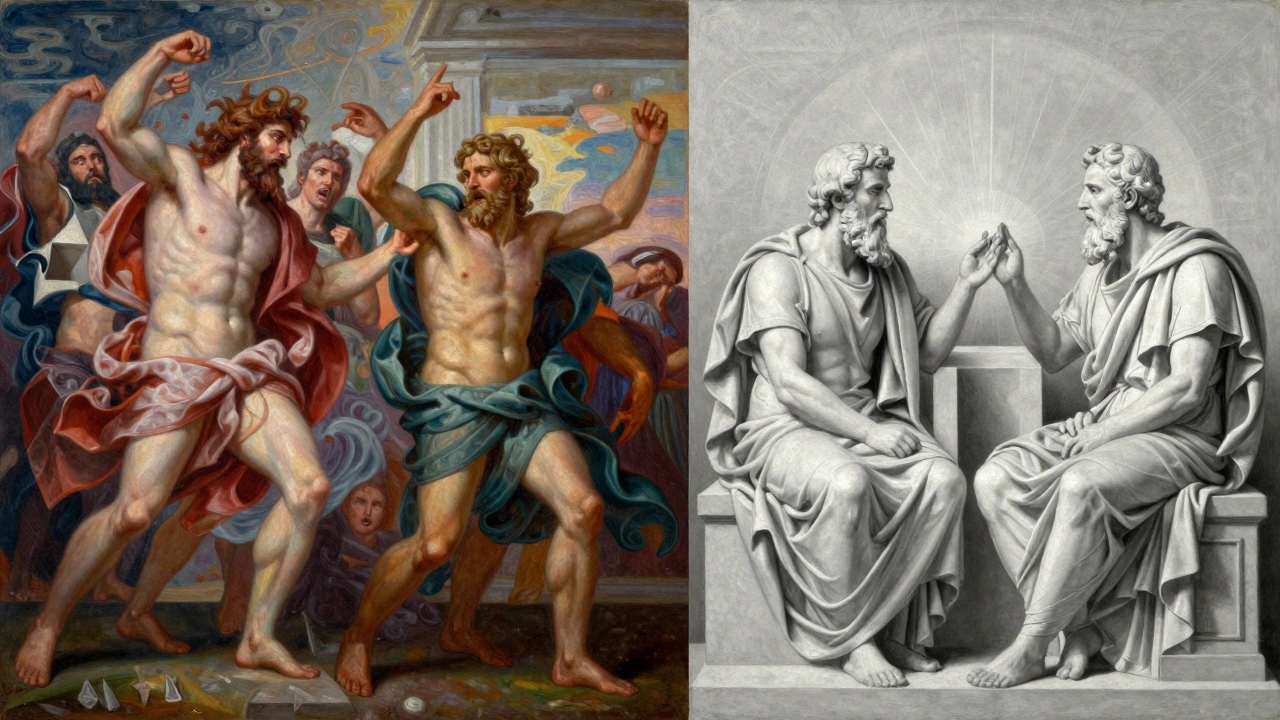
Christianity offered something the old polytheistic religions didn't: a personal relationship with a single, all-powerful deity who cared about you individually. In a vast, often cruel empire, the idea that one God loved everyone equally was incredibly appealing. It didn't matter if you were a slave in Egypt or a senator in Rome; you had value.
Early Christians also criticized the Greek gods for being immoral. How could you worship a god who raped women or caused floods just because he was angry? Christian morality provided a clear, consistent ethical framework. It promised salvation after death, which gave hope in a world where life was short and hard.
As Christianity spread, it didn't just coexist with paganism; it actively competed. Christians refused to participate in pagan rituals, which led to persecution. But this martyrdom actually helped the faith grow. People saw their courage and curiosity turned toward the new religion.
Key turning points included:
- The Edict of Milan (313 AD), which legalized Christianity.
- The Council of Nicaea (325 AD), which standardized Christian doctrine.
- Theodosius I making Christianity the state religion (380 AD).
Once the state backed Christianity, the tide turned quickly. Funding for pagan temples dried up. Priests lost their jobs. Public sacrifices were banned. Without institutional support, the old practices couldn't survive.
The Final Blow: Closing the Temple of Apollo
If there's one moment that symbolizes the end of the Greek gods, it's the closure of the Temple of Apollo at Delphi in 391 AD. Emperor Theodosius I issued edicts banning pagan rituals. The temple, once the most sacred site in the Greek world where people went to ask the oracle for guidance, was shut down.
This wasn't just a building closing. It was a statement. The voice of the gods was silenced by law. After this, practicing the old religion became dangerous. Many people converted publicly to avoid punishment, even if they kept some private traditions alive for a while longer.
By the 6th century, organized paganism in the Mediterranean was effectively dead. The knowledge of the myths survived, but the belief in the gods' active presence in the world vanished.
Science and Rationalism: Understanding the World
Even without Christianity, the Greek gods would have struggled. As science advanced, natural phenomena that were once attributed to divine intervention found logical explanations. Lightning wasn't Zeus's weapon; it was static electricity. Earthquakes weren't Poseidon's tantrums; they were tectonic shifts.
The Enlightenment period, centuries later, cemented this shift. Reason and evidence replaced myth and tradition as the primary ways to understand reality. The Greek gods moved from the realm of fact to the realm of fiction. They became characters in literature, subjects of art, and metaphors in psychology, but no longer objects of worship.
This transition allowed us to appreciate the beauty and complexity of the myths without needing to believe they were true. We can enjoy the story of Prometheus stealing fire without thinking he actually did.
Legacy in Modern Culture
While we don't believe in the Greek gods anymore, they haven't disappeared. They live on in our language, our names, and our stories. We name planets after them. We use words like 'narcissistic,' 'herculean,' and 'odyssey' every day. Psychologists talk about the 'Oedipus complex.' Writers and filmmakers constantly retell their adventures.
Their endurance shows that while the literal belief faded, the human need for meaningful narratives didn't. The Greek gods captured fundamental aspects of the human experience: love, war, jealousy, ambition, and tragedy. As long as humans feel these emotions, the stories will remain relevant.
Did people ever completely stop believing in Greek gods?
Belief declined gradually over centuries. By the 4th century AD, legal bans and the rise of Christianity made public practice difficult. While some isolated communities may have held onto traditions privately, organized belief in the Greek pantheon effectively ended by the 6th century.
Were Greek gods real to ancient people?
Yes, but 'real' meant different things. Most people viewed the gods as active forces in nature and daily life. However, even in antiquity, some philosophers treated the myths as allegorical rather than literal truth.
How did Christianity replace Greek mythology?
Christianity offered a personal, moral alternative to the impersonal, ritualistic Greek religion. Imperial support, legal bans on pagan practices, and the appeal of universal salvation accelerated the transition.
Why do we still care about Greek myths today?
The myths explore universal human themes like love, power, and fate. They provide rich archetypes and narratives that continue to influence literature, psychology, and popular culture.
What role did philosophy play in ending belief?
Philosophers like Plato and Aristotle critiqued the moral inconsistencies of the myths, encouraging a more rational view of the universe. This intellectual shift weakened the foundation of literal belief among the educated classes.