Reading Environment Impact Estimator
Environmental Access Assessment
Analyze the factors that drive reading frequency beyond ethnicitySelect the conditions that apply to the individual's environment to see the cumulative impact on reading probability.
Estimated Likelihood Increase
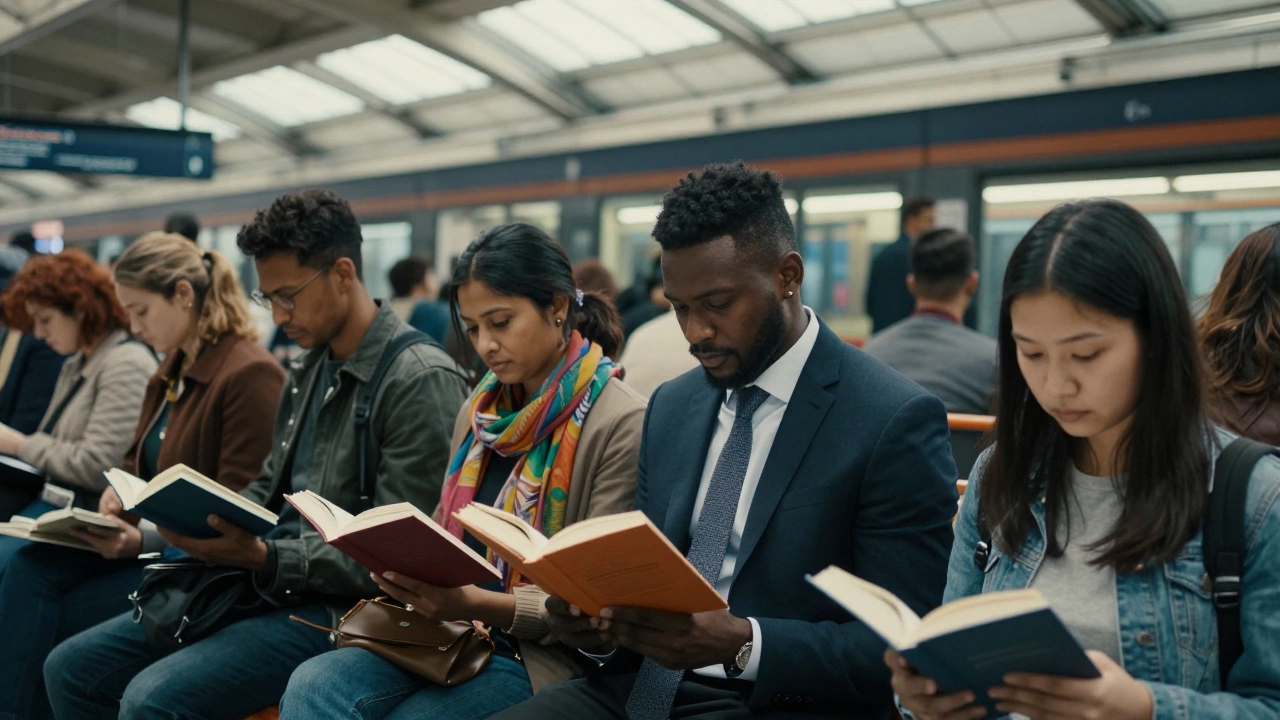
If you walk into a crowded subway or a local park, you'll see people from every background with their noses in a book. But have you ever wondered if certain groups actually read more than others? It's a question that often pops up in sociology classes or late-night debates, but the answer isn't as simple as picking one group and crowning them the "reading champions." The truth is, reading habits are less about the DNA you're born with and more about the world you grow up in.
Key Takeaways
- Reading habits are primarily driven by socioeconomic status and educational access, not race.
- Cultural values regarding literacy can significantly boost reading rates in specific communities.
- The "digital divide" continues to impact how different ethnic groups access reading materials.
- Reading preferences (genres and formats) vary widely across different demographic groups.
The Big Picture: What the Data Actually Says
When we try to pinpoint which race reads the most, we usually run into a wall of complex data. For instance, if we look at Pew Research Center a nonpartisan fact tank that provides information on social issues, public opinion, and demographic trends reports, the numbers often shift depending on how you define "reading." Are we talking about reading for pleasure, reading for work, or reading a digital screen?
In the United States, for example, data often shows a high percentage of adults across almost all racial groups-including White, Black, and Hispanic adults-claiming they read at least one book a year. However, the gap opens up when you look at the frequency of reading. Groups with higher average household incomes tend to read more, regardless of their race. This tells us that the real driver isn't ethnicity, but Socioeconomic Status the social standing or class of an individual or group, often measured as a combination of education, income and occupation.
Why does this matter? Because if you provide a child in a low-income neighborhood with a library card and a quiet place to study, their likelihood of becoming an avid reader skyrockets. The biological race of the person doesn't change their capacity or desire to read; their environment does.
The Role of Cultural Values and Education
While economics play a huge role, culture is another massive piece of the puzzle. Some communities place a legendary emphasis on academic achievement and literacy as a tool for liberation or social mobility. For example, in many Asian American communities, there is often a strong cultural push toward high educational attainment. This frequently translates into higher rates of reading, both for academic purposes and personal growth.
Similarly, within many Black communities, there is a rich tradition of "literacy as resistance." From the slave narratives of the 19th century to the contemporary explosion of Black literature, reading has been used as a way to reclaim identity and power. This creates a specific kind of reading culture that is deeply rooted in community and history.
But we have to be careful not to oversimplify. Not every person in these groups is a bookworm, and not every person in other groups is a non-reader. We're looking at broad trends, not individual rules. The connection here is simple: when a culture values reading and provides the tools to do it, people read more.
The Digital Divide and Access to Books
You can't talk about reading trends without talking about how people get their books. This is where the Digital Divide the gap between demographics and regions that have access to modern information and communication technology and those that don't comes into play. In the last decade, we've seen a massive shift toward e-books and audiobooks. However, access to high-speed internet and expensive devices like Kindle a series of e-readers developed by Amazon isn't equal.
If you live in a "book desert"-a neighborhood where the nearest bookstore is miles away and the local library is underfunded-you're less likely to read, no matter your race. Historically, marginalized racial groups have been more likely to live in these areas. This creates a statistical illusion where it looks like a certain race reads less, when in reality, they just have fewer books within reach.
Consider a student in a well-funded suburb versus a student in an inner-city school. The suburban student likely has a home library and a tablet. The inner-city student might rely entirely on the school's outdated textbooks. If the suburban student reads more, is it because of their race, or because they have a thousand more pages of accessible text in their bedroom?
| Factor | Impact Level | Primary Driver |
|---|---|---|
| Household Income | Very High | Ability to purchase books/devices |
| Parental Education | High | Early exposure to reading habits |
| Cultural Emphasis | Medium-High | Societal value placed on literacy |
| Geographic Location | Medium | Proximity to libraries/bookstores |

Changing Tastes: What Different Groups Are Reading
Now, let's shift from how much people read to what they read. This is where things get really interesting. There is a growing trend toward "diverse books," which are stories that feature protagonists from marginalized backgrounds. This has led to a surge in reading among groups who previously didn't see themselves reflected in the Literary Canon the body of books, music, and art that has been traditionally accepted as the most influential in shaping Western culture.
For instance, the rise of the "BookTok" phenomenon on TikTok a short-form video hosting service has democratized reading trends. It has pushed genres like romance and fantasy into the mainstream, especially among Gen Z and Millennial readers of all races. You'll find that a young Black woman in Atlanta and a young White woman in London might both be obsessed with the same "romantasy" novel, despite their different backgrounds.
We're also seeing a shift in reading habits by race as people seek out authors who share their lived experiences. This isn't just about identity politics; it's about the human desire to feel seen. When a reader finds a book that accurately describes their world, they are far more likely to keep reading. Representation doesn't just change what we read; it increases the volume of reading across the board.
The Psychological Barrier: The "Intellectual" Stigma
We also have to address the social baggage associated with reading. In some communities, reading for pleasure has been historically viewed as an "elitist" activity or something associated with a specific racial or social class. This creates a psychological barrier. If you've been told-implicitly or explicitly-that "people like us" don't spend their weekends reading 800-page novels, you might not pick up a book even if one is available.
Breaking this stigma is happening through community-led initiatives. Black-led book clubs and Latino literacy programs are rebranding reading as an act of community building rather than a solitary, academic chore. When reading becomes a social event, the perceived barrier drops, and the numbers go up.
Think about it like this: if you see your favorite athlete or musician talking about the books that inspired them, it changes the "cool factor" of reading. It moves from being a requirement for a grade to a tool for personal mastery. This shift is helping to close the gap in reading rates by making literacy feel accessible and desirable to everyone.

Looking Forward: The Future of Literacy
As we move further into the 2020s, the line between "reading" and "consuming content" is blurring. Audiobooks are booming. People who might have struggled with traditional text due to dyslexia or lack of formal schooling are now "reading" through their ears. This is a game-changer for demographics that were previously counted as non-readers.
The goal shouldn't be to find out which race reads the most, but to ensure that every person, regardless of their skin color or zip code, has the desire and the means to read. When we stop looking at race as the cause and start looking at access as the solution, the data becomes much more useful. We move from asking "who is better?" to "how do we help everyone?"
Is there a specific race that is statistically the most literate?
There is no single race that is inherently more literate. Literacy rates are tied to educational opportunities and socioeconomic status. In countries with universal education, literacy is high across all racial and ethnic groups. Disparities seen in data usually reflect systemic inequalities in school funding and access to resources rather than racial differences.
Do people from different races prefer different book genres?
While there are broad trends-such as a growing interest in diverse protagonists and culturally specific narratives-genre preference is mostly an individual trait. A person's age, gender, and personal interests generally influence their taste more than their race. For example, the popularity of fantasy and sci-fi is global and cuts across all ethnic lines.
How does the "digital divide" affect reading trends?
The digital divide refers to the gap in access to technology and the internet. Because e-books and digital libraries require devices and connectivity, groups with less economic power-who are often disproportionately from marginalized racial backgrounds-may have less access to a vast array of digital reading materials, affecting their overall reading frequency.
Why are some groups reporting higher reading rates in polls?
Self-reporting in polls can be skewed by social desirability bias, where people answer based on how they want to be perceived. Additionally, groups with higher levels of formal education (which can correlate with certain demographics due to systemic factors) are more likely to report reading habits that align with traditional academic expectations.
Can audiobooks be counted as "reading"?
Yes, from a cognitive and narrative perspective, audiobooks provide the same story and information as print. Many modern reading trends treat "consuming a book" as the primary metric, whether it is read with the eyes or the ears. This has helped increase the perceived reading rates in communities where oral traditions are strong.
Next Steps for Improving Reading Habits
If you're looking to increase your own reading or help others in your community, focus on these practical steps:
- Start small: Don't feel pressured to read a classic. Pick a graphic novel or a short story collection to build the habit.
- Join a community: Find a local book club or an online group. Reading is more sustainable when it's a shared social experience.
- Utilize public libraries: Most libraries now offer free digital apps like Libby or Hoopla, removing the cost barrier to reading.
- Diversify your shelf: Read authors from different backgrounds. It not only expands your worldview but often introduces you to styles of storytelling you wouldn't find in the mainstream canon.