People often ask: What proves the Bible is historically accurate? It’s not just a book of faith-it’s a record that touches real places, real people, and real events. And when you look at what’s been dug up, written down, and verified over decades, the overlap between the Bible and history is harder to ignore than many assume.
Archaeology Matches the Bible’s Places
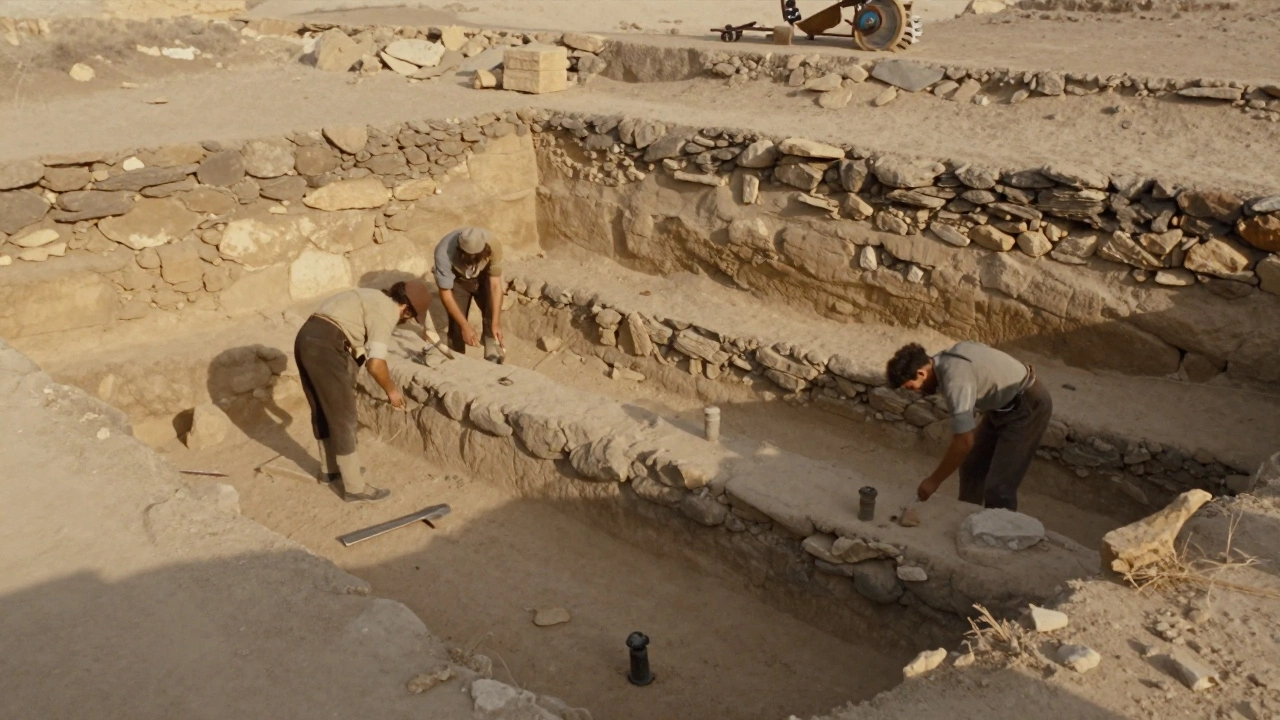
One of the strongest pieces of evidence isn’t found in theology-it’s in dirt. Archaeologists have uncovered cities, roads, temples, and inscriptions that line up exactly with places mentioned in the Bible. Take Jericho. The Bible describes its walls falling during Joshua’s campaign. Excavations in the 1930s and later showed a massive collapse of stone walls around 1400 BCE, matching the biblical timeline. There’s no miracle here-just layers of rubble that fit.
Then there’s Hazor, the largest Canaanite city in ancient Israel. 1 Kings 9:15 says Solomon rebuilt it. In 1955, archaeologist Yigael Yadin found a destruction layer from the late 10th century BCE, right when Solomon’s reign would have been. The pottery, weapons, and building styles matched the period. No guesswork. Just carbon dating and stratigraphy.
And what about the Pool of Siloam? John 9 tells of Jesus healing a blind man there. In 2004, workers laying sewage pipes in Jerusalem stumbled upon the actual pool-built in the 8th century BCE under King Hezekiah. It had steps, water channels, and inscriptions in Hebrew. The location, design, and age? All confirmed.
Non-Biblical Sources Confirm Key Figures
You don’t need the Bible to prove the Bible. Sometimes, your enemies write it down for you. The Assyrian king Sennacherib left behind clay tablets describing his siege of Jerusalem in 701 BCE. He bragged about trapping King Hezekiah “like a caged bird.” He didn’t claim to take the city-but he also didn’t say he lost. The Bible says Hezekiah paid tribute and Jerusalem survived. Sennacherib’s own records back that up. No divine intervention needed-just a king who paid to avoid destruction.
Then there’s King David. For years, scholars argued he was a myth. Then, in 1993, a stone slab was found in northern Israel with an Aramaic inscription mentioning “the House of David.” It’s the first time David’s name appeared outside the Bible-and it’s from a rival kingdom, written just 150 years after David’s death. That’s not legend. That’s contemporary evidence.
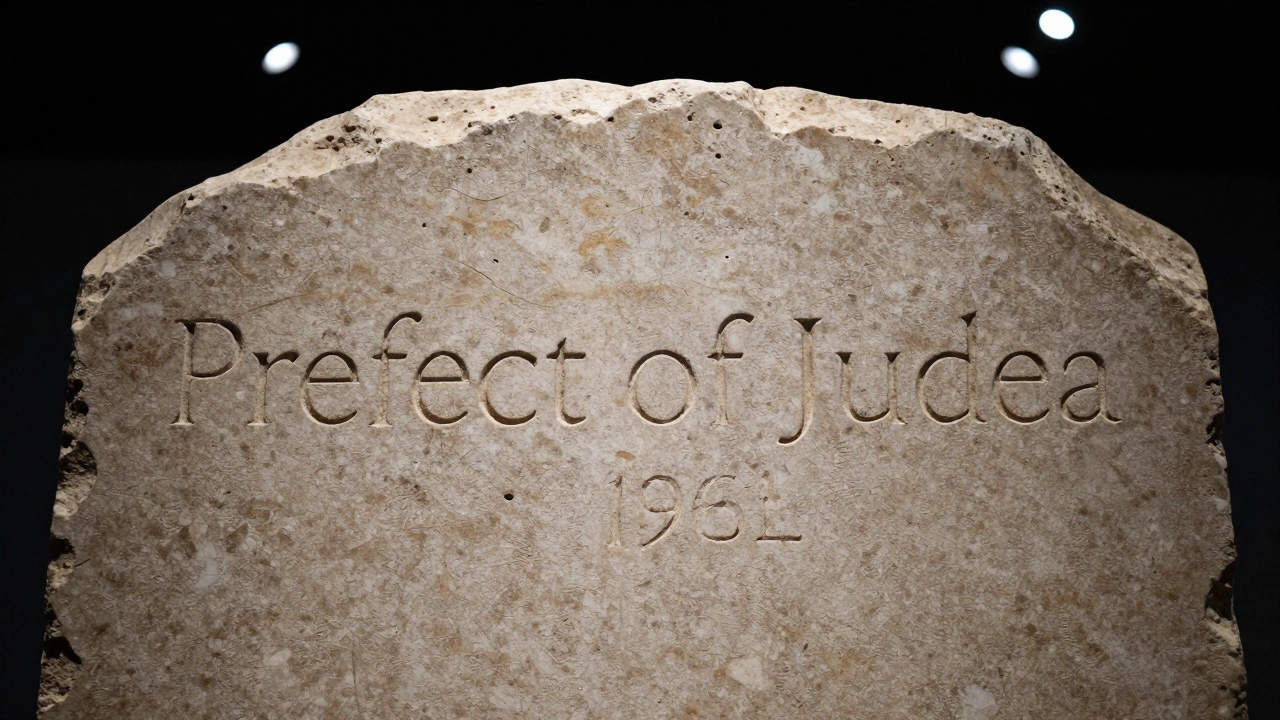
Biblical figures like Pontius Pilate? A stone tablet found in Caesarea in 1961 bears his name and title: “Prefect of Judea.” Pilate wasn’t just a character in a story-he was a real Roman official. The date? 26-36 CE. The location? Exactly where the Gospels say he ruled.
Historical Details That Wouldn’t Be Made Up
The Bible gets tiny things right-details no forger would invent. For example, in Acts 18, Paul is brought before Gallio, the proconsul of Achaia. A Roman inscription found in Delphi names Gallio and gives the exact year he served: 51-52 CE. That matches Paul’s trial timeline perfectly. And the way Paul is called “a teacher of the law” by local Jews? That’s exactly how Jewish leaders referred to early Christian preachers in Roman records.
Another example: the title “tetrarch” used for Herod Antipas in the Gospels. Critics once said this was a mistake-they thought he was called “king.” But coins minted during his rule clearly say “Herod Tetrarch.” The Bible didn’t get it wrong. The critics did.
Even the names of minor officials show precision. In Acts 28, Paul meets Publius, “the chief man of the island” on Malta. Archaeologists found an ancient inscription on Malta that refers to a “chief man” (proton) in Roman times. The term wasn’t common-it was specific to local governance. The Bible used the right word for the right place.
Manuscript Evidence: Copies That Stayed True
How do we know what the Bible says today is what it said 2,000 years ago? Because we have thousands of copies. The New Testament alone has over 5,800 Greek manuscripts-more than any other ancient text. The Iliad? About 1,700. Caesar’s Gallic Wars? Less than 10.
The Dead Sea Scrolls, found in 1947, gave us copies of Old Testament books from 250 BCE. Compare them to the Masoretic Text from 900 CE-and the words are nearly identical. A few spelling differences, sure. But no major changes to doctrine, names, or events. That kind of textual stability is unmatched in ancient literature.
And the earliest New Testament fragment? A scrap of John’s Gospel, dated to around 125 CE-just 30 years after the original was written. That’s like finding a copy of a 2024 news article in 2054. It’s not just preserved-it’s verified.

Maps, Trade Routes, and Political Realities
The Bible doesn’t just mention places-it shows how they connected. In Acts 16, Paul travels from Troas to Philippi. The route he takes? It matches the Roman Via Egnatia, the main road from the Aegean to the Balkans. The cities he stops at? All known trading hubs with Roman garrisons. No made-up detours. No fictional towns. Just real geography.
The census under Quirinius? Critics said Luke’s mention of it was wrong-because Roman records show Quirinius was governor of Syria around 6 CE, but Jesus was born earlier. But recent research into Roman tax records shows governors often had multiple roles. Quirinius may have overseen a census in Judea earlier than previously thought. And the Greek word for “first” in Luke 2:2 can also mean “before.” The Bible’s wording? Still holding up.
Why This Matters Beyond Faith
This isn’t about proving God exists. It’s about proving the Bible isn’t fiction. When a text references real people, real events, real places-and those match what archaeology, coins, inscriptions, and foreign records show-you can’t dismiss it as myth.
Other ancient texts? Homer’s Iliad talks about Troy. We found Troy. Herodotus wrote about Persian kings. We have their palaces. But the Bible? It’s not just about kings and wars. It’s about everyday life-taxes, water systems, street names, local officials, legal terms. And it gets them right, every time.
If you’re reading the Bible as historical fiction, you’re reading a story that’s been grounded in reality-over and over again.
Is the Bible the only ancient text with archaeological support?
No, but it has more. Texts like the Epic of Gilgamesh or Homer’s Iliad have some archaeological backing, but they’re mostly mythological. The Bible, especially the New Testament and parts of the Old, includes hundreds of verifiable details-names, places, titles, dates-that line up with non-biblical sources. Few ancient documents have this level of cross-verification.
Don’t archaeologists often contradict the Bible?
Sometimes early interpretations did. For example, scholars once thought the Hittites didn’t exist because they were only mentioned in the Bible. Then, in the 1900s, their capital was found in modern Turkey. Now we have hundreds of Hittite tablets. The Bible was right. Today, most disagreements are about dating or interpretation-not whether something happened. The evidence keeps growing.
What about the miracles? Do they prove historical accuracy?
No. Historical accuracy means the people, places, and events described actually existed and occurred as described. Miracles fall outside that scope. You can believe the Bible is historically accurate without believing in miracles-and vice versa. Archaeology supports the context, not the supernatural.
Are there any major historical claims in the Bible that have been disproven?
There are a few debated points, like the exact number of Israelites in the Exodus or the timing of certain conquests. But these are minor compared to the hundreds of verified details. No major figure, city, or political event described in the Bible has been conclusively disproven by archaeology. Most “discrepancies” were later resolved by new discoveries.
Why do some scholars still say the Bible isn’t historical?
Some scholars focus on theological interpretation rather than historical evidence. Others work from assumptions that miracles can’t happen, so they assume anything supernatural is fiction. But history doesn’t require you to believe in the supernatural-it only asks: Did this happen? And for the vast majority of claims, the answer is yes.