Ancient Adventure Story Timeline
Explore the origins of the adventure genre. Click on a story to see why it qualifies (or doesn't) as the "oldest adventure story."
Epic of Gilgamesh
c. 2100–1200 BCESumerian/Akkadian
Quest for immortality.
Tale of Sinuhe
c. 1900 BCEEgyptian
Exile and survival.
The Odyssey
c. 700 BCEGreek
Nautical journey home.
Ramayana
c. 500–100 BCEIndian
Rescue mission & war.
Why Gilgamesh Wins
| Story | Protagonist Agency? | External Conflict? | Transformation? | Oldest Complete? |
|---|---|---|---|---|
| Gilgamesh | ✔ Yes (Grief-driven) | ✔ Yes (Monsters/Gods) | ✔ Yes (Acceptance) | ✔ Yes |
| Sinuhe | ● Partial (Flight) | ✔ Yes | ● Limited | ✘ No (Younger) |
| Odyssey | ✔ Yes | ✔ Yes | ✔ Yes | ✘ No (Younger) |
| Ramayana | ✔ Yes | ✔ Yes | ✔ Yes | ✘ No (Younger) |
Note: While oral traditions likely predate these texts by millennia, The Epic of Gilgamesh is the oldest complete written narrative that fits all three criteria of modern adventure fiction: agency, conflict, and transformation. Other texts like The Shipwrecked Sailor are older but lack the complex character arc required for the genre definition.
You might think you know what an adventure story looks like. Maybe it’s a swashbuckling pirate chasing treasure, or a modern explorer hacking through jungle vines. But if you strip away the swords and the spaceships, the core of the genre hasn’t changed much in four thousand years. The question what is the oldest adventure story isn't just about trivia; it's about tracing the DNA of every blockbuster movie and bestseller on your shelf today.
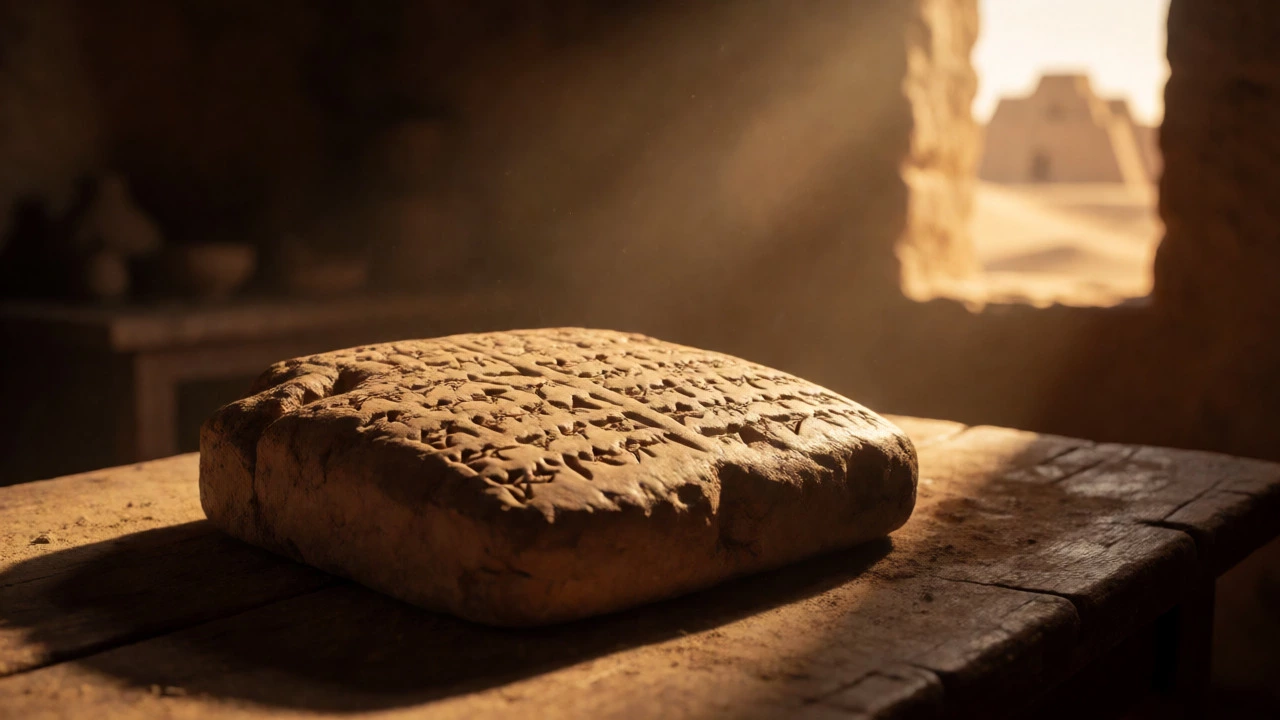
The answer points us back to ancient Mesopotamia, specifically to a clay tablet that has survived millennia. While many cultures have ancient myths, one text stands out as the definitive prototype for the narrative structure we recognize today. It wasn't written by a single author in a quiet study, but compiled from older oral traditions. This story didn't just entertain; it defined how humans talk about risk, loss, and the quest for meaning.
The Real Contender: The Epic of Gilgamesh
If you dig into the archives of human storytelling, The Epic of Gilgamesh is an ancient Sumerian poem that follows King Gilgamesh of Uruk on his quest for immortality. Most scholars agree this is the earliest known work of literature that fits the modern definition of an adventure story. It dates back to around 2100 BCE, with standard versions appearing later around 1200 BCE. That makes it older than Homer’s Iliad by over a thousand years.
Why does this matter? Because Gilgamesh isn't just a list of events. It has a protagonist with flaws, a sidekick (Enkidu), a clear goal, and a profound emotional arc. When Gilgamesh loses his friend Enkidu, he doesn't just grieve; he embarks on a physical journey across dangerous landscapes to find the secret of eternal life. Sound familiar? It’s the exact blueprint used in everything from Star Wars to The Lord of the Rings.
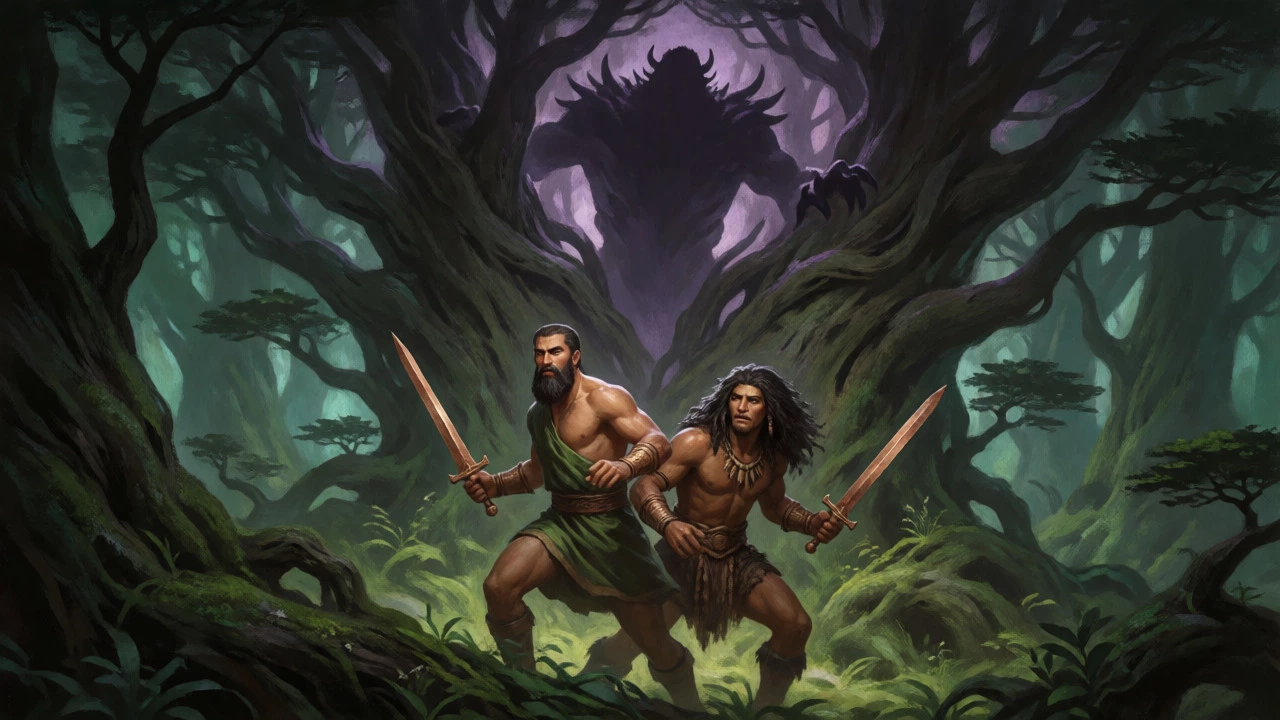
The story begins with Gilgamesh as a tyrant king who oppresses his people. The gods create Enkidu, a wild man, to challenge him. They fight, become friends, and then go on adventures together, slaying monsters like Humbaba and the Bull of Heaven. But when Enkidu dies, Gilgamesh’s fear of death drives the rest of the plot. He travels to the ends of the earth, meets survivors of a great flood, and ultimately learns that immortality is reserved for the gods. Humans must find meaning in their legacy instead.
Defining "Adventure" in Ancient Contexts
To claim something is the "oldest adventure," we have to define what an adventure actually is. If we mean any story with a journey, we might look at Egyptian texts like The Tale of Sinuhe (c. 1900 BCE) or The Shipwrecked Sailor (c. 2000 BCE). These are certainly old. However, they lack the complex character development and the dual-protagonist dynamic that defines the genre today.
An adventure story typically requires three elements:
- A Protagonist with Agency: Someone who chooses to leave their comfort zone.
- External Conflict: Monsters, nature, or enemies that pose physical threats.
- Transformation: The hero returns changed, not just victorious.
The Shipwrecked Sailor features a sailor stranded on an island who meets a giant serpent. It’s a cool tale, but it’s more of a parable about gratitude than a personal quest. Gilgamesh, on the other hand, is driven by internal psychological needs-grief and fear-which manifest as external dangers. This blend of internal and external stakes is what separates true adventure fiction from simple travelogues or mythological explanations.
Other Ancient Claimants to the Throne
While Gilgamesh holds the crown, other ancient texts deserve a nod. You can't discuss early narratives without mentioning The Odyssey, which is an ancient Greek epic attributed to Homer that details Odysseus' ten-year journey home after the Trojan War. Written around the 8th century BCE, it is undoubtedly the most famous ancient adventure. But it’s late to the party compared to Mesopotamian works.
Then there is The Ramayana, a Sanskrit epic traditionally attributed to Valmiki that recounts Prince Rama's exile and battle against the demon king Ravana. Dating estimates vary wildly, often placing its composition between 500 BCE and 100 BCE, though its oral roots may be older. Like Gilgamesh, it involves a hero, a stolen loved one, supernatural allies, and a war. Yet, because its written form likely post-dates the standardized Akkadian version of Gilgamesh, it usually takes second place in chronological rankings of "oldest" texts.
| Work | Approx. Date | Origin | Key Adventure Element |
|---|---|---|---|
| Epic of Gilgamesh | c. 2100-1200 BCE | Sumerian/Akkadian | Quest for immortality; monster slaying |
| Tale of Sinuhe | c. 1900 BCE | Egyptian | Exile and survival in foreign lands |
| The Odyssey | c. 700 BCE | Greek | Nautical journey; divine intervention |
| Ramayana | c. 500 BCE-100 BCE | Indian | Rescue mission; large-scale warfare |
This table highlights why Gilgamesh wins the title. It combines the personal stakes of Sinuhe with the fantastical elements of the Odyssey, all while predating both by centuries. The Egyptians had great stories, but they were often focused on order and duty. The Greeks focused on wit and return. Gilgamesh focused on the terrifying unknown and the human response to it.
How Ancient Structure Influences Modern Hits
You might wonder why we care about a dead king from Iraq. Because the structure of Gilgamesh is everywhere. Joseph Campbell, the mythologist who wrote The Hero with a Thousand Faces, based his "Hero's Journey" framework partly on these ancient epics. Look at Indiana Jones. Indy starts in his comfort zone (the museum), gets called to adventure (the map), crosses the threshold (leaves America), faces trials (snakes, Nazis), reaches the ordeal (the Well of Souls), and returns with the artifact (and a new perspective).
Even video games use this template. In The Legend of Zelda, Link leaves the village, fights monsters, gains tools, and saves the princess. The specific names change, but the skeleton is identical to Gilgamesh’s trek to Utnapishtim. The ancient authors understood that readers don't just want to see a hero win; they want to see the hero struggle, fail, and grow. That emotional resonance is timeless.
Pitfalls in Determining the "Oldest" Story
Determining the oldest story is tricky because "written" doesn't always mean "created." Oral traditions predate writing by thousands of years. There could have been adventure tales told around fires in Africa or Australia tens of thousands of years before anyone carved cuneiform into clay. We simply don't have records of them.
Another issue is fragmentation. Many ancient texts survive only in pieces. We have fragments of Sumerian poems about Gilgamesh that are even older than the full epic, but they aren't complete narratives. So, when we say The Epic of Gilgamesh is the oldest, we mean the oldest complete narrative that fits the genre criteria. It’s a practical distinction, not necessarily a metaphysical one.
Also, definitions of "literature" vary. Some scholars argue that religious hymns or legal codes aren't "stories" in the fictional sense. Gilgamesh blurs this line-it’s part mythology, part legend, and part philosophical treatise. But because it prioritizes narrative entertainment and character experience over purely ritualistic function, it qualifies as an adventure story.
Why This Matters for Readers Today
Knowing the roots of the genre changes how you read modern books. When you pick up a fantasy novel, you’re participating in a tradition that started with scribes pressing reeds into wet mud in Ur. You realize that the tropes you critique-the chosen one, the dark lord, the magic sword-are ancient tools designed to process universal human fears.
It also encourages us to look beyond Western-centric literary histories. For decades, school curricula taught that Greek literature was the foundation of Western storytelling. Acknowledging Gilgamesh shifts the center of gravity to the Middle East, reminding us that storytelling is a global human heritage, not a regional invention.
Is the Epic of Gilgamesh really a novel?
Not exactly. A novel implies a long-form prose narrative, usually printed. Gilgamesh is an epic poem written in verse. However, it functions narratively like a novel because it has a sustained plot, character arcs, and thematic depth. Scholars classify it as the earliest surviving great work of literature, regardless of its poetic format.
Who wrote the oldest adventure story?
We do not know the original author. The story evolved over centuries through oral tradition. The most famous standard version was edited by a scribe named Sin-leqi-unninni around 1200 BCE. Before that, various anonymous poets contributed episodes that were eventually compiled into the twelve-tablet series we have today.
Are there older adventure stories than Gilgamesh?
Possibly, but none survive intact. We have older fragments of Sumerian poems featuring Gilgamesh, such as "Gilgamesh and Huwawa," dating to around 2100 BCE. However, these are episodic and shorter. Other cultures may have had oral adventure tales that predate writing, but without written records, we cannot verify their content or structure.
Does the Bible contain older adventure stories?
The Hebrew Bible contains ancient narratives, such as the story of Noah's Flood, which parallels the flood account in Gilgamesh. However, the final compilation of the Torah generally dates to the first millennium BCE, making it younger than the Sumerian originals. The Genesis accounts likely drew upon earlier Mesopotamian sources.
Why is Enkidu important to the adventure?
Enkidu serves as the foil to Gilgamesh. He represents nature and humanity's raw state, contrasting with Gilgamesh's civilization and power. Their friendship humanizes Gilgamesh. Enkidu's death is the catalyst for the main adventure, driving Gilgamesh to confront mortality. Without Enkidu, the story would just be a series of heroic feats rather than a deep exploration of grief.