Adventure Story Hook Generator
Create a compelling opening line for your adventure story by selecting a technique and filling in the details.
Your Generated Hook:
Tip: Ensure this hook creates an immediate question in the reader's mind that can only be answered by turning the page.
You have ten seconds. Maybe fewer. That is all the time you get before a reader closes your book or scrolls past your post. In the world of adventure stories, which rely on momentum and excitement, a weak beginning is a death sentence. You don't need to explain the history of the world in paragraph one. You don't need to describe the protagonist's breakfast unless they are eating it while dodging arrows. You need a spark.
A good story starter does one thing: it creates an immediate question in the reader's mind that can only be answered by turning the page. It disrupts the status quo. It introduces danger, mystery, or change right out of the gate. If you are struggling to find that opening line, you are not alone. Even seasoned authors stare at blank screens wondering how to begin. The secret isn't magic; it's structure. Let's look at what actually works when you want to write an adventure that grips people from the first word.
The Power of Immediate Action
The most common advice for action scenes is to start with movement. This doesn't mean you must start with a car chase or a sword fight, though those work well. It means starting with a verb that implies urgency. Instead of saying, "John was worried about the package," try, "John clutched the package as the sirens wailed closer." See the difference? One tells you about a feeling; the other shows you a situation where that feeling matters.
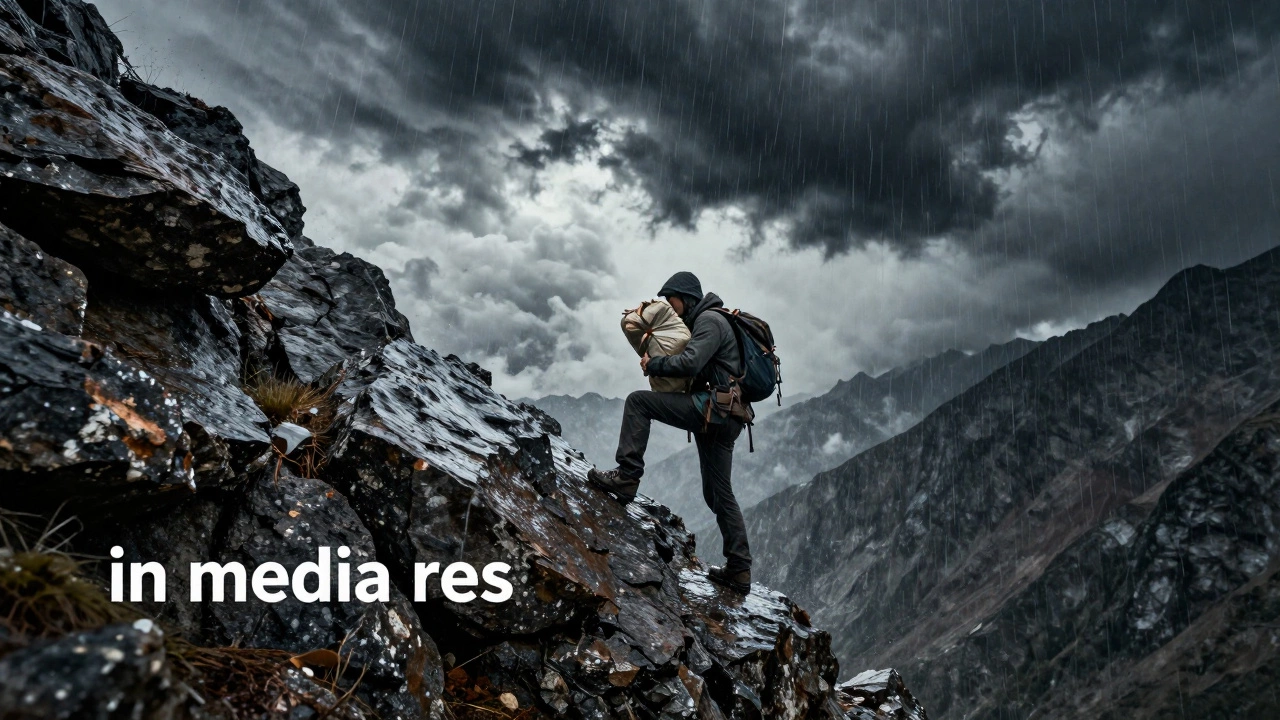
In adventure writing, in media res (Latin for "into the middle of things") is your best friend. Drop the reader into the scene after the calm has already broken. If your character is climbing a mountain, don't start them at the base camp buying gear. Start them halfway up, slipping on wet rock, with the storm clouds gathering above. This technique forces the reader to ask, "How did they get here?" and "Will they survive?" Those are the questions that keep eyes glued to the screen.
Think about your favorite movies. Do they usually start with the hero waking up and brushing their teeth? Rarely. They start with the inciting incident or the moment just before everything goes wrong. Apply this to your writing. Identify the moment where the ordinary life ends and the extraordinary journey begins. Cut everything before that moment. If you aren't sure if it's early enough, move the starting point earlier.
Starting With a Mystery or Anomaly
Not every adventure needs physical danger from the first second. Some of the best mystery novels and thrillers start with something that simply doesn't make sense. This is called an anomaly. It’s a detail that breaks the pattern of normalcy. A letter arrives from a dead relative. A map appears on a wall that shouldn't be there. A stranger knows the protagonist's name but claims they’ve never met.
This approach taps into human curiosity. We are wired to solve puzzles. When you present an unexplained event, you engage the reader's brain automatically. They become active participants, trying to figure out the answer alongside the character. For example, instead of introducing a detective who is bored, introduce the crime scene itself. Describe the odd detail-the single red shoe left in the middle of a pristine white room. Now the reader wants to know why that shoe is there.
To use this effectively, ensure the anomaly is specific. Vague mysteries are boring. "Something felt wrong" is not a hook. "The clock struck thirteen" is a hook. Specificity creates intrigue. The more precise the strange detail, the stronger the pull toward the explanation. This works particularly well in urban fantasy or sci-fi adventures where the rules of reality are about to shift.
Character Voice and Internal Conflict
Sometimes the best way to start is not with what happens, but with who is experiencing it. A strong character voice can carry a story even if the action is slow. If your protagonist has a distinct personality-sarcastic, fearful, overly optimistic-let that shine through immediately. Their internal monologue should reveal their flaw or their desire.
Consider the classic trope of the reluctant hero. Start with them refusing the call to adventure. Show us why they don't want to go. Are they tired? Broken? Afraid? By establishing their resistance early, you make their eventual journey more meaningful. The reader roots for them because they understand the cost of stepping forward. For instance, a pirate who hates the sea is instantly interesting. Why do they hate it? What happened? The reader needs to know.
Internal conflict also grounds high-stakes action. If a character is fighting a dragon, we care more if we know they are fighting to save someone they love, not just because it's their job. Establish the emotional stake quickly. You don't need pages of backstory. A single line like, "She held the dagger, remembering her brother's last breath," sets the stakes higher than any description of the weapon could.

Setting the Scene with Sensory Details
Adventure often takes place in exotic or dangerous locations. Use the setting as a character. But avoid generic descriptions like "it was dark and scary." Be specific. Engage the senses. What does the jungle smell like? Rotting fruit and damp earth. What does the spaceship sound like? A low, vibrating hum that rattles your teeth. These details immerse the reader faster than abstract adjectives.
When describing a location, tie it to the character's goal or fear. If the character is lost, describe the maze-like streets that seem to shift. If they are hiding, describe the shadows that feel like eyes. This technique, known as pathetic fallacy, mirrors the character's internal state with the external environment. It creates a cohesive mood without needing to explicitly state how the character feels.
For example, in a desert survival story, don't just say it was hot. Describe the sun hammering down like a blacksmith's fist. Describe the thirst that makes the tongue swell. This visceral experience makes the reader feel the danger. It raises the tension naturally. The environment becomes an antagonist, adding another layer of challenge to the adventure.
Common Mistakes to Avoid
Even experienced writers fall into traps that kill momentum. Here are the biggest ones to watch out for:
- The Weather Report: Starting with a long description of the weather or scenery before introducing any character or conflict. Readers don't care about the rain until someone is getting wet and cold.
- The Alarm Clock: Waking up the protagonist in the first paragraph. It is cliché and passive. Unless they wake up to a bomb going off, skip the waking up part.
- The Info Dump: Explaining the lore, history, or magic system in the first page. Trust your reader. Reveal information slowly as it becomes relevant to the plot.
- The Generic Protagonist: Using names like John or Jane Smith with no distinguishing traits. Give your character a quirk, a scar, or a specific way of speaking immediately.
Avoiding these mistakes keeps your prose tight and engaging. Every sentence should serve a purpose: advancing the plot, revealing character, or building atmosphere. If a sentence does none of these, cut it. Concise writing moves faster, which is essential for adventure genres.

Testing Your Opening
How do you know if your starter is good? Share it with someone who doesn't know the plot. Ask them two questions: "What do you think happens next?" and "Do you care about the person in the story?" If they can predict the next step easily, your mystery is too obvious. If they don't care about the character, your voice or stakes aren't clear yet.
Another test is the "So What?" factor. After reading the first paragraph, ask yourself, "So what?" If the answer is vague, you need to raise the stakes. Make the consequence of failure clearer. If the character fails to open the door, do they die? Do they lose their honor? Do they miss the bus? Higher consequences create higher tension.
Remember, writing is rewriting. Your first draft opening might be terrible. That's okay. Many famous books were rewritten dozens of times. J.K. Rowling changed the beginning of Harry Potter multiple times. Focus on getting the core idea down, then refine the hook later. The goal is to capture the energy of the adventure, not perfection.
| Technique | Best For | Risk |
|---|---|---|
| Action Hook | Thrillers, Fantasy, Sci-Fi | Confusing context if too abrupt |
| Mystery/Anomaly | Detective, Horror, Urban Fantasy | Paying off the mystery later |
| Character Voice | Literary Fiction, Coming-of-Age | Slow pacing if not balanced |
| Sensory Setting | Survival, Historical, Romance | Becoming descriptive overload |
Practical Exercises to Find Your Hook
If you are still stuck, try these quick exercises to generate ideas:
- The Last Line First: Write the ending of your story first. Then work backward to find the moment that leads inevitably to that end. Often, the best start is the mirror image of the finish.
- The Worst Day: Imagine the worst day of your protagonist's life. Start the story on that day. High emotion equals high engagement.
- The Question Game: Write a statement that is clearly false or impossible in your world. "The sky turned green on Tuesday." Now explain why.
- Dialogue Only: Write the first page using only dialogue. No tags, no descriptions. Just voices arguing or negotiating. This forces you to focus on conflict and subtext.
These exercises break writer's block by removing the pressure to be perfect. They allow you to play with ideas. Once you have a rough draft, you can polish the language and add the necessary context. The key is to start moving. Motion creates clarity.
Ultimately, a good story starter respects the reader's time. It promises entertainment, tension, or insight. It delivers on that promise with every subsequent page. Whether you choose action, mystery, or character, ensure your opening reflects the heart of your adventure. If the rest of your book is fast-paced, your start should be too. If it's introspective, let the voice lead. Consistency between the hook and the tone builds trust. And trust is what keeps readers coming back for more.
How long should the first paragraph be?
There is no strict rule, but shorter paragraphs often work better for hooks. Aim for 1-4 sentences. You want to deliver the impact quickly without overwhelming the reader with text blocks. White space on the page encourages reading.
Can I start with a flashback?
Generally, it is risky. Flashbacks can confuse readers if they don't understand the current timeline. If you must use one, make it very short and clearly connected to the present action. It is usually safer to establish the 'now' before diving into the 'then.'
Is it bad to start with dialogue?
Not at all, provided the dialogue reveals conflict or character. Avoid small talk like "Hello, how are you?" Instead, start with lines that show tension, surprise, or urgency. Dialogue is a great way to inject voice immediately.
What if my story is slow-paced?
Even slow-paced stories need a hook. Focus on emotional tension or atmospheric dread rather than physical action. A subtle change in routine or a lingering unease can be just as compelling as a chase scene if executed well.
Should I introduce the main character immediately?
Yes, ideally within the first few lines. Readers connect with people, not plots. Even if the character is unnamed initially, give them a distinct action or thought so the reader knows whose perspective they are following.