Romance Heat Level Finder
Select your preferred style of romantic intimacy below to find your ideal book rating.
Sweet & Emotional
I prefer emotional connection over physical details. No sex scenes, just kissing or hand-holding is fine.
Mild & Implied
Some touching and kissing is okay, but I prefer if the scene fades to black before things get explicit.
Moderate & Descriptive
I want to see sex scenes described, but keep it focused on emotion rather than graphic mechanics.
Spicy & Explicit
I love detailed descriptions, strong language, and anatomical references in intimate scenes.
Scorching / XXX
Give me everything! Frequent, very graphic scenes, kinks, and intense passion are a must.
Search keywords:
Have you ever picked up a romance novel, only to be blindsided by a scene that was far more intense than you expected? Or perhaps you searched for something steamy and ended up with nothing but sweet hand-holding? If so, you’ve likely encountered the mysterious "H" rating. In the world of romance novels is a genre focused on the relationship between two or more characters who fall in love, this single letter acts as a universal signal for what’s happening behind closed doors.
The "H" stands for heat. It is not an official literary classification like those used by libraries or academic critics. Instead, it is a community-driven shorthand created by readers, reviewers, and publishers to help you navigate the spectrum of sexual content in romantic fiction. Understanding these ratings can save you from awkward surprises and help you find exactly the kind of story you’re craving.
The Origin of the H Rating System
Where did this system come from? It didn’t start in a boardroom at a major publishing house. The H rating system emerged organically from online reader communities, particularly on platforms like Goodreads and dedicated romance forums in the early 2010s. Readers wanted a quick way to communicate whether a book contained explicit sex scenes or kept things relatively tame.
As self-publishing exploded in popularity, authors began adopting these informal ratings to set clear expectations for their audience. Today, even traditional publishers often include heat level indicators on their marketing materials. While there is no single governing body that enforces these standards, a general consensus has formed across the industry. This shared language helps bridge the gap between author intent and reader expectation.
Decoding the Scale: From Sweet to Scorching
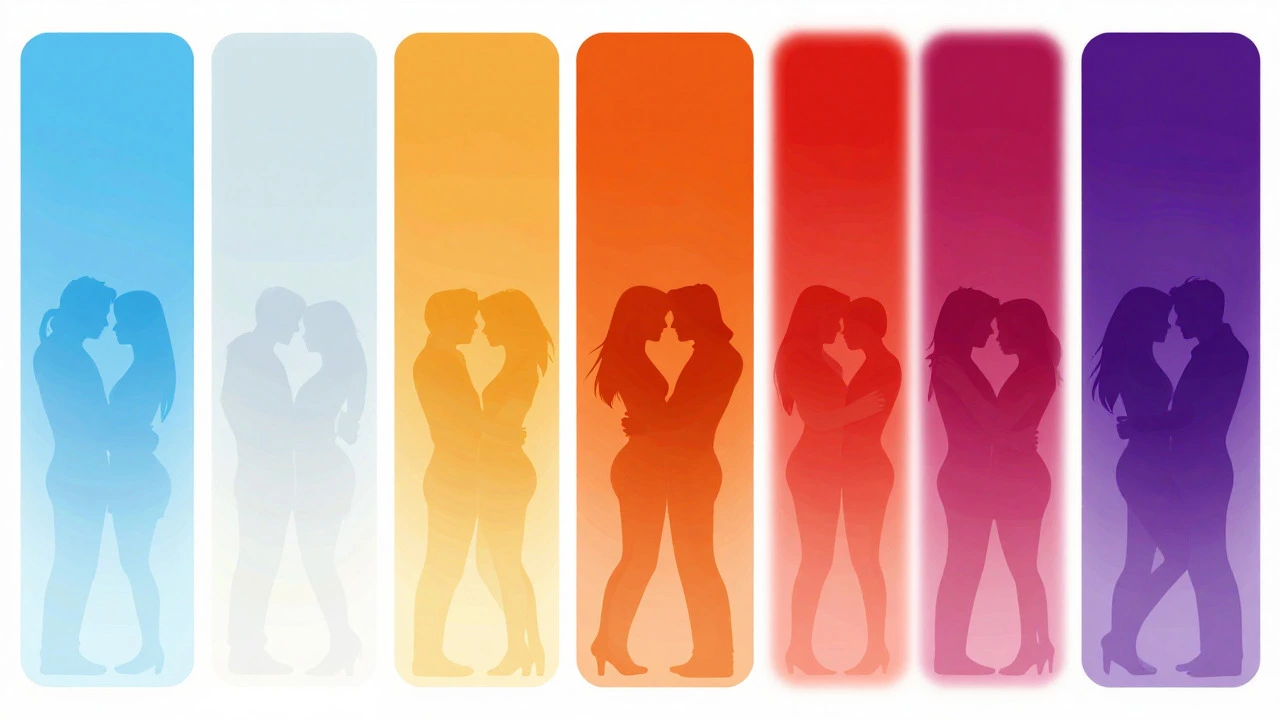
The most common version of the H scale ranges from H1 to H5. Each level represents a distinct degree of physical intimacy and descriptive detail. Knowing where a book falls on this scale allows you to curate your reading list with precision.
| Rating | Common Name | Description | Content Expectation |
|---|---|---|---|
| H1 | Sweet / Clean | No sex scenes; kisses may fade to black. | Emotional focus; suitable for all ages. |
| H2 | Mild / Low Heat | Kissing and touching; sex implied but not described. | Fades to black during intimate moments. |
| H3 | Medium / Moderate | Sex scenes present; some detail but limited explicitness. | Focus remains on emotion rather than mechanics. |
| H4 | High / Spicy | Explicit sex scenes with detailed descriptions. | Strong language and specific anatomical references. |
| H5 | Scorching / XXX | Very explicit, graphic, and frequent sex scenes. | May include kinks, fetishes, or non-traditional dynamics. |
Why Heat Ratings Matter to Readers
You might wonder why such a simple letter matters so much. For many readers, the heat level is just as important as the plot or character development. Some people read romance to escape into a fantasy filled with passion and intensity. Others prefer stories that focus purely on emotional connection without graphic details. Neither preference is better than the other; they are simply different tastes.
Consider your own reading habits. Do you enjoy getting lost in the sensory details of a passionate encounter? Or do you find that too much explicit content distracts you from the emotional arc of the story? By understanding the H rating, you can avoid wasting time on books that don’t match your comfort zone. It also helps you discover new authors who write within your preferred range.
Furthermore, heat ratings provide a layer of transparency. In the past, readers often relied on vague blurbs like "steamy" or "sweet," which could mean very different things to different people. One person’s "steamy" might be another person’s "mild." The standardized H scale reduces ambiguity, making it easier to find content that aligns with your personal boundaries and interests.
Navigating Variations and Publisher Differences
While the H1-H5 scale is widely recognized, it is not universally enforced. Different publishers and indie authors may interpret the levels slightly differently. For example, one author might consider a scene with moderate detail to be H3, while another might label it H4. This subjectivity means that checking reviews can still be helpful.
Some platforms use alternative systems. You might see terms like "Closed Door" (equivalent to H1/H2), "Open Door" (H3+), or star ratings instead of letters. Always check the specific legend provided by the retailer or author. If you’re buying from a small indie publisher, look for their definition of heat levels on their website or in the book description.
Additionally, certain subgenres have built-in expectations regarding heat. Paranormal romance, for instance, often leans toward higher heat levels due to the fantastical elements involved. Conversely, historical romance may vary widely depending on the era depicted and the author’s style. Being aware of these genre norms can help you anticipate the heat level even before checking the rating.
How to Find Books with Your Preferred Heat Level
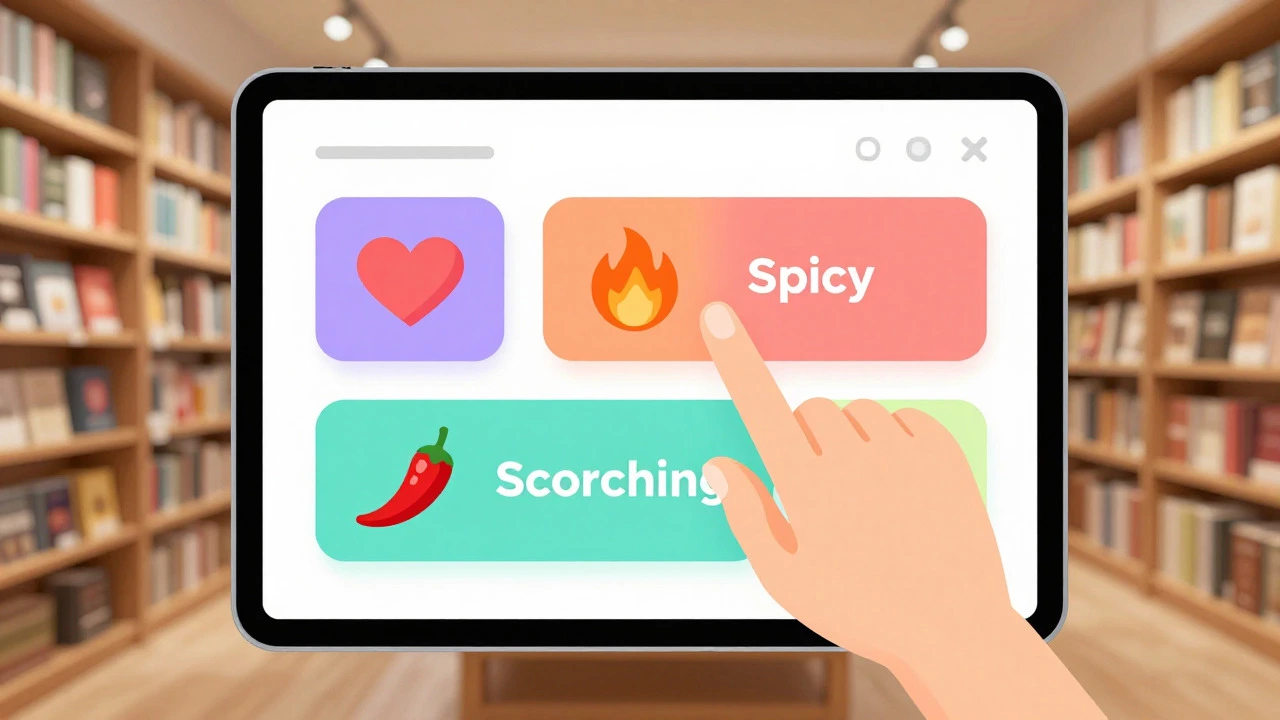
Finding books that match your desired heat level has become much easier thanks to digital tools. Most major online retailers allow you to filter search results by heat rating. On Amazon, for example, you can often find tags or keywords indicating "spicy" or "clean" romance. Goodreads also features user-generated lists categorized by heat level.
If you’re browsing in a physical bookstore, look for signage near the romance section. Many stores now organize shelves by heat level, using color-coded stickers or separate sections for "Sweet" and "Spicy" titles. Librarians can also be valuable resources; they often know which titles contain explicit content and can recommend alternatives based on your preferences.
Another tip is to follow bloggers and influencers who specialize in romance reviews. Many of them explicitly state the heat level of every book they review. Joining online communities, such as Facebook groups or Reddit threads dedicated to romance readers, can also provide personalized recommendations tailored to your taste.
Beyond the H: Other Important Considerations
While heat level is crucial, it’s not the only factor to consider when choosing a romance novel. Content warnings are increasingly common and essential for readers with specific triggers or sensitivities. These warnings might indicate themes like abuse, mental health struggles, or controversial tropes. Always scan the back cover or product description for these alerts.
Tropes also play a significant role in shaping your reading experience. Whether you prefer enemies-to-lovers, second-chance romance, or fake dating, knowing your favorite tropes can help you narrow down your choices. Combining trope preferences with heat ratings gives you a powerful tool for discovering your next great read.
Finally, remember that heat level doesn’t dictate quality. A well-written H1 book can be just as compelling and emotionally resonant as an H5 novel. Focus on finding stories that resonate with you personally, regardless of how much skin is shown on the page.
Is H5 always pornographic?
Not necessarily. While H5 books contain very explicit and graphic sex scenes, they are still classified as romance because the central plot revolves around the development of a loving relationship. Pornography typically lacks a strong narrative or character development, whereas H5 romance integrates sexual content into a broader emotional storyline.
Can I trust the H rating on self-published books?
Generally, yes. Self-published authors rely heavily on accurate metadata to attract readers. Mislabeling heat levels can lead to negative reviews and refunds. However, since interpretations can vary slightly, it’s always a good idea to skim recent reader reviews to confirm if the book matches your expectations.
What does "fade to black" mean?
"Fade to black" refers to a writing technique where the narrative cuts away right before a sexual encounter begins. The scene ends with darkness or a chapter break, implying that intimacy occurred without describing the act itself. This is typical of H1 and H2 rated books.
Are there romance books with no sex at all?
Yes, these are usually labeled as H1 or "Clean/Sweet" romance. They focus entirely on emotional intimacy, courtship, and relationship building. Physical contact may be limited to kissing or holding hands, and any sexual activity is left to the reader's imagination.
Does a higher H rating mean better writing?
No. Heat level indicates the amount of sexual content, not the quality of the prose or plot. Excellent writing exists across all heat levels. Some readers prefer the subtlety of lower heat books, while others enjoy the intensity of higher heat narratives. Personal preference dictates enjoyment, not the rating itself.