Staring at an endless bookshelf and wondering where to start? You’re not alone. Book Recommendations are curated suggestions that help readers cut through the noise and find stories that click. Below you’ll get a practical, genre‑by‑genre cheat sheet, plus a quick method to match any mood with the perfect read.
Quick Takeaways
- Identify your mood or goal first - relaxation, learning, adventure, or a boost of optimism.
- Pick a genre that fits that mood, then use the curated list to narrow down titles.
- Mix best‑sellers with hidden gems for a balanced shelf.
- Track what you finish in a simple spreadsheet or app.
- Revisit the list every few months - your taste evolves.
How to Pick the Right Book for You
Before you dive into any recommendation, ask yourself three quick questions:
- What’s my current energy level? Low energy? Go for a breezy novel. High energy? Choose a fast‑paced thriller.
- Do I want to learn something? Non‑fiction, memoir, or narrative nonfiction can satisfy a curiosity spike.
- Am I in the mood for escapism? Fantasy, sci‑fi, or historical fiction can transport you.
Answering these helps you zero in on the genre, then you can scan the curated picks below.
Top Picks by Genre
Fiction - Literary & Contemporary
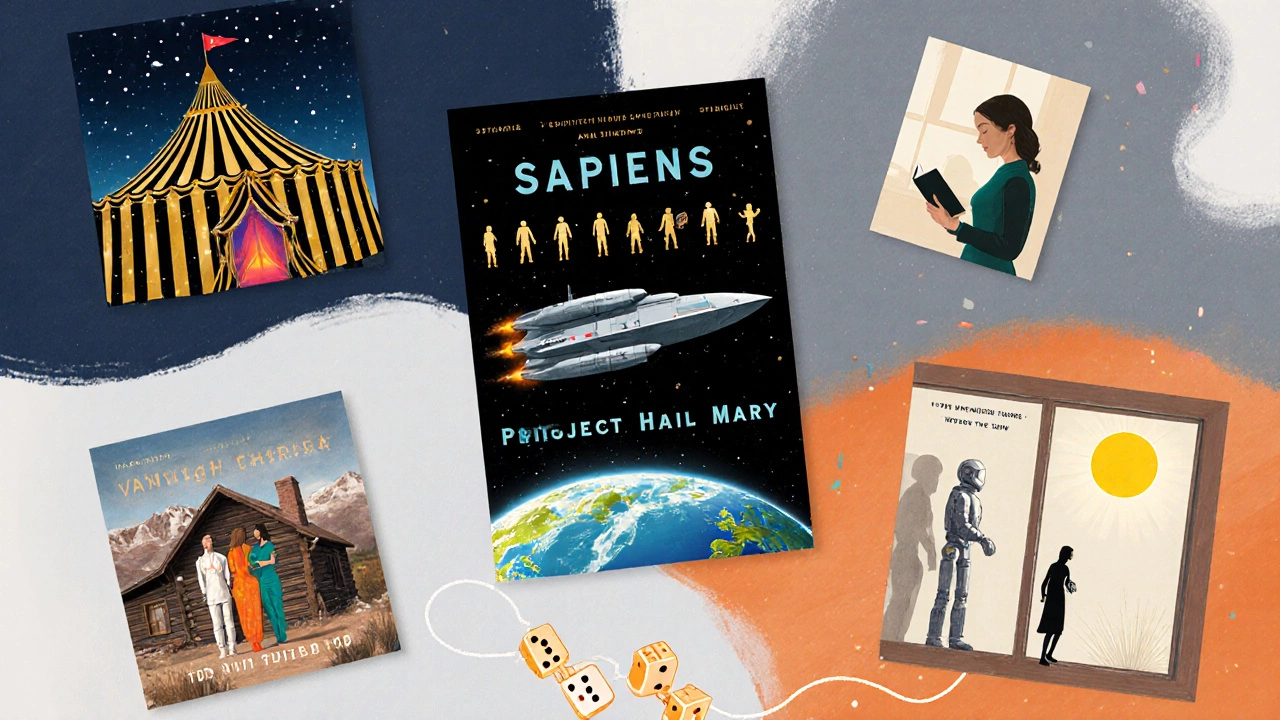
The Night Circus by Erin Morgenstern (2011) offers a magical, atmospheric love story set in a wandering circus that only opens at night. The prose feels like a dream, perfect for readers craving lyrical storytelling.
Non‑Fiction - Big Ideas
Sapiens: A Brief History of Humankind by Yuval Noah Harari (2014) distills 200,000 years of history into bite‑size insights about culture, economics, and technology. Ideal when you want a fresh perspective on why we are the way we are.
Memoir - Personal Triumph
Educated by Tara Westover (2018) tells the story of a woman who grew up in an Idaho survivalist family and earned a PhD from Cambridge. It’s a raw, inspiring look at the power of education.
Sci‑Fi - Hard and Hopeful
Project Hail Mary by Andy Weir (2021) follows a lone astronaut who wakes up alone on a star‑ship with a mission to save Earth. Fans of "The Martian" will love the same blend of science and humor.
Fantasy - Epic & Fresh
The Vanishing Half by Brit Bennett (2020) explores two twin sisters who choose very different racial identities, blending family drama with social commentary. While technically literary fiction, its world‑building feels almost fantastical in its emotional depth.
Self‑Help - Practical Growth
Atomic Habits by James Clear (2018) breaks down how tiny changes compound into massive results, backed by psychology and real‑world examples. A go‑to guide for anyone looking to build better routines.
Literary Fiction - Thought‑Provoking
Klara and the Sun by Kazuo Ishiguro (2021) is narrated by an Artificial Friend who watches humanity from a store window, asking what it means to love. The novel is a gentle meditation on technology and humanity.
Quick Comparison Table
| Title | Author | Year | Why Read It? |
|---|---|---|---|
| The Night Circus | Erin Morgenstern | 2011 | Magical ambience, lyrical prose |
| Sapiens | Yuval Noah Harari | 2014 | Big‑picture history, thought‑provoking |
| Educated | Tara Westover | 2018 | Powerful memoir of self‑discovery |
| Project Hail Mary | Andy Weir | 2021 | Science‑driven adventure, humor |
| The Vanishing Half | Brit Bennett | 2020 | Explores identity, family ties |
| Atomic Habits | James Clear | 2018 | Actionable habit‑building framework |
| Klara and the Sun | Kazuo Ishiguro | 2021 | Elegant look at AI and love |
Hidden Gems Worth Your Time
If you’ve already tackled the big names, try these under‑the‑radar titles:
- "The Midnight Library" by Matt Haig (2020) - a speculative look at alternate lives.
- "The Seven Moons of Maali Almeida" by Shehan Karunatilaka (2023) - a surreal, post‑war Sri Lankan satire.
- "All the Light We Cannot See" by Anthony Doerr (2014) - beautifully written WWII narrative, often overlooked in bestseller lists.
- "An American Marriage" by Tayari Jones (2018) - intimate look at love and the justice system.
Building Your Personal Reading List
Turning recommendations into a habit is easier when you have a system:
- Set a monthly goal. Five pages a day equals a decent novel each month.
- Use a tracking app. Goodreads, StoryGraph, or a simple Google Sheet work well.
- Alternate genres. Switching from a heavy non‑fiction to a light fantasy keeps momentum.
- Schedule “reading blocks.” 20‑minute slots before bed or during commute.
- Reflect after each book. Jot down one line about what stuck with you; it helps cement the habit.
With this routine, the curated list above becomes a living library you actually get through.
Frequently Asked Questions
How many books should I read in a year?
There's no one‑size‑fits‑all answer, but many avid readers aim for 20‑30 books a year. Adjust based on your schedule and the length of the books you choose.
Where can I find free versions of these books?
Public libraries often have e‑book loans via apps like Libby or OverDrive. Some titles also appear on Project Gutenberg (classic works) or the author's promotional sites.
What if I don’t finish a book?
Put a checkmark in your tracker and move on. The goal is exposure, not perfection. You can always return later if curiosity resurfaces.
How do I choose between fiction and non‑fiction?
Consider your current need: escapism? Try fiction. Skill‑building or curiosity? Reach for non‑fiction. Mixing both keeps your brain balanced.
Are audiobooks worth it?
Definitely, especially for commuters or people who prefer listening. Many titles on Audible and Scribd match the print versions in quality.