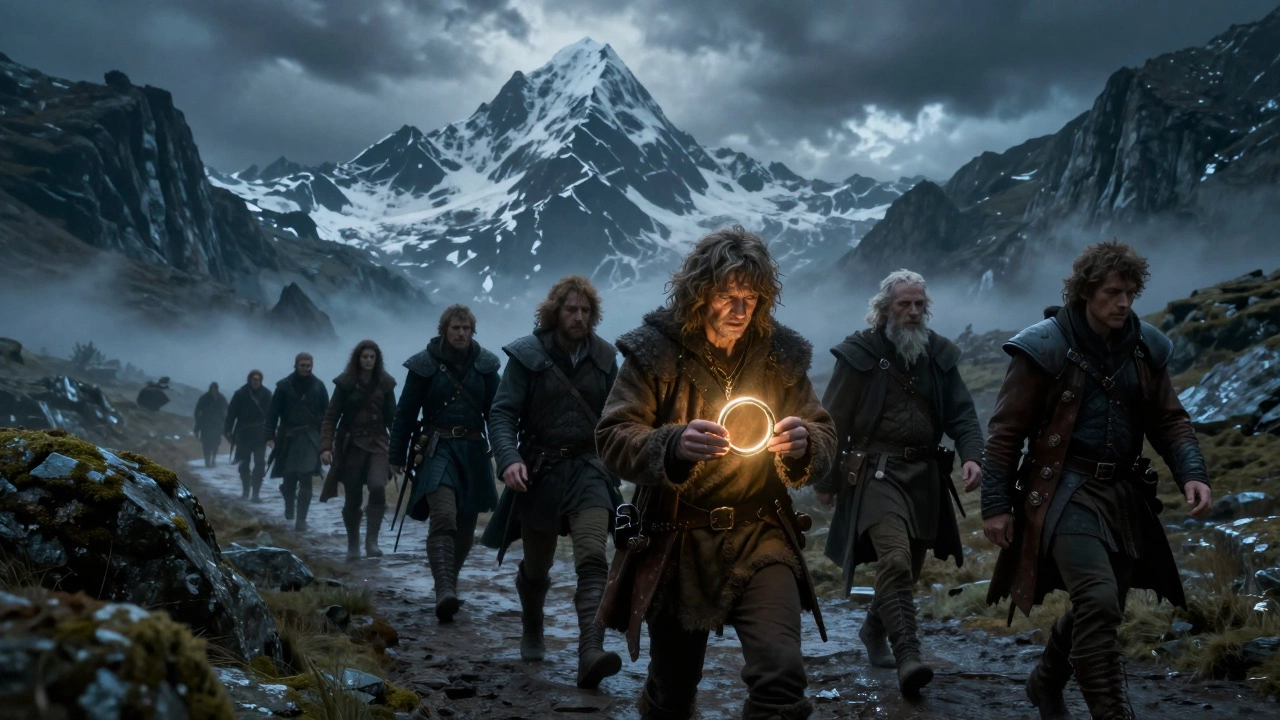
Find Your Fantasy Archetype
Select the traits that resonate most with you to discover your ideal fantasy masterpiece.
The Architect
I want a map, a history, languages, and a world that feels real and ancient.
The Soul Seeker
I value internal conflict, psychological depth, and poetic prose over battles.
The Connector
I want accessible magic, flawed heroes, and a story everyone knows.
The Strategist
I crave politics, ecology, religion, and complex systems thinking.
Ask ten different readers to name the greatest fantasy book of all time, and you will likely get ten different answers. You might hear about a wizard’s quest in Middle-earth, a young boy sorting into houses at a boarding school, or a pair of siblings navigating a desert kingdom. There is no single scientific metric for literary greatness. However, when critics, scholars, and fans gather around this question, a few titles consistently rise to the top. The debate usually centers on world-building depth, character complexity, and cultural impact.
Defining the "greatest" requires looking beyond sales figures. While commercial success matters, true influence is measured by how a book changes the genre itself. Some books create the rules; others break them. To understand which title holds the crown, we need to look at the heavyweights that shaped modern fantasy.
The Foundation: The Lord of the Rings
If you are looking for the most influential work in the genre, it is hard to ignore The Lord of the Rings by J.R.R. Tolkien. Published in three volumes between 1954 and 1955, this epic did not just popularize high fantasy; it essentially invented the template for it. Before Tolkien, fantasy was often seen as children’s literature or fairy tales. He brought linguistic rigor, historical depth, and mythological weight to the medium.
Tolkien created entire languages-Quenya and Sindarin-with full grammatical structures before writing the stories. This attention to detail gave Middle-earth a sense of reality that had never been seen before. The concept of a primary evil (the Dark Lord), a fellowship of diverse races, and a quest to destroy a powerful artifact became the standard blueprint. Even authors who disagree with Tolkien’s style admit his shadow looms large over every subsequent fantasy novel. If you measure greatness by foundational impact, Tolkien takes the title.
| Title | Author | Key Innovation | Primary Theme |
|---|---|---|---|
| The Lord of the Rings | J.R.R. Tolkien | High Fantasy Template & Linguistic World-building | Power, Corruption, Industrialization vs Nature |
| A Wizard of Earthsea | Ursula K. Le Guin | Magic as Balance & Psychological Depth | Identity, Shadow Self, Coming of Age |
| Harry Potter and the Philosopher's Stone | J.K. Rowling | Mainstream Cultural Phenomenon & Accessible Magic | Love, Death, Choice, Institutional Critique |
| Dune | Frank Herbert | Eco-Political Sci-Fi/Fantasy Hybrid | Religion, Ecology, Messianic Figures |
The Literary Counterpoint: A Wizard of Earthsea
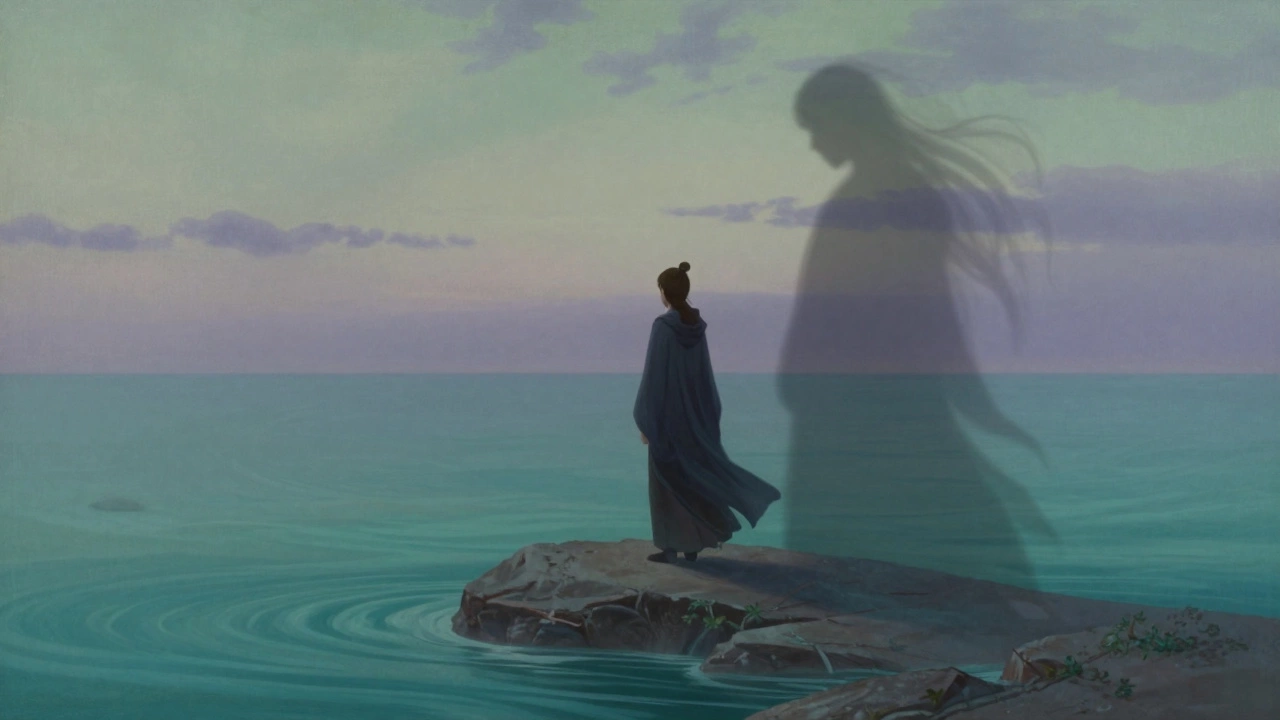
While Tolkien built the map, Ursula K. Le Guin explored the soul. Many literary critics argue that A Wizard of Earthsea, published in 1968, is the superior work of art. Unlike the sprawling epics that followed, this novel is concise, poetic, and deeply psychological. It draws heavily from Taoist philosophy rather than European mythology.
In Earthsea, magic is not about waving wands or casting fireballs. It is about knowing the true names of things and maintaining balance. When Ged, the protagonist, unleashes a dark shadow through pride and fear, he must spend the rest of his life confronting that part of himself. This introduction of the "shadow self" added a layer of internal conflict to fantasy that was previously rare. For readers who value prose quality and philosophical depth over battle scenes, Le Guin’s work is the gold standard. It proved that fantasy could be serious literature without losing its wonder.
The Cultural Giant: Harry Potter
We cannot discuss the greatest fantasy book without addressing the elephant in the room: Harry Potter and the Philosopher's Stone (or *Sorcerer's Stone* in the US). J.K. Rowling’s series, starting in 1997, changed the publishing industry forever. It turned reading into a global social event. Millions of adults read alongside children, creating a shared cultural language that transcended age groups.
Critics often dismiss Harry Potter as simple or derivative, citing its similarities to British boarding school stories like *Bridget Jones’s Diary* meets *Lord of the Rings*. However, dismissing it ignores its massive accessibility. Rowling made magic feel mundane and relatable. She showed that heroes can be messy, flawed, and ordinary. The series’ exploration of prejudice, bureaucracy, and the choice between right and easy resonated deeply with a generation. If "greatest" means widest reach and cultural penetration, Rowling wins hands down.
The Genre-Bender: Dune
Sometimes the line between science fiction and fantasy blurs. Frank Herbert’s Dune, published in 1965, is technically sci-fi but operates on fantasy principles. It features feudal politics, messianic prophecies, and mental powers achieved through spice-induced meditation. Dune is often cited as the greatest speculative fiction book because it tackles complex systems: ecology, religion, politics, and economics.
Herbert didn’t just tell a story; he simulated a society. The desert planet Arrakis feels real because of its water scarcity and the political maneuvering surrounding the spice melange. Paul Atreides is not a typical hero; he is a tragic figure caught in a web of religious manipulation. For readers who want intellectual stimulation and world-building that feels historically plausible, *Dune* stands alone. It influenced everything from *Star Wars* to *Game of Thrones*.
Other Heavyweights in the Conversation
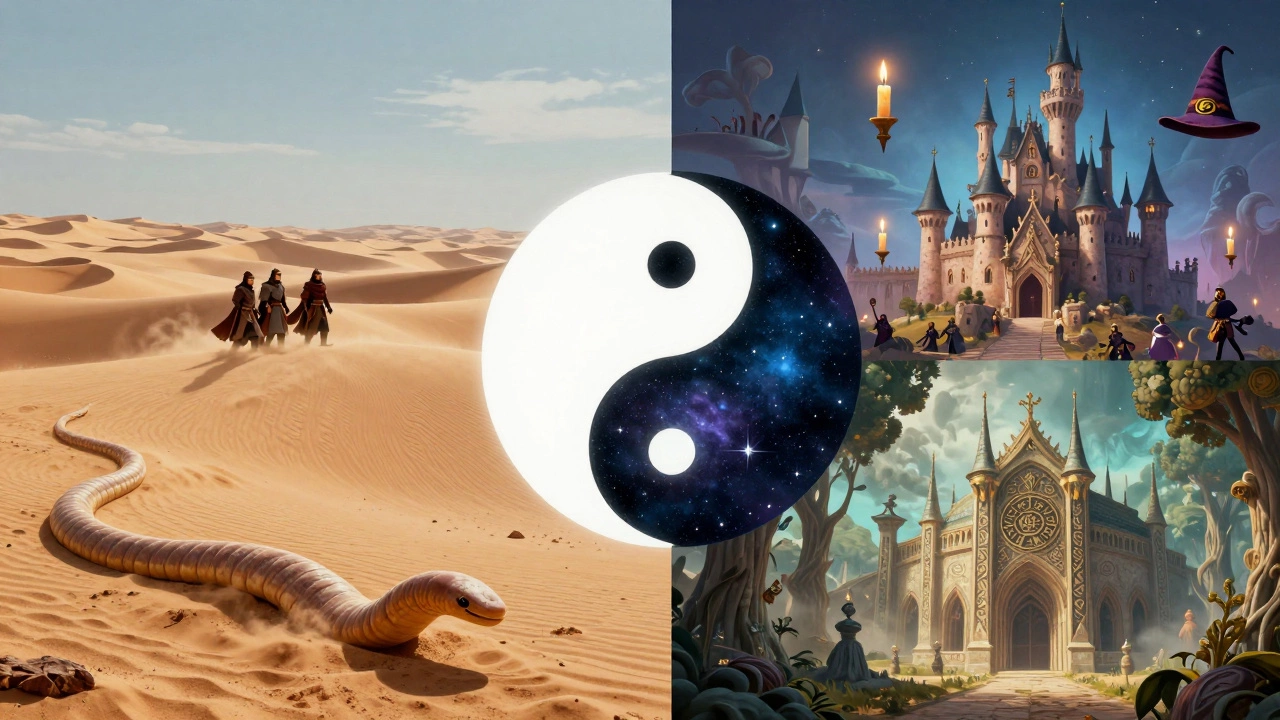
The debate doesn’t end with these four. Other books frequently appear in "best of" lists, each bringing something unique to the table.
- The Name of the Wind by Patrick Rothfuss: Praised for its lyrical prose and unreliable narrator. It focuses on the art of storytelling itself, making the reader question what is true.
- Good Omens by Neil Gaiman and Terry Pratchett: A comedic take on the apocalypse that blends theological satire with humanism. It shows that fantasy can be hilarious while still being profound.
- The Left Hand of Darkness by Ursula K. Le Guin: Another entry from Le Guin, this one explores gender and society on an alien world. It challenges our assumptions about identity and connection.
- A Game of Thrones by George R.R. Martin: Known for its gritty realism and moral ambiguity. It deconstructed the traditional fantasy hero, showing that power often corrupts everyone.
How to Choose Your Own "Greatest"
Since there is no objective winner, the greatest fantasy book for you depends on what you value in storytelling. Do you prefer intricate maps and ancient histories? Go with Tolkien. Do you want psychological depth and poetic language? Try Le Guin. Are you looking for a cultural touchstone that everyone knows? Start with Rowling. Do you crave complex political intrigue and ecological themes? Read Herbert.
Fantasy is a mirror. It reflects our fears, hopes, and desires through a lens of imagination. The "greatest" book is the one that stays with you long after you close the cover. It is the one that makes you see the world differently, even if just for a moment.
Is The Lord of the Rings considered the best fantasy book?
It is widely considered the most influential. J.R.R. Tolkien established the conventions of high fantasy, including elves, dwarves, wizards, and epic quests. While other books may have better prose or more complex characters, Tolkien’s impact on the genre is unmatched.
What is the difference between high fantasy and low fantasy?
High fantasy, like *The Lord of the Rings*, takes place in a secondary world entirely separate from our own. Low fantasy, like *Harry Potter* or *The Chronicles of Narnia*, introduces magical elements into the real world or a setting that closely resembles it.
Why do some critics dislike Harry Potter?
Some literary critics argue that the prose is simplistic and the plot relies heavily on tropes from earlier works. They also point out inconsistencies in the later books. However, defenders argue that its simplicity is its strength, allowing it to reach a broad audience and tackle deep themes like death and love.
Is Dune a fantasy or science fiction book?
*Dune* is classified as science fiction because it is set in the future and involves space travel and technology. However, it uses many fantasy elements, such as feudal politics, prophecy, and mental abilities, leading many to call it "science fantasy."
Who wrote the first fantasy novel?
There is no single "first" fantasy novel, as myths and legends predate written history. However, *The Faerie Queene* by Edmund Spenser (1590) and *Gulliver's Travels* by Jonathan Swift (1726) are early examples. Modern fantasy as a distinct genre began to take shape in the late 19th and early 20th centuries with authors like J.R.R. Tolkien and C.S. Lewis.
What makes a fantasy book "great"?
Greatness in fantasy is subjective but often includes strong world-building, compelling characters, original magic systems, and thematic depth. A great fantasy book should transport the reader while also offering insights into the human condition.