Historical Fiction Anachronism Checker
Ensure your dialogue and descriptions fit the era. Enter a word or phrase and select the year your story is set.
Quick Reference Guide
Here are some common pitfalls from the article data used in this tool:
- Chocolate Cake: Rare/Non-existent in many forms before late 18th/early 19th century depending on region.
- Nerd: Coined in 1950. Do not use in stories set before then.
- Hello: Popularized by Edison/Telco in late 19th century. Use "Hail," "Good day," or silence before.
- Okay: Originated in US political slang in 1839. Avoid in earlier settings.
- Telephone: Invented ~1876. No phones before this date.
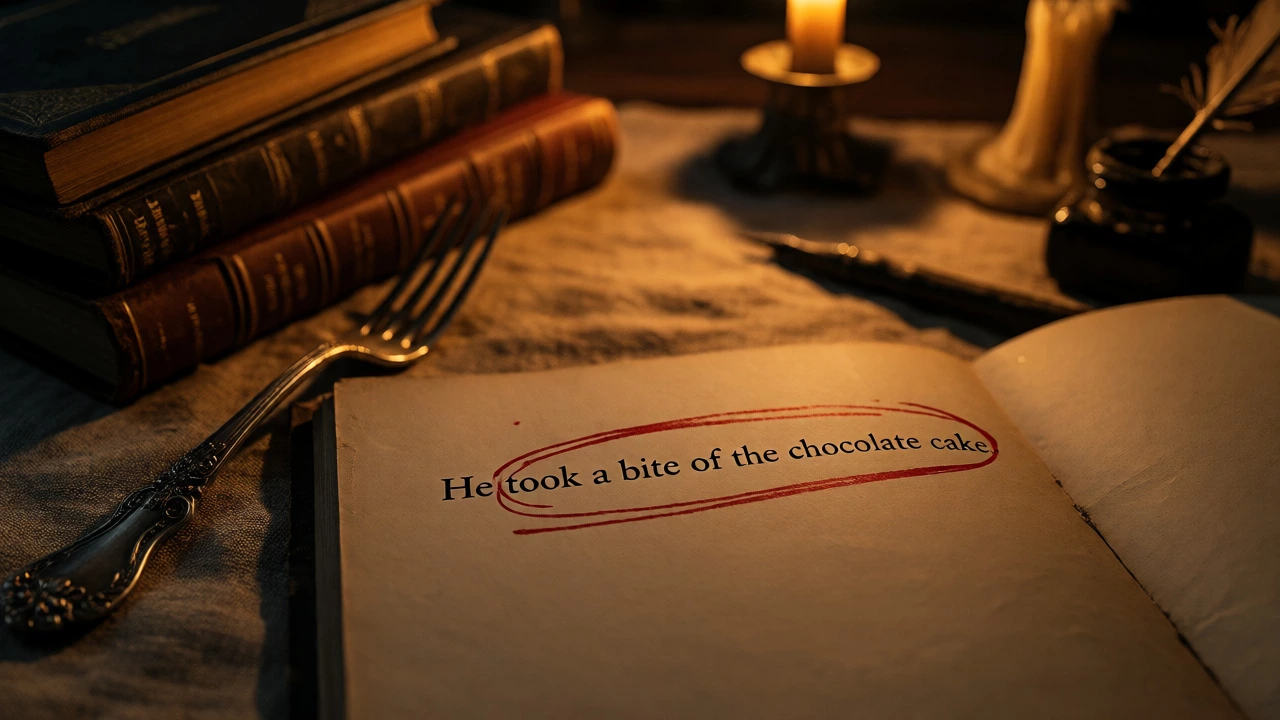
You spend three months reading about 18th-century French table manners. You learn which fork to use for oysters and why wearing the wrong waistcoat could get you laughed out of a salon in Paris. Then you write one sentence: He took a bite of the chocolate cake.
And just like that, your editor circles it in red ink. Chocolate cake didn't exist in that form in 1750. You've broken the spell. You've reminded the reader they are holding a book, not standing in a candlelit room.
This is the paradox of writing historical fiction. It demands the rigor of a historian but the soul of a novelist. Is it hard? Yes. But not for the reasons most people think. It isn't hard because you need a PhD in medieval agriculture. It's hard because you have to make the past feel as immediate, messy, and alive as the present, without letting the facts strangle the story.
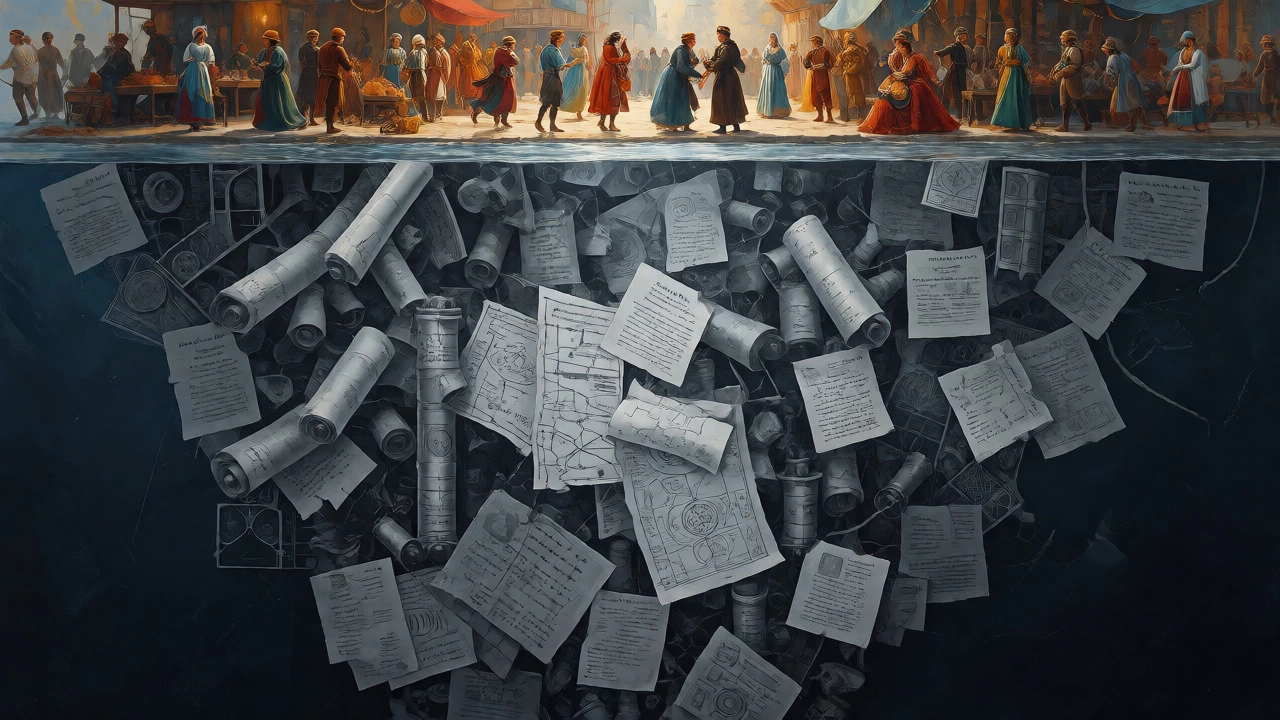
The Iceberg Problem: Research vs. Storytelling
Most aspiring writers believe the hardest part is getting the details right. They fear being caught with an anachronism. And sure, anachronisms matter. If your Roman soldier checks his wristwatch (even if it's a sundial), you lose credibility. But here’s the secret veteran authors know: readers forgive small inaccuracies. They don’t forgive boring characters.
The real difficulty lies in the "Iceberg Theory." You need to know ten times more than you put on the page. If you only write what you researched, your prose feels like a textbook. If you write nothing but invention, it feels like fantasy. The sweet spot is deep knowledge that allows you to be selective. You choose the three details that evoke the era-the smell of coal smoke, the specific slang of a dockworker, the texture of rough linen-and let the rest float beneath the surface.
Consider Hilary Mantel, whose Wolf Hall series redefined Tudor England. She didn't dump every fact she knew about Thomas Cromwell onto the page. Instead, she used her exhaustive research to inform Cromwell’s internal monologue. His thoughts felt modern enough to relate to, yet grounded in the religious paranoia of the 1530s. That balance is the high-wire act.
Bridging the Empathy Gap
People in the past weren't just us in funny hats. This is the second major hurdle: psychological distance. We share basic human emotions-love, fear, hunger-but our moral frameworks differ wildly from those of ancestors.
Take slavery in the American South or feudal obligations in medieval Europe. A modern reader brings 21st-century ethics to these settings. If your protagonist suddenly holds liberal democratic ideals in 1600s Japan, you break immersion. They should feel constrained by their world, even if they chafe against it.
To bridge this gap, you must practice radical empathy. Ask yourself: What did they believe was true? How did religion shape their daily fears? Did they view time as linear or cyclical? For instance, before the widespread adoption of mechanical clocks, time was often measured by tasks or sunlight, not minutes. Your character wouldn't say, "I'll meet you at 2:00 PM." They'd say, "When the shadows reach the church door." Getting this mindset right is harder than memorizing dates.
The Language Trap: Voice and Dialogue
How do you make dialogue sound old without sounding like Shakespeare? This is where many writers stumble. There is no "historical English" that works for all periods. Using "thee" and "thou" incorrectly can look amateurish. Conversely, using modern slang like "okay," "cool," or "hello" can shatter the illusion.
Here is a practical rule of thumb: Avoid words coined after the setting's date. Use etymological dictionaries to check first appearances. For example, "nerd" wasn't coined until 1950. "Gossip" has older roots, but its usage changed. Instead of trying to mimic archaic grammar perfectly, focus on rhythm and vocabulary constraints.
- Remove contractions sparingly: Full forms (do not, cannot) can add weight, but overuse makes speech stiff.
- Avoid modern idioms: Phrases like "bite the bullet" or "cut corners" may not fit your timeline.
- Focus on sensory language: Describe things through the lens of available technology. No "electric hum," no "neon glow."
Ken Follett, known for his meticulous attention to detail, often advises writing in a neutral, clear style rather than attempting heavy dialect. Dialects are hard to read and easy to mess up. A slightly formal, timeless tone often serves better than a caricature of the past.
Plotting Against History
If your story involves real historical figures, you face a unique constraint: they died when they died. You can't save Napoleon at Waterloo. You can't prevent the sinking of the Titanic. The plot must navigate around fixed points in history.
This requires creative plotting. You need fictional characters who interact with historical events without altering them. The challenge is making the outcome feel inevitable yet surprising. Readers know the ending. Your job is to make them care about how the characters survive-or fail-to reach it.
Use the "gap" between recorded history and private life. History books record battles and treaties. They rarely record what two friends whispered while waiting for a train in 1914. Fill those gaps with fiction. That’s where your story lives.
Common Pitfalls and How to Avoid Them
Even experienced writers fall into traps. Here are the most frequent issues editors flag in historical manuscripts:
| Pitfall | Description | Solution |
|---|---|---|
| Info-Dumping | Stopping the action to explain political context or fashion trends. | Weave details into action and dialogue. Show, don't lecture. |
| Modern Mindset | Characters having contemporary attitudes toward gender, race, or science. | Research prevailing social norms. Let characters struggle within their limits. |
| Anachronistic Props | Items existing before their invention (e.g., forks in early Rome). | Cross-reference objects with timelines. When in doubt, leave it out. |
| Flat Characters | Protagonists who serve only as tour guides to the era. | Give them personal stakes unrelated to the historical event. |
Another subtle trap is sanitizing the past. Modern sensibilities often lead writers to clean up hygiene, violence, or social cruelty. While you don't need gratuitous gore, acknowledging the harshness of pre-modern life adds authenticity. People smelled different. Medicine was brutal. Social mobility was restricted. Ignoring these realities makes the world feel sterile.
Tools of the Trade
You don't need to visit the British Library to start. Digital tools have made research accessible. Start with primary sources-diaries, letters, newspapers from the era. These reveal voice and concerns better than secondary summaries.
Use online archives like Project Gutenberg for public domain texts. Check museum collections for visual references of clothing and tools. Create a mood board with images of landscapes, fabrics, and architecture. Visual cues help maintain consistency in description.
Also, build a "fact sheet" for your manuscript. List key technologies, laws, and cultural norms relevant to your plot. Keep it handy while drafting. This prevents constant back-and-forth during the writing flow.
So, Is It Worth the Effort?
Writing historical fiction is demanding. It requires discipline, curiosity, and humility. You will get things wrong. You will rewrite chapters because you discovered a new source contradicts your assumption. But there is a profound joy in resurrecting a lost world.
When done well, historical fiction does more than entertain. It fosters empathy across time. It shows us that humans have always grappled with power, love, and mortality, regardless of the century. If you love digging into the past and crafting compelling narratives, the difficulty is part of the appeal. The challenge forces you to become a better writer, a sharper observer, and a more thoughtful thinker.
Do I need a degree in history to write historical fiction?
No, you do not need a formal degree. Many successful historical fiction authors come from journalism, law, or other fields. What you need is strong research skills and the ability to synthesize information. A degree helps, but curiosity and persistence are more critical. You can learn any era through dedicated self-study.
How much historical accuracy is required?
Accuracy depends on your genre and promise to the reader. In literary historical fiction, minor errors might be forgiven if the atmosphere is authentic. In mystery or thriller subgenres, factual errors can break trust. Generally, avoid major anachronisms (like cars in 1800) but prioritize emotional truth. If you take liberties, state them in an author's note.
Can I change historical events for my story?
Yes, this is called alternate history or speculative historical fiction. However, you must establish the rules early. If you change a major event, show the ripple effects logically. If you stick to actual history, you cannot change outcomes for real figures. Fictional characters can influence events, but they shouldn't alter the established timeline unless you are writing alternate history.
How do I handle outdated language and slurs?
This is a delicate balance. Using historically accurate terms can be jarring for modern readers. Some authors choose to omit offensive language entirely, prioritizing readability. Others include it to reflect the reality of the era, adding content warnings if necessary. Consider your audience and the purpose of the word. Does it define the character's worldview? If so, keep it. If it's just filler, consider replacing it with a less charged synonym.
What is the best way to start researching?
Start broad, then narrow down. Read general histories of the period to understand the big picture. Then, dive into primary sources like diaries, letters, and newspapers to find the "texture" of daily life. Look for specific details: what did people eat for breakfast? How did they travel? What were their common fears? This layered approach ensures both structural accuracy and vivid detail.