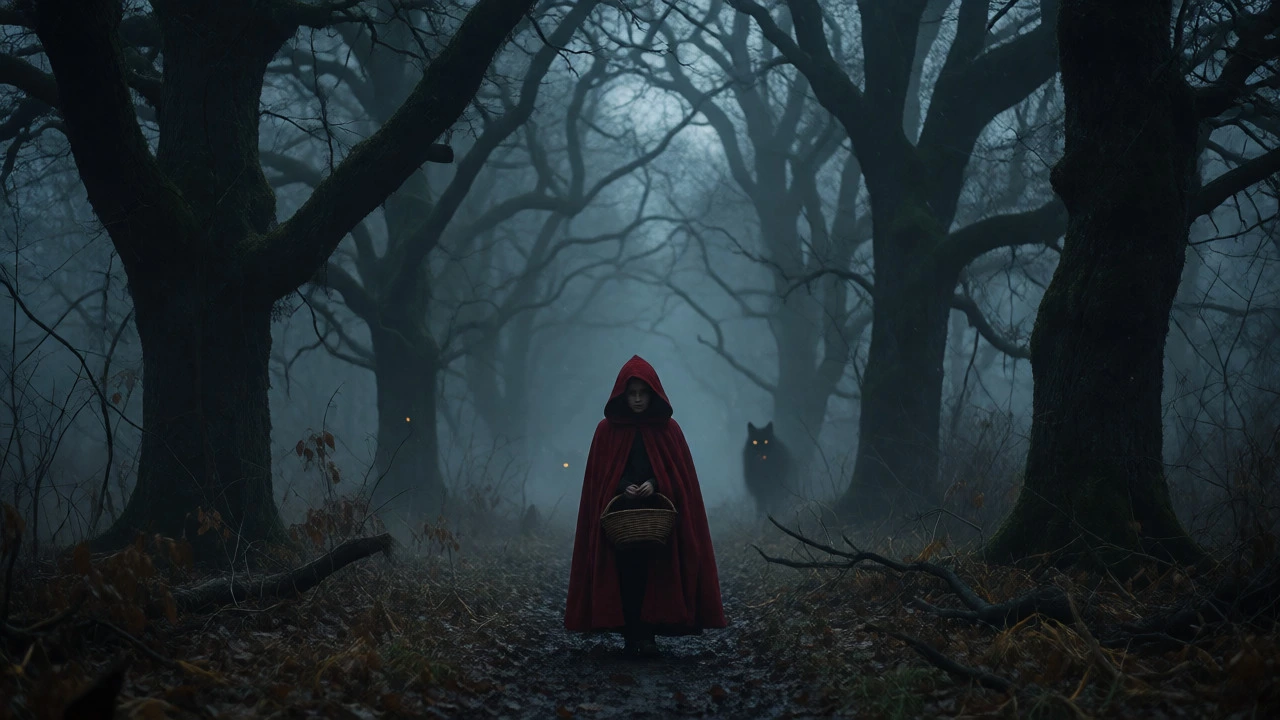
Little Red Riding Hood Version Explorer
Explore how this story changed from a dark warning for adults to a children's bedtime tale. Select a version below to see its key characteristics.
Authorship
Unknown / Collective Community
Audience
Village communities (all ages)
Ending
Varied; often tragic or ambiguous. No guaranteed rescue.
Wolf's Fate
Escapes or is killed by villagers in some variants.
Stories were fluid and changed with each telling, serving as warnings about real dangers in the wild.
Why does this matter?
Recognizing these differences helps us understand how stories evolve. Folklore is fluid and communal, while Literature is fixed and individual. Little Red Riding Hood exists in both worlds today, proving that stories are living entities that adapt to societal fears—from wolves to internet predators.
You probably think you know Little Red Riding Hood is a classic children's bedtime story about a girl in a red cloak who gets eaten by a wolf. But here’s the twist: it wasn’t always for kids. In fact, if you traveled back to 17th-century France or medieval Germany, this story was likely told around campfires as a warning to young women, not a lullaby. So, is it actually folklore? The short answer is yes, but with a massive asterisk. It started as oral tradition-folklore-and then got polished into literature by famous authors.
The Line Between Folklore and Literature
To understand why people argue about this, we need to define our terms. Folklore refers to traditional beliefs, customs, and stories passed down orally through generations within a community. It has no single author. Literature, on the other hand, is written by a specific person at a specific time.
Little Red Riding Hood sits right on that border. Before anyone wrote it down, grandmothers in rural Europe were telling versions of "The Wolf and the Kids" or similar tales where a predator tricks a victim. These stories changed every time they were told. One version might have had seven kids; another might have had just one girl. This fluidity is the hallmark of true folklore.
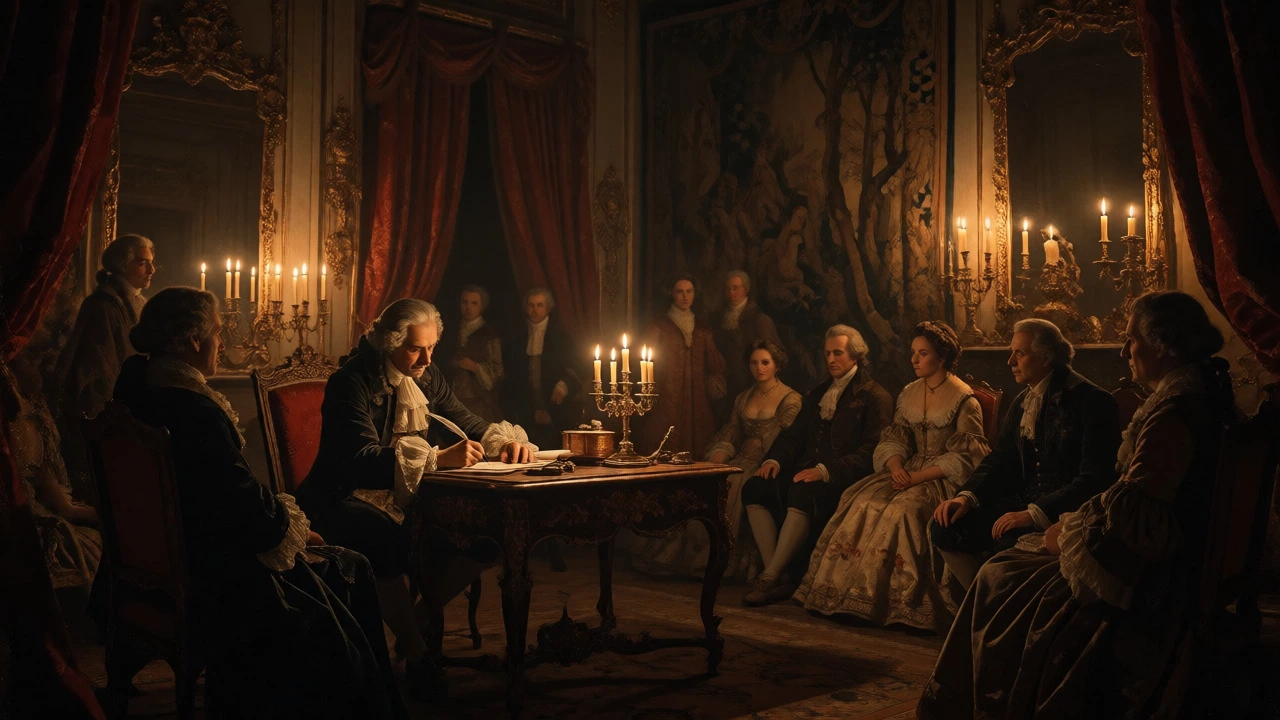
However, when Charles Perrault published Histoires ou contes du temps passé in 1697, he froze the story. He gave it a title, a moral, and a fixed ending (where everyone dies). That act moved it from folklore to literature. But because he drew from existing oral traditions, the roots remain firmly planted in folklore.
Perrault’s Dark Warning
If you read Perrault’s original version, you’ll notice something missing: the woodsman. There is no rescue. The wolf eats the grandmother, disguises himself, and then eats Little Red Riding Hood. Game over.
Perrault didn’t write this to entertain toddlers. He wrote it for the salons of Versailles. His audience was adults who enjoyed witty, slightly risqué stories. The "wolf" was often interpreted as a metaphor for predatory men. The red hood? Some scholars suggest it symbolized menstruation or entry into womanhood, making the girl vulnerable to sexual danger.
This context matters because it proves the story existed before books. Perrault claimed he was simply recording what he heard in the countryside. Whether he invented parts or transcribed them exactly is debated, but the core narrative structure-the journey, the deception, the consumption-is undeniably folkloric.
The Grimms’ Sanitized Version
Fast forward to 1812. Two German brothers, Jacob and Wilhelm Grimm, published their collection of household tales. They included a version called Rotkäppchen.
Their version added the happy ending. A huntsman cuts the wolf open, and out pop the girl and her grandmother, alive and well. Why did they change it? Because the Grimms wanted to create a national identity for Germany through shared stories. They also believed fairy tales should teach moral lessons without being too traumatic for children.
Did the Grimms invent this ending? Probably not entirely. Oral variants with rescues likely existed, but the Grimms standardized it. This shows how folklore evolves even after it’s written down. Once a story enters print, it can loop back into oral tradition. People retell the book version as if it were an old legend. This feedback loop makes separating folklore from literature nearly impossible.
| Feature | Oral Folklore (Pre-1600s) | Charles Perrault (1697) | Brothers Grimm (1812) |
|---|---|---|---|
| Authorship | Unknown/Collective | Charles Perrault | Jacob & Wilhelm Grimm |
| Ending | Varied (often tragic or ambiguous) | Tragic (Girl and Grandma eaten) | Happy (Rescued by Huntsman) |
| Audience | Village communities (all ages) | Adult Salon Culture | Bourgeois Families/Children |
| Moral Focus | Survival/Practical Wisdom | Danger of Strangers/Seduction | Obedience/Cleverness |
| Wolf’s Fate | Escapes or killed by villagers | Unpunished | Killed/Stuffed with stones |
Why the Confusion Persists
People get confused because modern media blurs the lines further. Disney, Pixar, and Hollywood take these literary texts and turn them into new cultural artifacts. When you watch a movie adaptation, are you watching folklore? No. You’re watching commercial entertainment based on literature that was based on folklore.
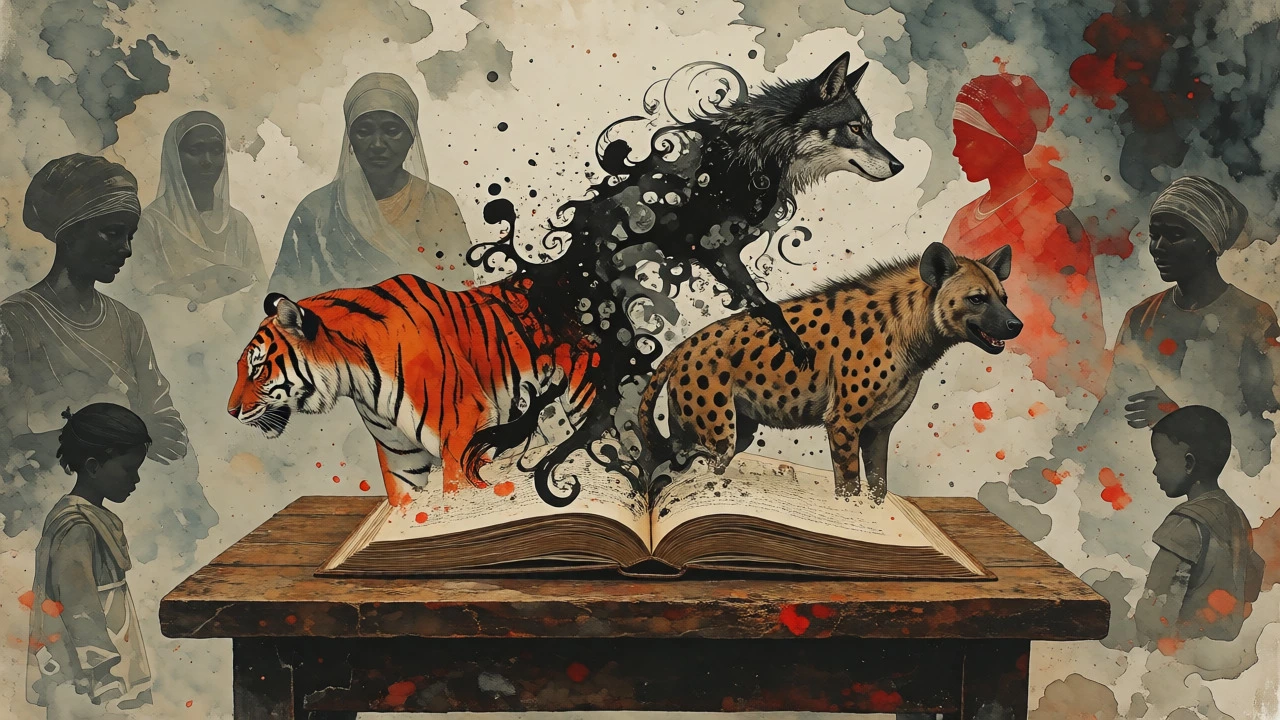
But ask someone in a remote village in China or Africa, and you might hear a local variant. In China, there’s Tiger Grandmother, where a tiger pretends to be the grandmother. In Korea, there’s Bawi Bawi, involving a tiger and a grandmother.
These aren’t copies of the European story. They are parallel developments. Human brains tend to categorize threats similarly. A big cat or wolf lurking in the woods is a universal fear. This suggests that while the specific details of Little Red Riding Hood are European folklore, the underlying archetype is part of global human storytelling instinct.
The Role of the Wolf
You can’t talk about this story without talking about the wolf. In many early versions, the creature isn’t even called a wolf. It’s sometimes a werewolf or a shape-shifting demon. This ties the story to werewolf legends, which are deeply rooted in European folklore.
In medieval times, wolves were a genuine threat to livestock and humans. Stories about wolves eating people weren’t fantasy; they were news reports. Over time, as wolves disappeared from Western Europe, the wolf became symbolic. It transformed from a real predator into a metaphor for evil, lust, or chaos.
This transformation is key to understanding its folklore status. Real-world fears fuel folklore. As the reality changes, the story adapts. Today, the wolf might represent internet predators or stranger danger. The vessel remains, but the liquid inside changes. That adaptability is the soul of folklore.
How to Spot Folklore Traits
If you want to determine if a story is folklore, look for these signs:
- No Single Author: If you can’t point to one person who created it, it’s likely folklore.
- Multiple Variants: If there are ten different endings depending on who tells it, it’s folklore.
- Local Specifics: Does it mention specific foods, clothes, or places relevant to a region? Folklore grounds itself in local reality.
- Oral Transmission: Was it primarily shared by word of mouth before being printed?
Little Red Riding Hood checks all these boxes before 1697. After that, it becomes a hybrid. It’s a literary text that behaves like folklore because people keep retelling it, changing it, and using it in new contexts.
Modern Implications
Does it matter if we call it folklore or literature? Absolutely. Calling it "just a fairy tale" dismisses its historical weight. Recognizing its folkloric roots helps us understand how societies used stories to teach survival skills. For young girls in 17th-century France, staying on the path wasn’t just advice; it was a safety protocol against assault.
Furthermore, acknowledging the folklore aspect reveals how colonialism and globalization spread these stories. European colonizers brought their tales to the Americas and Asia. Indigenous populations adapted them, creating hybrid forms. Now, Little Red Riding Hood belongs to everyone, yet its DNA is distinctly European peasant culture.
Frequently Asked Questions
Who originally wrote Little Red Riding Hood?
No single person "wrote" it first. It originated in oral folklore across Europe. However, Charles Perrault is credited with the first major literary publication in 1697, followed by the Brothers Grimm in 1812.
Is Little Red Riding Hood based on a true story?
Not directly. While wolves were a real threat in medieval Europe, the specific plot of a girl meeting a talking wolf is a fictional narrative device common in folklore, not a historical event.
Why does the girl wear a red hood?
In early versions, the color varied. Perrault specified red, possibly to symbolize blood, youth, or sin. Later translations solidified the red cape as iconic, though some regional variants use green or yellow.
What is the difference between a myth and folklore?
Myths usually explain natural phenomena or religious beliefs and involve gods. Folklore includes everyday stories, legends, and fables passed down by ordinary people. Little Red Riding Hood is folklore because it deals with human dangers, not divine ones.
Are there other cultures with similar stories?
Yes. Many cultures have "wolf in sheep's clothing" type tales. Examples include the Chinese "Tiger Grandmother," the Korean "Bawi Bawi," and various African tales featuring hyenas or leopards deceiving family members.
Final Thoughts
So, is Little Red Riding Hood folklore? Yes, it began as folklore. It grew up into literature. And now, it lives in both worlds simultaneously. Next time you read it to a child, remember: you’re sharing a ghost story that survived centuries of campfires, salons, and printing presses. It’s not just a cute tale; it’s a survivor.