Titanic Survival Probability Calculator
Select Your Profile
How This Works
Based on historical records from the British Board of Trade inquiry and survivor testimonies, this calculator estimates survival probabilities using documented survival rates by class, gender, and age group. Remember: these numbers reflect the tragic reality of the disaster, where lifeboat access was heavily influenced by class and gender.
The Titanic didn’t just sink-it shattered illusions. On April 15, 1912, after hitting an iceberg, the supposedly unsinkable ship went down in the North Atlantic, taking more than 1,500 people with it. That number isn’t a guess. It’s the result of meticulous records kept by the White Star Line, British inquiry reports, and survivor testimonies gathered in the weeks after the disaster. The death toll wasn’t just high-it was a direct consequence of choices made before the ship even left port.
Exact Numbers: 1,517 Lives Lost
The official death toll from the Titanic sinking is 1,517. That includes passengers and crew combined. Of the 2,224 people on board, 707 survived. The numbers come from the British Board of Trade inquiry, which cross-referenced passenger manifests, lifeboat logs, and recovered bodies. There’s no rounding up, no speculation. This is the documented count.
Why does it matter? Because people still think the movie got it right. James Cameron’s Titanic showed a dramatic, emotional loss-but it didn’t show the full picture. The real tragedy wasn’t just the scale. It was the uneven survival rates. First-class passengers had a 62% survival rate. Third-class passengers? Just 25%. Crew members? Around 24%. The lifeboats weren’t filled to capacity, and many weren’t even launched until it was too late.
Who Was Left Behind?
The dead weren’t faceless statistics. They were families. A father who gave his lifejacket to his son. A mother who refused to leave her child behind. A band that kept playing as the ship tilted. Their names are listed on memorial plaques in Southampton, Belfast, and Halifax.
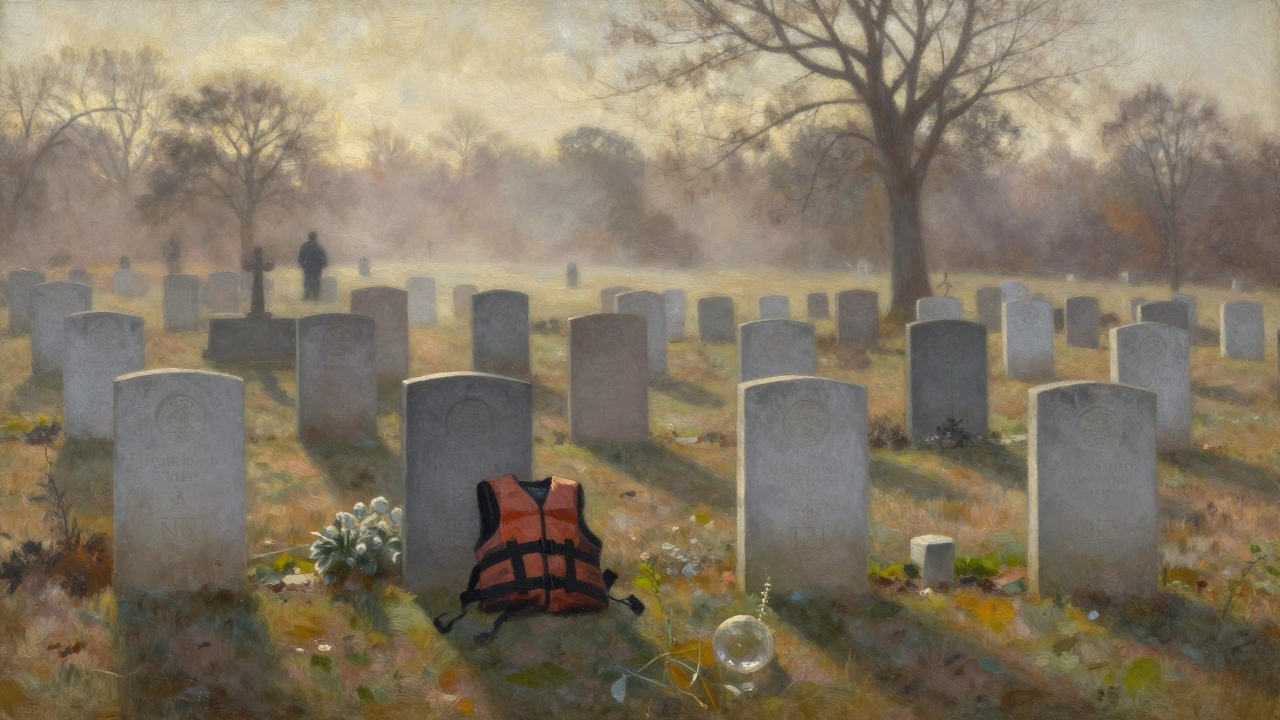
Of the 1,517 who died, 1,160 bodies were never recovered. The ocean kept them. The 333 bodies that were found were brought to Halifax, Nova Scotia, where cemeteries still hold their graves. Many are marked only with numbers: Unknown Male, No. 121. Those who were identified often had their names etched into headstones by grieving relatives who traveled across the Atlantic to claim them.
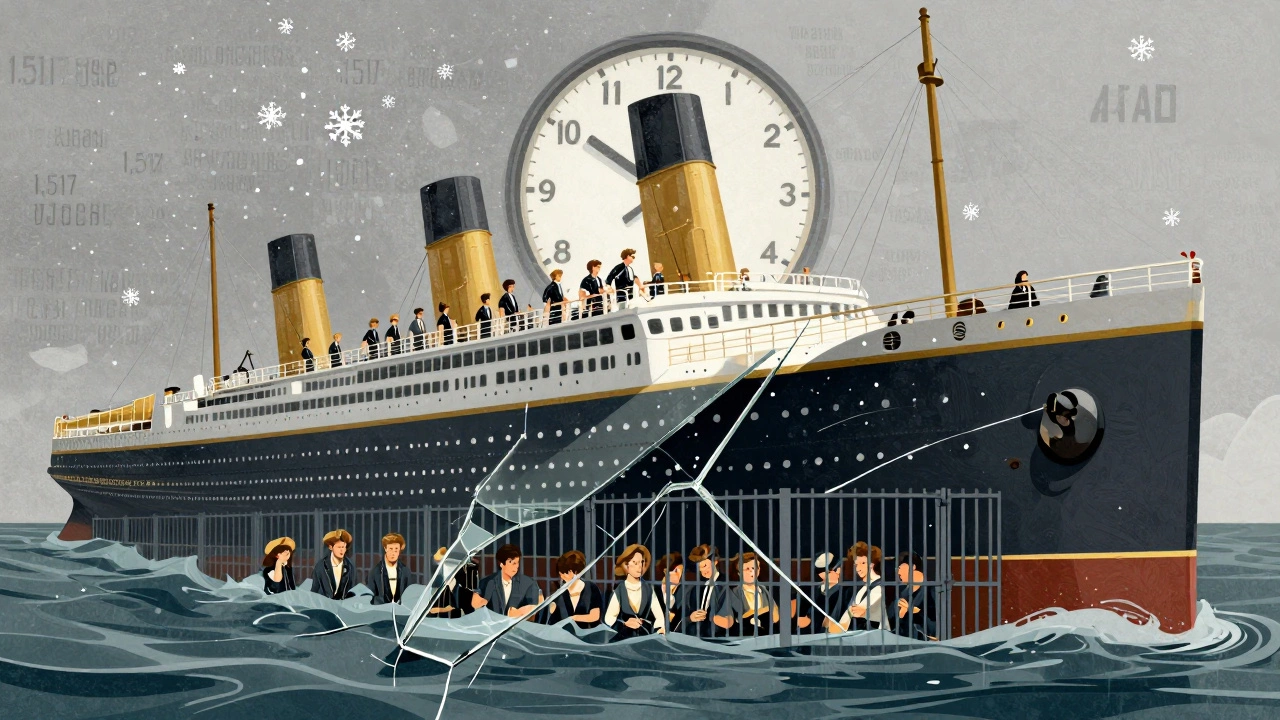
One of the most haunting details? The children. There were 109 children aboard. Only 53 survived. Of the 56 who died, 52 were in third class. The lifeboats prioritized women and children-but only if they were near the deck. Many third-class families were locked below, separated by gates meant to keep steerage passengers from mingling with first-class guests. By the time they broke through, the water was rising too fast.
Why So Many Died
The iceberg wasn’t the only killer. The real cause was a chain of failures.
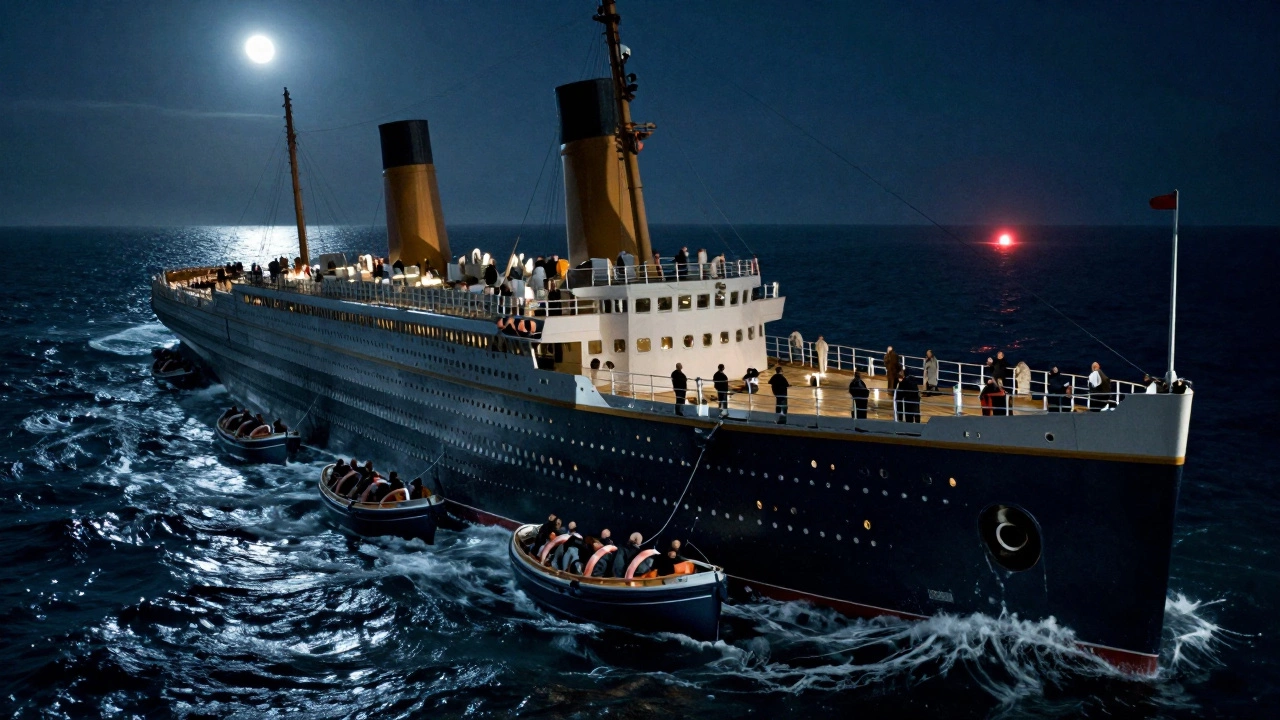
- Too few lifeboats: The Titanic carried only 20 lifeboats, enough for 1,178 people-less than half the total on board. It met the outdated British safety laws of 1894, which based lifeboat capacity on a ship’s tonnage, not its passenger count.
- Lifeboats launched half-empty: Crew members, untrained in evacuation, feared the boats would break under weight. Many launched with only 30-40 people when they could hold 65.
- No radio emergency protocol: The wireless operators were busy sending passenger messages. The nearby ship Californian had its radio turned off for the night. They saw the distress flares-but didn’t know what they meant.
- No lifeboat drills: The crew had never practiced an evacuation. Passengers didn’t know where to go. Some didn’t even realize the ship was sinking until it was too late.
These weren’t accidents. They were policy failures. The White Star Line wanted luxury, not safety. The Board of Trade hadn’t updated rules in decades. And no one thought a ship that big could go down so fast.
What Changed Afterward
The Titanic didn’t just die-it forced the world to change.
In 1914, the International Convention for the Safety of Life at Sea (SOLAS) was born. New rules required:
- Enough lifeboats for everyone on board
- 24-hour radio watches on all passenger ships
- Regular lifeboat drills for crew and passengers
- Ice patrol services in the North Atlantic
These rules are still in place today. Every cruise ship you board follows them. The Titanic didn’t just sink-it became the reason modern maritime safety exists.
Why This Still Matters
More than a century later, people still ask: How many died in the Titanic? But the real question is: Why did they die?
The answer isn’t just about icebergs or ship design. It’s about power. About who got saved and who didn’t. About rules written for profit, not people. The Titanic was a symbol of progress. But it also exposed the rot beneath.
Today, when we hear about disasters-plane crashes, factory fires, climate-related deaths-we still see the same patterns. The wealthy escape. The poor are left behind. Systems fail because no one thought it could happen. Until it does.
The Titanic didn’t just kill 1,517 people. It killed a myth. And in its place, it left a warning.
What We Remember
Every year on April 15, survivors’ descendants gather at memorials. In Belfast, where the ship was built. In Southampton, where many crew members lived. In Halifax, where the dead were buried.
They don’t just read names. They tell stories. The tailor who sewed his own lifejacket. The steward who carried a child to a lifeboat and then went back for another. The woman who refused to leave her dog.
Those stories are why we still care. Not because the ship was grand. But because the people on it were real.