Genre Classification Challenge
1. A story set in modern-day London where a boy discovers he can cast spells with a wand, while his non-magical relatives worry about mortgages.
2. A novel entirely set in Middle-earth, featuring elves, dwarves, and a ring that grants invisibility, with no connection to our real-world geography.
3. A story about a detective solving a murder in 1950s New York City. The conflict is driven by human psychology, greed, and police procedure. No supernatural elements exist.
4. A future society where humans live on Mars. Conflicts are resolved through AI negotiation and genetic engineering advancements. Events are explained by physics and technology.
5. Children discover a wardrobe in an ordinary English house that leads to a land where animals talk and magic is real. The children return home regularly.
Quiz Results
0/5
Keep practicing!
Understanding the difference between Fiction (the umbrella) and Fantasy (the specific genre with magic/supernatural elements) helps you find books you'll actually enjoy.
Walk into any bookstore and you’ll likely see Harry Potter shelved under Young Adult or Fantasy. But ask ten people what it is, and you might get ten different answers. Is it pure fantasy? Is it just fiction with a magic coat of paint? The confusion isn’t your fault; it’s baked into how we categorize stories. Most readers use "fiction" as the umbrella term for anything invented, while "fantasy" describes the specific flavor of that invention. This distinction matters less for enjoying the books but significantly more if you’re trying to find similar reads or understand literary theory.
The core issue stems from a misunderstanding of hierarchy. Think of it like food. "Food" is the broad category (fiction). "Italian cuisine" is a sub-category (genre). "Pizza" is a specific dish (book). Saying Harry Potter is fiction is like saying pizza is food. It’s true, but it misses the point. Saying it’s fantasy is like saying pizza is Italian. It’s also true, and much more useful. Let’s break down why this book sits firmly in the fantasy camp, despite wearing some realistic clothes.
The Definition Problem: Umbrella vs. Specific
To clear up the confusion, we need to define our terms simply. Fiction is literature created from the imagination, not presented as fact. It includes everything from romance novels to sci-fi thrillers. If it didn’t happen in real life, it’s fiction. Fantasy is a genre of speculative fiction involving magical elements, supernatural creatures, or imaginary worlds. All fantasy is fiction, but not all fiction is fantasy. When someone asks, "Is Harry Potter fantasy or fiction?" they are essentially asking, "Is this an apple or a fruit?" The answer is both, but one label tells you more about what you’re getting.
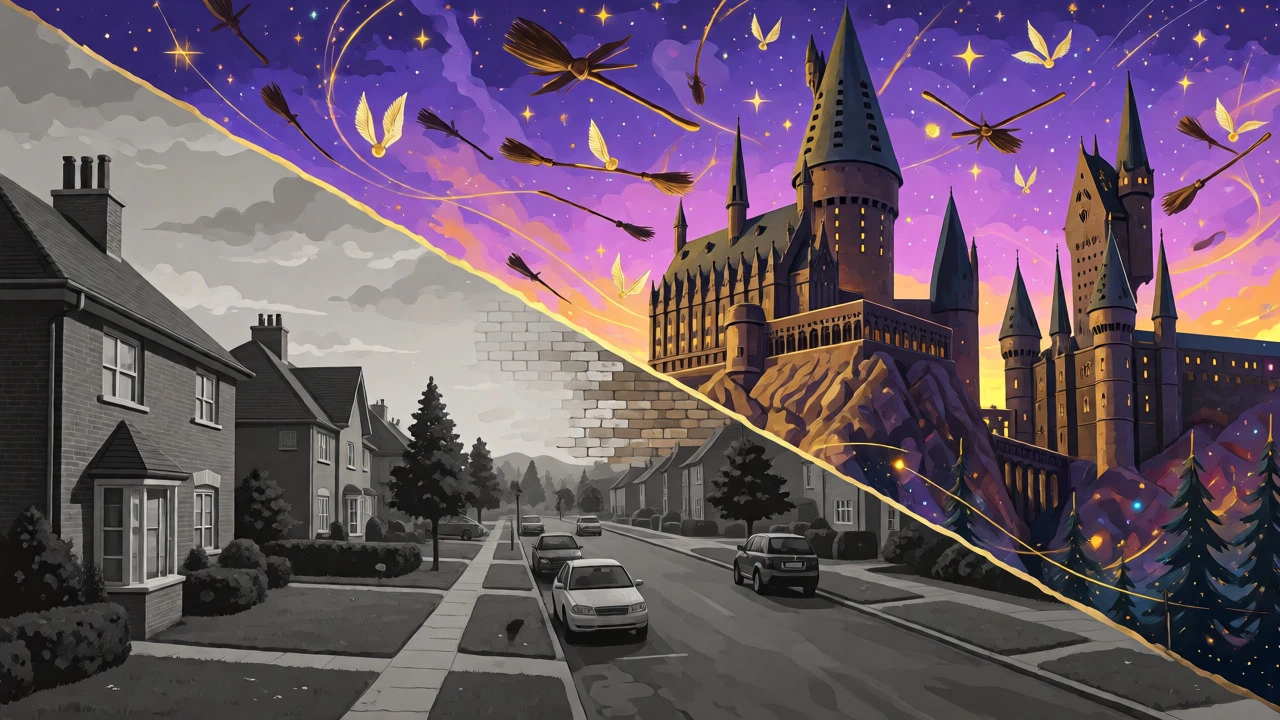
J.K. Rowling built her world using two distinct layers. The first layer is the Muggle world-London, Privet Drive, ordinary schools. This part feels like contemporary realistic fiction. The second layer is the Wizarding World-Hogwarts, Diagon Alley, Ministry of Magic. This part is high fantasy. Because the story spends significant time in both, readers often hesitate. However, the narrative engine-the plot driver-is entirely magical. Without wands, spells, and dragons, there is no story. Therefore, the primary genre classification must be fantasy.
Why It Feels Like Realistic Fiction
If Harry Potter is so clearly fantasy, why do so many people hesitate to call it that? Part of the reason is its setting. Unlike Tolkien’s Middle-earth, which exists in a completely separate secondary world, Hogwarts is hidden within our own. London still has buses and phone booths. The Dursleys have mortgages and lawns. This technique is called "low fantasy" or sometimes "urban fantasy," though urban fantasy usually implies a grittier, adult tone. Rowling uses a "portal fantasy" structure where the protagonist moves between the mundane and the magical.
This grounding makes the magic feel accessible rather than alien. You don’t need to learn Elvish grammar to understand the stakes. You already know what bullying feels like (Draco Malfoy) and what parental pressure feels like (the Weasleys’ financial struggles). These relatable human experiences anchor the fantastical elements. Readers connect with Harry because he deals with universal teenage problems, just with broomsticks involved. This emotional realism often overshadows the genre markers for casual readers, leading them to default to the safer, broader label of "fiction."
Key Elements That Define It as Fantasy
Let’s look at the hard evidence. Literary scholars and publishers classify genres based on specific tropes and structural requirements. Here is how Harry Potter checks the boxes for fantasy:
- Magic Systems: The story relies on a consistent set of rules for spellcasting, potions, and artifacts. This is a hallmark of fantasy.
- Supernatural Creatures: Dragons, unicorns, house-elves, and centaurs exist alongside humans. In realistic fiction, these would be hallucinations or metaphors. In Harry Potter, they are biological realities.
- Secondary Worlds: While connected to Earth, places like Hogwarts and the Ministry function as distinct societies with their own laws, economies, and histories.
- Chosen One Trope: Harry’s destiny as the one who can defeat Voldemort is a classic mythological/fantasy narrative arc.
Compare this to a book like The Perks of Being a Wallflower. That is fiction, but it lacks these elements. There are no spells, no mythical beasts, and no alternate societies. The conflict is internal and social, not magical. The presence of even one confirmed magical event shifts a book out of pure realism and into speculative fiction, specifically fantasy when the magic is the focus.
| Feature | Realistic Fiction | Fantasy (Harry Potter) | Science Fiction |
|---|---|---|---|
| Core Conflict Driver | Human relationships, society, psychology | Magical abilities, prophecy, good vs. evil | Technology, future societies, scientific principles |
| Setting | Actual historical or contemporary locations | Imaginary worlds or hidden magical enclaves | Futuristic settings or space |
| Explanation of Events | Rational, cause-and-effect physics | Spells, curses, ancient magic | Advanced tech, AI, genetic engineering |
| Example Book | The Kite Runner | Harry Potter and the Sorcerer's Stone | Dune |
The Role of Subgenres: Low Fantasy vs. High Fantasy
Within the fantasy umbrella, Harry Potter is often categorized as "low fantasy" or "contemporary fantasy." This doesn't mean it's low quality; it refers to the level of immersion. High fantasy, like The Lord of the Rings, takes place in a world entirely separate from ours, with its own geography and history unrelated to Earth. Low fantasy inserts magical elements into the real world.
This distinction helps explain the "fiction" confusion. Because the Muggle world looks exactly like ours, readers might forget the magical layer is the dominant narrative force. However, genre labels aren't about percentage of page count. They are about the fundamental nature of the reality presented. Even if Harry spent 90% of his time doing homework in a normal classroom, the fact that he solves problems with magic makes it fantasy. If he solved them with logic and dialogue, it would be realistic fiction.
Other examples of low fantasy include Percy Jackson & The Olympians by Rick Riordan or The Chronicles of Narnia by C.S. Lewis. These books share DNA with Harry Potter: modern kids discovering ancient magical powers. Recognizing this subgenre helps you find more books you'll love. If you liked Harry Potter for the school setting, look for other academy fantasies. If you liked it for the hidden world aspect, look for urban fantasy.
Why Labeling Matters for Readers
You might wonder, "Who cares what the label is? I just want to read a good story." Fair point. But labels serve a practical purpose: discovery. Algorithms on Goodreads, Amazon, and library catalogs rely on tags. If you tag Harry Potter only as "fiction," you miss out on connecting with the massive community of fantasy readers. You also risk recommending it to someone who hates magic and loves gritty crime dramas.
Furthermore, understanding the genre enhances analysis. When you recognize the fantasy tropes, you see how Rowling subverts them. She plays with the "Chosen One" trope by making Harry vulnerable and unsure. She mixes the "boarding school" trope with epic quest structures. Knowing the framework lets you appreciate the craftsmanship. It turns passive reading into active engagement. You start noticing how the magic system parallels real-world politics or how the creature mythology draws from Celtic folklore.
Beyond the Binary: It’s Also Children’s Literature
Another layer complicates the question. Harry Potter started as children's literature and grew into young adult (YA). Genre (fantasy) and format/audience (children/YA) are orthogonal axes. A book can be Fantasy AND YA. Or Fantasy AND Adult. Or Horror AND Children's.
The debate over whether it's "just" fiction often comes from snobs who view fantasy as lesser than literary fiction. This is a bias, not a definition. Literary merit doesn't depend on genre. The Great Gatsby is realistic fiction; The Hobbit is fantasy. Both are classics. Don't let anyone tell you that calling Harry Potter "fantasy" diminishes it. It specifies it. It tells you that the rules of physics are optional, and that's where the fun begins.
If you're looking for recommendations based on this clarity, here’s a quick guide:
- Want more Harry Potter? Look for other Low Fantasy titles like Artemis Fowl or The Spiderwick Chronicles.
- Want deeper world-building? Try High Fantasy like A Game of Thrones or The Name of the Wind.
- Want realistic stories with magical twists? Explore Magic Realism like The House of the Spirits.
Is Harry Potter considered science fiction?
No, Harry Potter is not science fiction. Science fiction typically explains extraordinary events through technology, future advancements, or scientific principles. Harry Potter relies on magic, spells, and supernatural forces that have no scientific basis within the story's universe. While both are speculative fiction, their mechanisms differ fundamentally.
Can a book be both fiction and fantasy?
Yes, absolutely. Fiction is the broad category for all invented narratives. Fantasy is a specific genre within fiction that involves magic or imaginary worlds. All fantasy books are fiction, but not all fiction books are fantasy. Using both terms is accurate, but "fantasy" provides more specific information about the content.
Why do some people argue Harry Potter is realistic fiction?
People argue this because the story features real-world locations like London and addresses realistic themes like bullying, poverty, and family dynamics. However, the presence of magic and supernatural creatures disqualifies it from being purely realistic fiction. It is best described as low fantasy or contemporary fantasy due to its blend of real and magical elements.
What is the difference between high and low fantasy?
High fantasy takes place in an entirely fictional secondary world with its own history and geography (e.g., Middle-earth in Lord of the Rings). Low fantasy incorporates magical elements into the real world (e.g., Harry Potter in London). Harry Potter is a prime example of low fantasy because the wizarding world exists secretly alongside the non-magical Muggle world.
Does the genre change as the series progresses?
The genre remains fantasy throughout the series, but the tone and complexity evolve. Early books lean closer to children's fantasy with whimsical elements, while later books incorporate darker themes, political intrigue, and war, appealing to older young adult audiences. The core fantasy mechanics, however, remain consistent.