
Publisher Matchmaker
Find Your Perfect Publisher Match
Answer a few questions about your manuscript and we'll show you which publishers from the article are most likely to be interested.
Your Manuscript
Why This Matters
Publishers seek specific characteristics in debut manuscripts. The right match increases your chances significantly.
Publisher Matches
Enter your manuscript details above to see your publisher matches
If you’ve just finished your first book, you’re probably wondering: who will actually publish it? The idea of sending your manuscript to a big publishing house can feel overwhelming - like trying to knock on the door of a castle guarded by dragons. But here’s the truth: you don’t need a celebrity agent or a million-dollar advance to get published. Many publishers actively seek first-time authors, and some even specialize in them. The key isn’t luck. It’s knowing where to look.
Traditional publishers that welcome debut authors
Not all traditional publishers are locked away behind thick doors. Some have open submission windows and dedicated imprints for new voices. Graywolf Press, for example, is a nonprofit publisher that has launched careers like Ocean Vuong and Jenny Offill. They don’t require agents and accept unsolicited manuscripts in specific genres - mostly literary fiction and poetry. Their acceptance rate is low, but they’ve published over 150 debut authors since 2000.
University presses like the University of Georgia Press or the University of Nebraska Press also take first-time authors, especially in niche nonfiction, regional writing, and literary fiction. These presses don’t offer huge advances, but they do offer serious credibility. Their books end up in academic libraries, get reviewed by major outlets like The New York Review of Books, and often win literary prizes. One debut author from Nebraska Press won the PEN/Hemingway Award in 2023 - their first book ever.
Simon & Schuster’s Atria Books and Penguin Random House’s One World imprint regularly sign debut authors. You’ll need an agent for these, but they’re not looking for the next bestseller - they’re looking for fresh perspectives. One agent told me last year that 40% of their new clients in 2025 were first-time writers with no platform. What mattered was voice, originality, and a clear target audience.
Small presses: the hidden goldmine for new writers
Small presses are where a lot of the most exciting new books come from. They’re not flashy. They don’t run TV ads. But they’re more flexible, more personal, and often faster than the big houses.
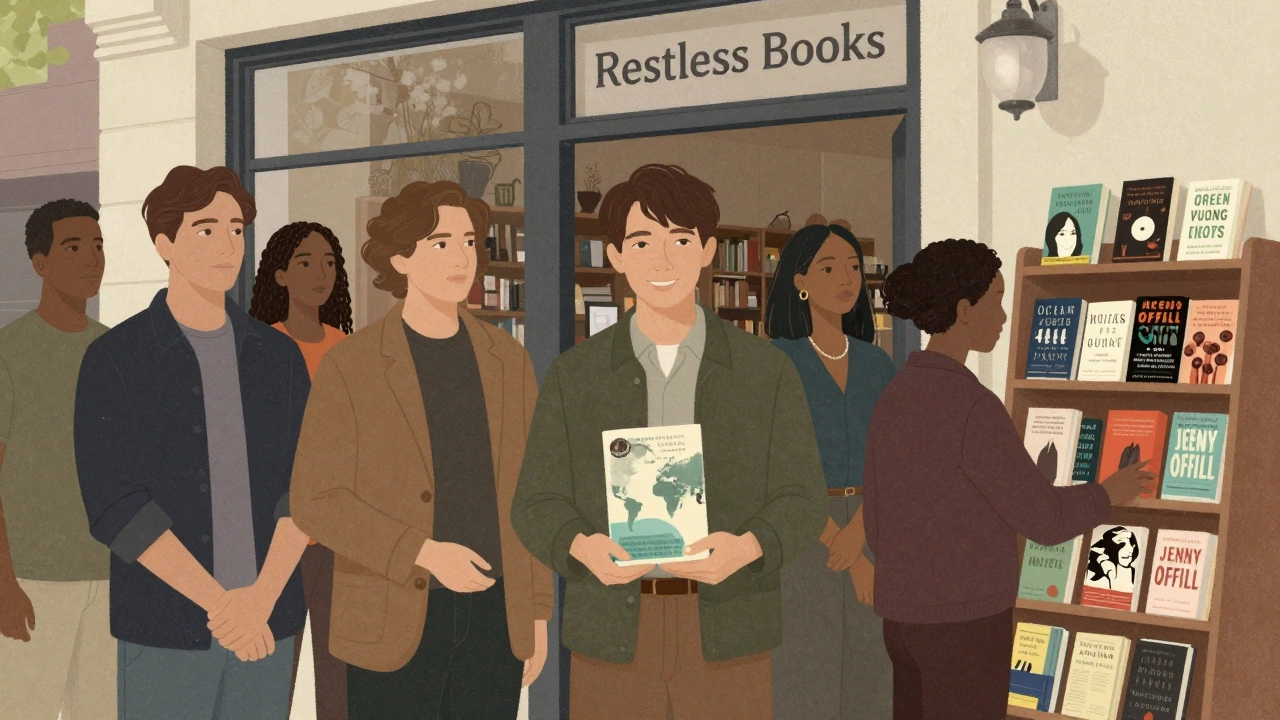
Restless Books focuses on global voices and translated works. They’ve published debut authors from Syria, Nigeria, and Peru - all without requiring prior publishing experience. Their average print run is 3,000 copies, which sounds small, but it’s enough to get noticed by critics and book clubs.
Catapult is another standout. They publish literary fiction and memoirs and have a reputation for nurturing writers through the entire process - from editing to marketing. Their debut authors often land spots on NPR’s Best Books lists. One writer, a former teacher from Ohio, got her first book picked up by Catapult in 2024. She had no social media following. Her book sold 12,000 copies in its first year.
Don’t overlook indie presses like Hub City Press, Black Lawrence Press, or BOA Editions. These are all nonprofit, award-winning, and open to unsolicited submissions. BOA Editions, for instance, publishes 12 books a year - and half of them are by first-time authors. They don’t pay advances, but they do give authors 10 free copies and help with bookstore events.
What publishers look for in debut authors
It’s not about how many followers you have. It’s about whether your book stands out. Publishers are tired of clichés - the orphaned hero, the magical mentor, the love triangle that solves everything. They want something real. Something specific.
A 2025 survey of 42 publishers found that the top three traits they looked for in debut manuscripts were:
- Unique voice - not just good writing, but a distinct way of seeing the world
- Clear target audience - who will read this? Why?
- Authentic emotional core - does the story make you feel something you haven’t felt before?
One editor at a major house told me she read 87 manuscripts last year. Only 3 made her cry. Those three got offers.
Don’t waste time sending your fantasy novel to a publisher who only does memoirs. Research each press. Look at their last five books. If you wouldn’t buy one of them, why should they buy yours?
What to avoid: vanity presses and predatory publishers
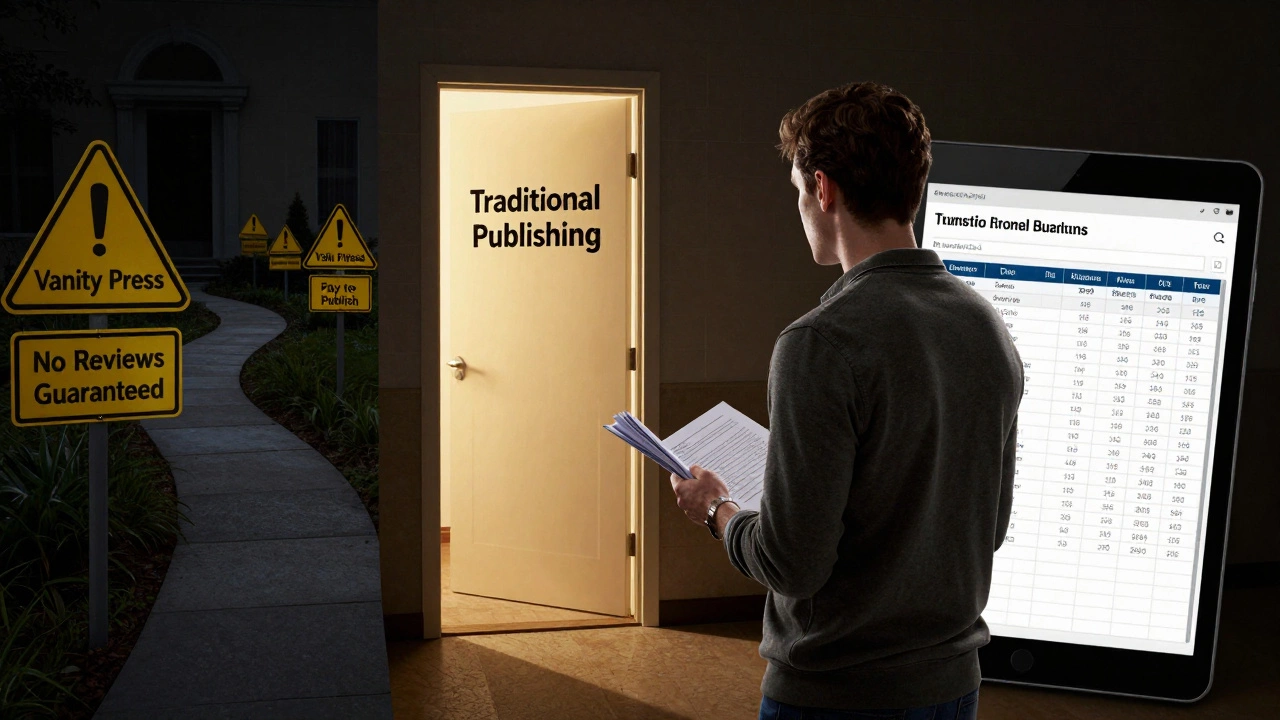
There are companies that promise to publish your book - for a fee. They’ll charge you $3,000 to $10,000 for “editing,” “design,” and “distribution.” These are vanity presses. They make money from you, not from selling your book. Their books never appear in bookstores. They don’t get reviewed. They don’t sell.
Here’s how to spot them:
- They ask you to pay upfront
- They don’t list titles on Amazon or Barnes & Noble
- They use fake “awards” or “bestseller lists”
- They say you don’t need an agent
Legitimate publishers never charge you. Ever. If they do, walk away. The Association of Authors’ Agents (AAA) and the Independent Book Publishers Association (IBPA) both maintain lists of reputable publishers. Use them.
How to submit: the practical steps
Here’s how to get your manuscript in front of the right people:
- Finish your book - and edit it yourself. No one will read a sloppy draft.
- Find three books published by your target press in the last two years. Read them. Understand their tone.
- Write a one-page query letter. Don’t summarize your book. Tell them why your story matters now.
- Follow submission guidelines exactly. Some want PDFs. Some want Word docs. Some want no synopsis. Don’t ignore this.
- Wait. The average response time is 8-12 weeks. Don’t follow up unless they say you can.
Keep a spreadsheet. Track who you sent it to, when, and what they asked for. You’ll need this when you get rejections - and you will get rejections. Even J.K. Rowling got rejected by 12 publishers.
Alternatives: hybrid and self-publishing
If traditional publishing feels too slow, hybrid publishing might be your middle ground. Companies like She Writes Press or Page Two offer professional editing, design, and distribution - but you pay a portion of the cost. In return, you keep more control and higher royalties. These aren’t vanity presses - they’re legit, but they’re not free.
Self-publishing works too. Amazon KDP lets you publish in days. But if you want your book on bookstore shelves, you’ll need to invest in marketing, cover design, and distribution. Many debut authors who self-publish end up getting picked up by traditional publishers later - if their book sells well.
There’s no single “best” path. The best publisher for you is the one that believes in your book - and will fight for it.
Do I need an agent to get published as a first-time author?
Not always. Many small presses and university presses accept unsolicited submissions directly from authors. But if you’re targeting big publishers like Penguin Random House or HarperCollins, you’ll need an agent. Agents take 15% of your earnings, but they know which editors are looking for what - and they can negotiate better deals. If you’re unsure, start with presses that don’t require agents, then use your success to attract one later.
How long does it take to get published traditionally?
From submission to bookshelf, it usually takes 18 to 24 months. That includes editing, cover design, marketing, and printing. If you’re lucky, you’ll hear back in 3-6 months. If you’re not, it could take a year. There’s no rush. The process is slow because publishers want to get it right - not just fast.
Can I publish a book if I’m not a native English speaker?
Absolutely. Publishers like Restless Books, Graywolf, and Catapult actively seek writers from non-English backgrounds. Your story doesn’t need to be in perfect American English - it needs to be honest and compelling. Many debut authors write in English as a second language and still win major awards. Focus on clarity and voice, not grammar perfection. Editors will help you polish it.
What if my book doesn’t fit into a popular genre?
Genre isn’t the enemy - lack of clarity is. If your book blends mystery, poetry, and historical fiction, that’s fine. But you need to explain who will read it. Is it for fans of Elena Ferrante? For readers of The Overstory? For book clubs that like slow-burn emotional stories? The more specific you are, the easier it is for a publisher to sell it.
Should I self-publish first to prove my book can sell?
Only if you’re ready to treat it like a business. Selling 5,000 copies on your own is hard - but if you do it, traditional publishers will notice. Many authors who self-publish and then get picked up by big houses did so because they built a real audience, not just because they hit a sales number. Don’t self-publish to trick publishers. Publish because you believe in your book - and you’re willing to work for it.
If you’re serious about publishing your first book, start with research. Pick three publishers that match your genre. Read their recent books. Write a query letter that shows you understand them. Send it. Then send the next one. Keep going. The door isn’t locked - you just haven’t knocked on the right one yet.